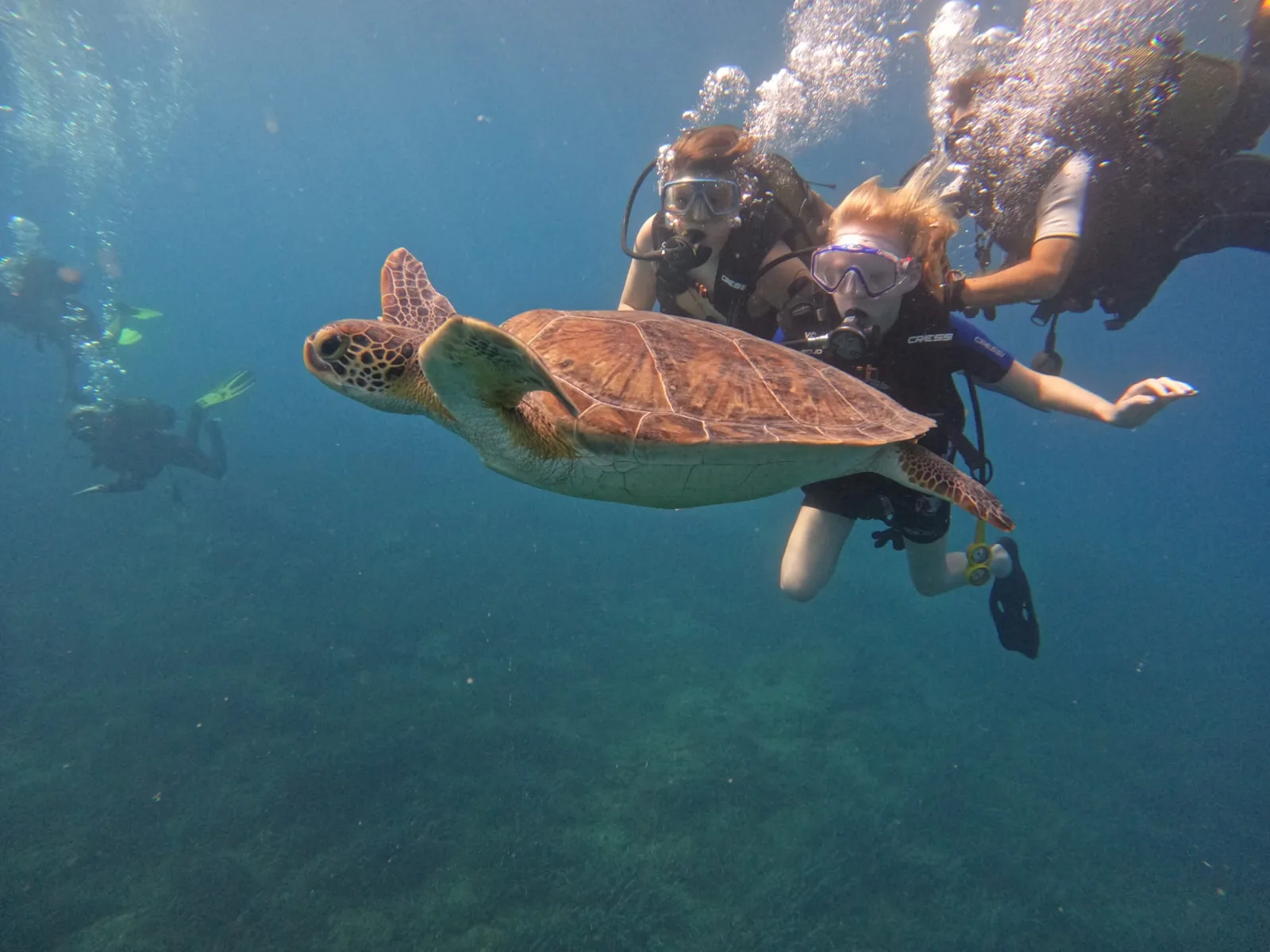
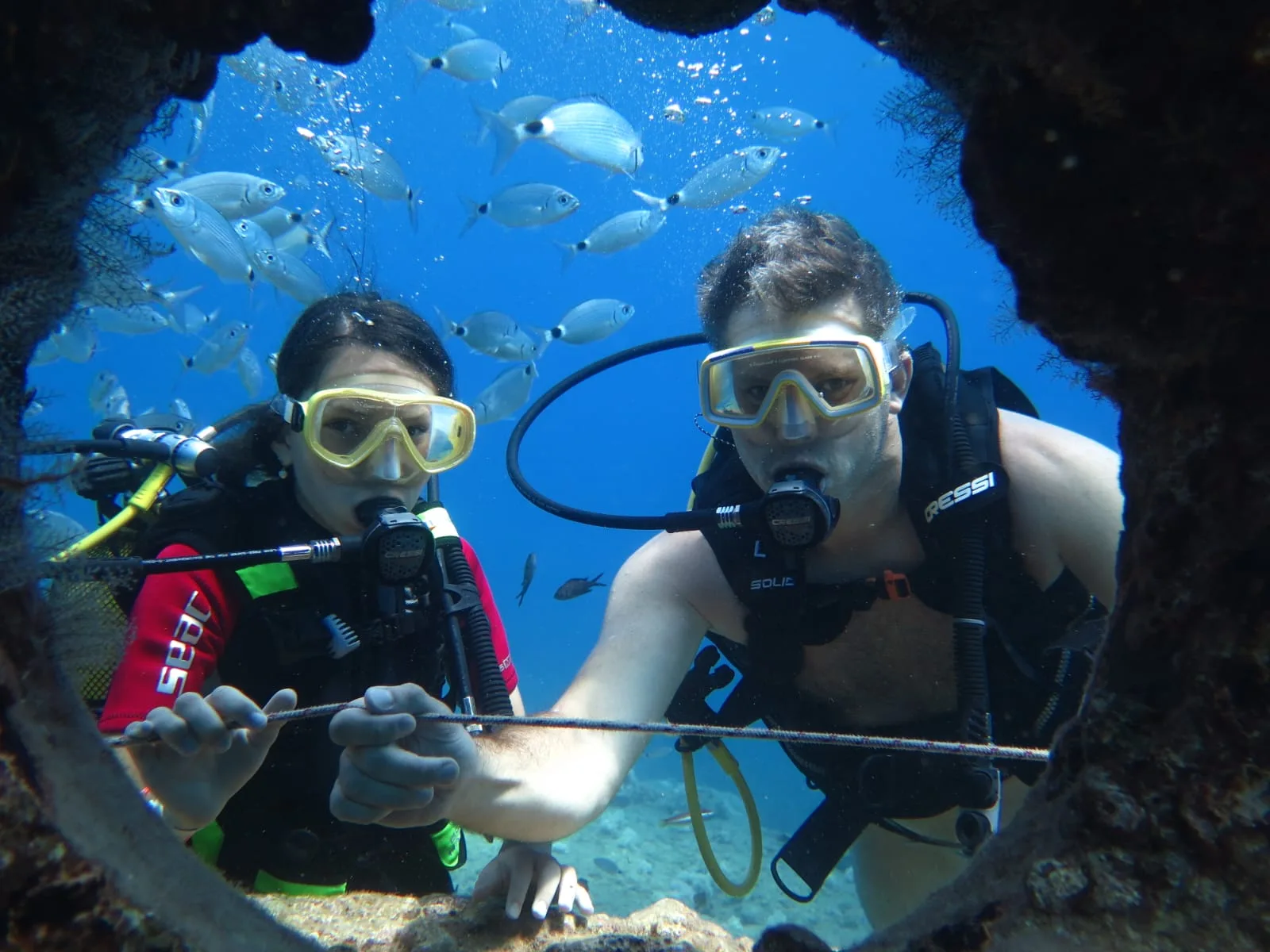
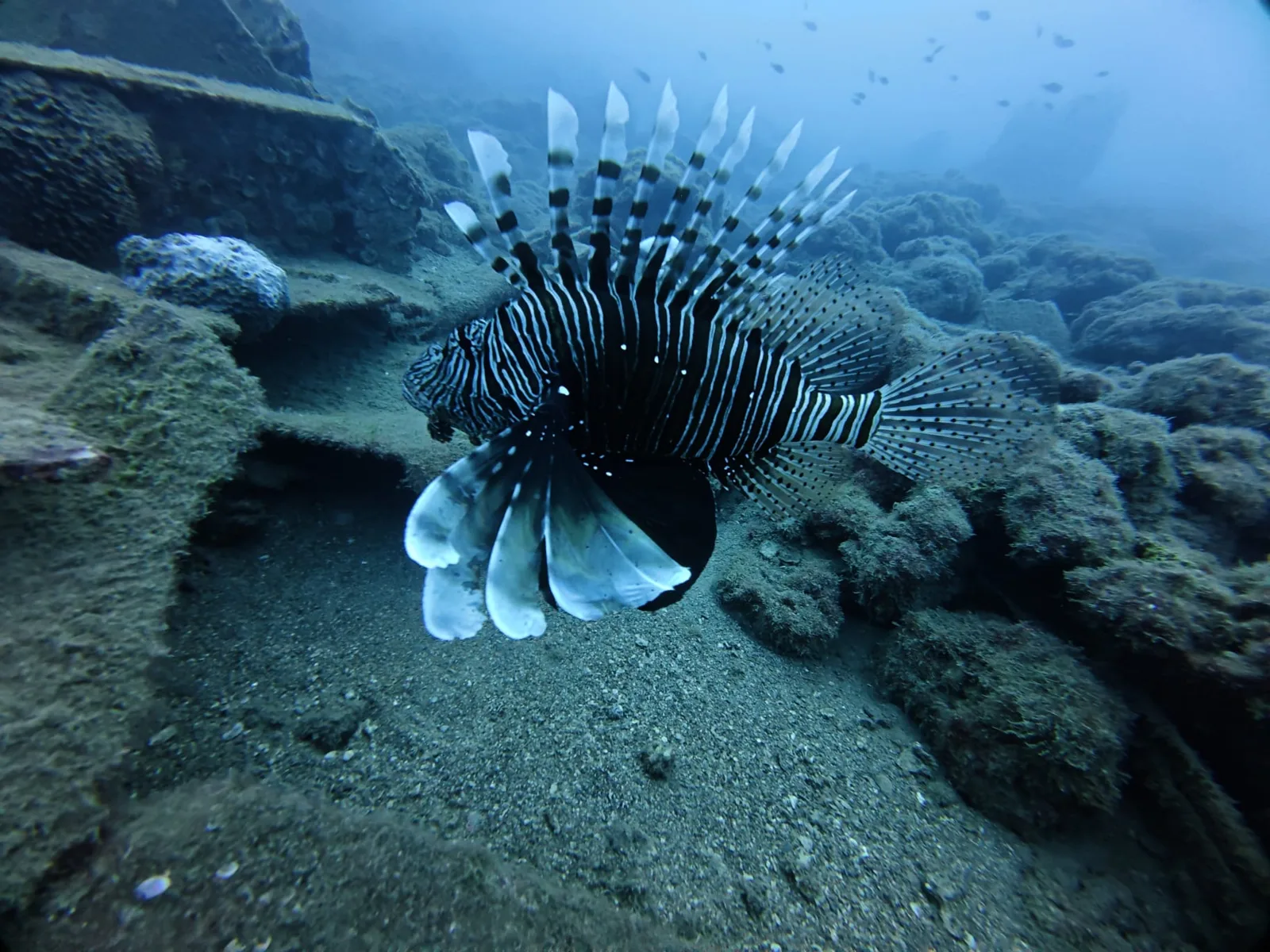
Few words in diving carry as much weight as "cave". The Antalya coast genuinely has them — caves and rocky reefs in the waters off Alanya's Cleopatra Beach, cave-dotted reefs and fish shoals on the Antalya city coastline, and around Kemer the Lighthouse reef with its 9-metre tunnel and the Three Islands with their reefs and caves. But "cave diving" also describes one of the most demanding disciplines in the sport, and mixing up the two can be dangerous.
This page is our honest guide to the difference. At Side Diving · Atalay Tour we run five full-day boat diving trips. Beginners dive them in the discovery format, a gentle first dive at 5–8 metres and a second to about 13 metres beside an instructor, and 13 metres is the beginner ceiling; certified divers go out on the same boats and dive the real profiles, roughly 30 metres on standard certified dives and down to 60 metres on the deep sites for suitably qualified divers. On those trips you can absolutely see caves — from the outside, in open water, with daylight above you. What we will never do is take an uncertified guest inside an overhead environment, and here we explain exactly why.
If you are a certified diver hoping for more, that is our normal territory: the deeper sites are everyday certified diving here, and genuine overhead-environment dives are planned around your training. Talk to us through our contact page or WhatsApp. And if you simply want to see what the fuss is about, our standard boat trips to Antalya, Alanya and Kemer waters are the safe, licence-free way to meet these rock formations face to face.
Cavern vs Cave Penetration: The Difference That Decides Everything
Diving distinguishes sharply between two things that sound alike. Cavern diving means staying in the daylight zone of an overhead formation: you can always see natural light, the way out is short and obvious, and if anything feels wrong you can simply turn towards the blue and ascend. Cave penetration means passing beyond that daylight zone into a true overhead environment — a place where you cannot swim straight up to the surface, where the exit may be many metres of rock away, and where a stirred-up silt cloud can erase all visibility in seconds.
That second category is not "advanced fun diving". It is a separate discipline with its own training, its own equipment logic and its own rules. Penetration divers carry guideline reels so they can find the exit by touch, plan their breathing gas in conservative thirds, carry redundant lights and often redundant air sources, and train specific skills like zero-visibility line drills. None of that is improvised on holiday — it is built up through dedicated overhead-environment courses on top of a standard diving certification.
Why does this matter for your holiday decision? Because the caves of the Antalya coast are best enjoyed at exactly the level you are trained for. From open water, a cave mouth is a beautiful, safe spectacle: shadowed rock, schooling fish using the overhang, octopus and grouper hiding in crevices. Inside, without training, the same place becomes a hazard. Our house rule is simple and non-negotiable: try-dive guests admire caves from the outside, in open water, always with an instructor — and that rule is precisely what makes a cave-rich dive day here relaxing instead of risky.
Certification and Guide Requirements: Who May Go Where
Here is how access works on our coast, honestly and without small print.
- No licence — our standard boat trips. All five of our full-day trips are guided try-dive days: a gentle morning dive at 5–8 metres for 15–25 minutes, then an afternoon dive to about 13 metres, always with an instructor and after a full safety briefing; 13 metres is the ceiling for divers without a licence. Try-dives are possible from around age 10 (ask us about options for younger children). At these depths you dive along reefs, rock formations and open cave mouths — never inside an overhead environment.
- Certified divers — the real profiles. Certified divers come out on the same boats and dive around 30 metres on standard certified dives, and down to 60 metres on the deep sites for suitably qualified divers. That is why the certified-only wrecks of this coast and the deeper Kemer tunnel and cave formations are normal diving here rather than an exotic extra. Which site you actually dive depends on your qualification level, the conditions and the day's plan, so tell us your certification level and logged dives via the contact page or WhatsApp. True cave penetration additionally requires overhead-environment training beyond a standard open-water card.
- Want to progress? We sign logbooks on every trip, and CMAS courses can be arranged on request — the honest route from "I saw a cave mouth on my try-dive" to "I am trained to go further".
The guide requirement deserves its own sentence: even fully certified divers dive caves here with local guides, because local knowledge — which entrance is safe in today's sea state, where the silt lies, where the cave life actually is — is not something a certification card can carry. On our try-dive trips that guiding is built in, with small groups and constant instructor contact throughout both dives.
Where You Actually Meet Caves on the Antalya Coast
Three of our five boat trips put caves on the day's menu, each in its own way.
- Antalya boat trip — €50, ~8 hours. The city coastline serves reefs, caves and shoals of fish in one day. Shadowed openings in the rock concentrate marine life, which makes this the trip where a cave mouth is most likely to be the backdrop of your best moment underwater.
- Alanya boat trip — €43, ~8 hours. You dive caves and rocky reefs in the waters off Cleopatra Beach. Alanya's underwater caves are woven into local lore too — they are associated with the story of the Mediterranean monk seal, one of the rarest marine mammals in the world. That is a story, not a promised sighting: we never guarantee what the sea will show.
- Kemer boat trip — €43, ~8 hours, with PADI-certified instructors. Kemer is known for the clearest water on this coast, and its map reads like a cave-lover's wish list: the Lighthouse site with its reef from 3 to 18 metres, a 9-metre tunnel and rich cave life, and the Three Islands (Üç Adalar) with reefs, caves and even a chance of dolphins near the boat. On a discovery dive you experience what fits the 13 metre beginner ceiling; the deeper tunnel and cave passages there are certified-diver territory, dived by certified guests according to their qualification level, the conditions and the day's plan.
Every trip, whichever you choose, includes the same backbone: two guided dives, all equipment, free two-way hotel transfer with a morning pickup (exact time confirmed the evening before), a fresh lunch cooked on board, passenger and diving insurance and a full safety briefing. Non-divers join as boat guests at a reduced rate — full details on our prices page.
How to Decide — and Book — a Cave Day Safely
Use this simple decision path. If you are uncertified or new: pick the Antalya or Alanya trip for the most cave-flavoured day, or Kemer for the clearest water; you will see open cave mouths, overhangs and the life they shelter, at try-dive depths, with an instructor beside you. If you are certified: book a standard trip and dive the real profiles with us, from around 30 metres on standard certified dives to 60 metres on the deep sites if you are suitably qualified, or contact us directly about a dedicated overhead-environment day, which is planned around your training. If you only want to watch: come aboard as a non-diving guest at a reduced rate and enjoy the boat, the bays and the lunch.
Whatever you choose, the health rules are the same for everyone and are not negotiable: diving is not possible during pregnancy or with severe asthma, heart conditions or respiratory conditions — tell us in advance if you are unsure. And plan your calendar around one firm rule: no flying within 24 hours after diving, so do not book a dive day for the day before your flight home.
Booking is deliberately low-risk, which matters for a decision like this: you reserve free online and pay on the day, and cancellation is free up to 24 hours before the trip. That means you can hold your spot now, ask us every cave question you have via the contact page or WhatsApp, and still change your mind without losing a cent. The caves have been here for millennia — they will wait for the day and the format that are right for you.