 ° 5 min read
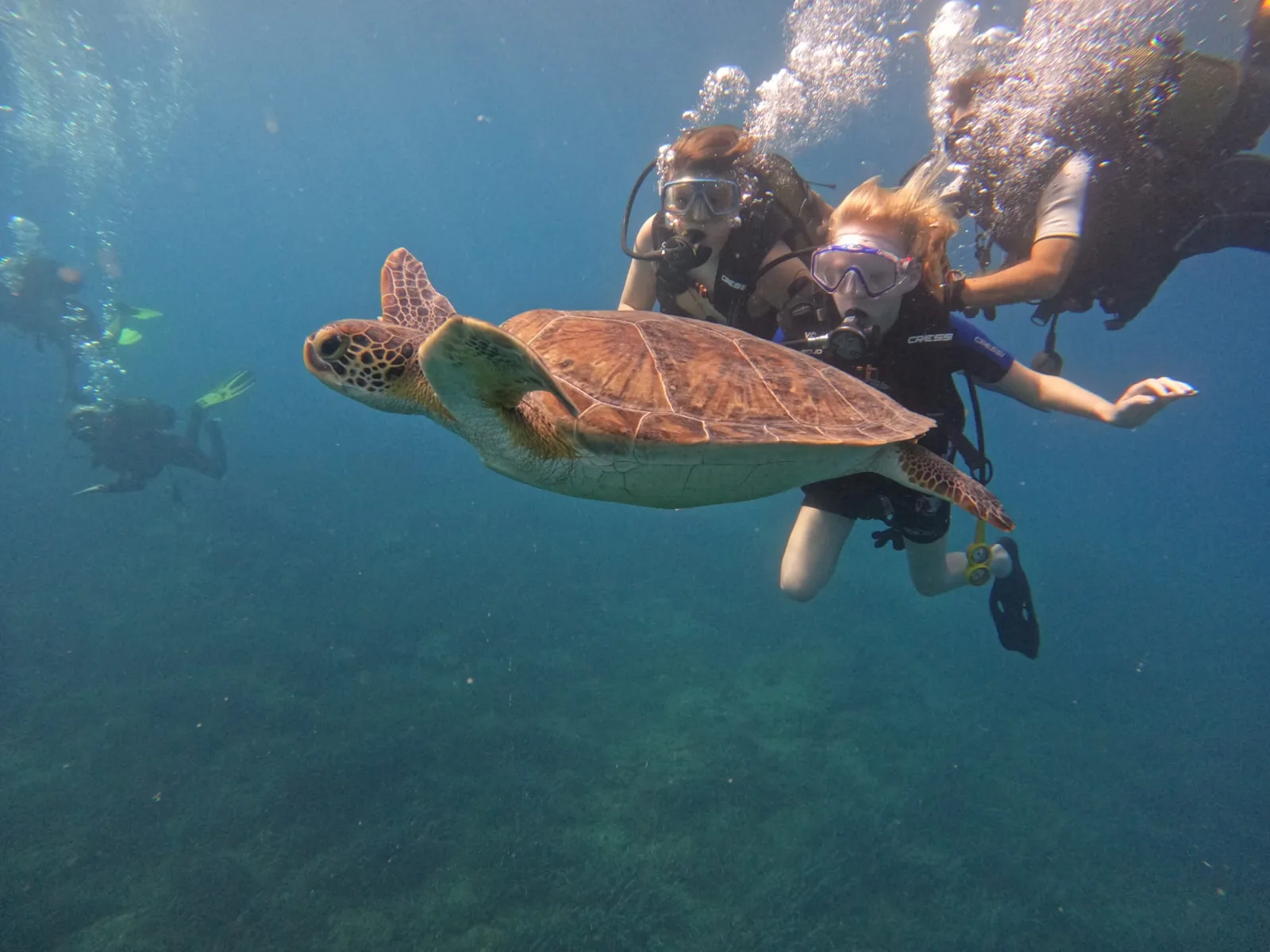
 First Time Scuba Diving: A Complete Beginner's Guide
Everything a first-time diver needs to know before stepping off the boat in Side — from calming your nerves to clearing your ears and breathing underwater.
Read guide →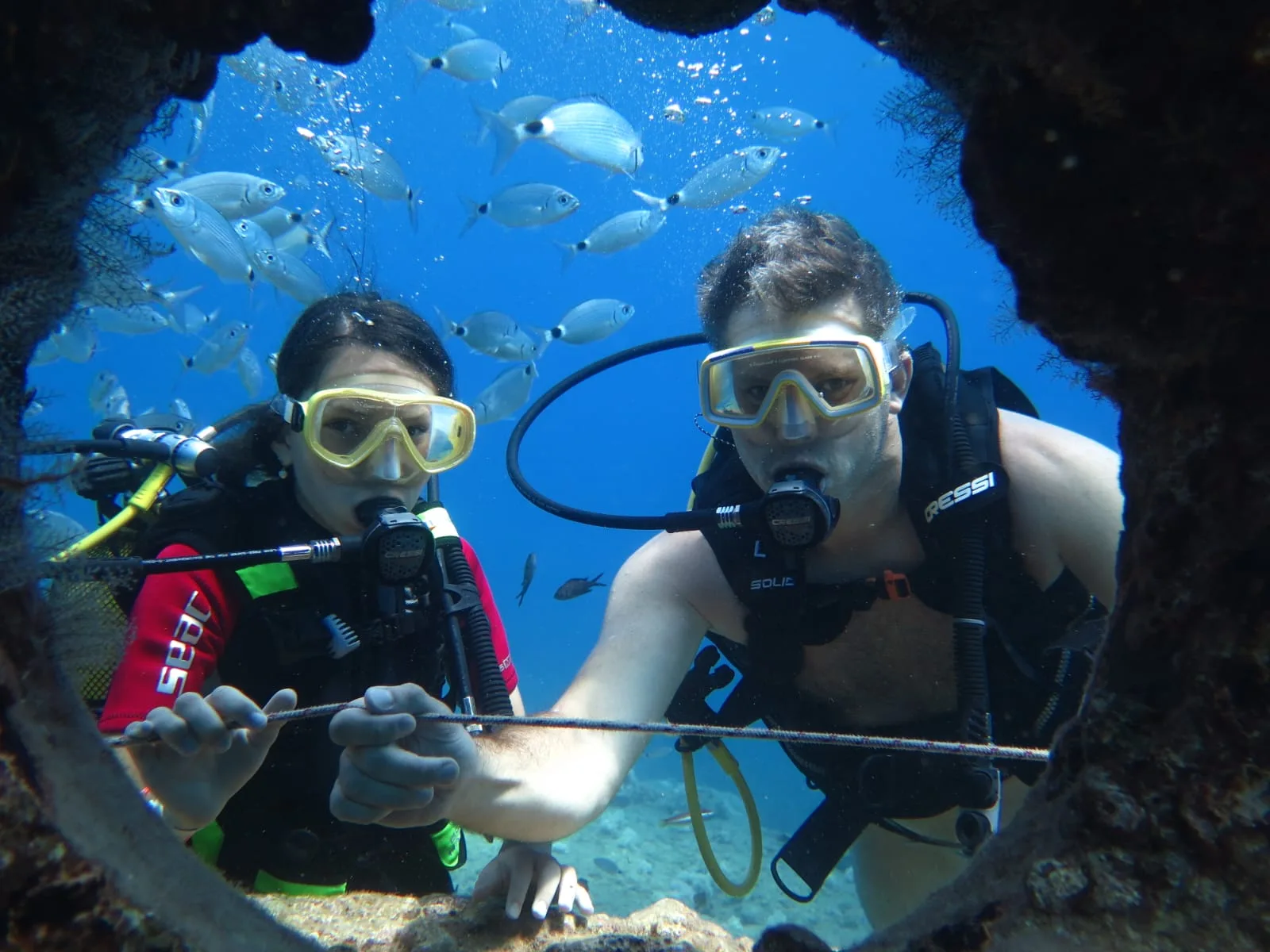 ° 4 min read
 The Side Underwater Museum: A Diver's Guide to the Sunken Sculpture Park
A sculpture park on the seabed, slowly turning into a living reef — here is what the Side Underwater Museum is, what you will see and how to dive it with us.
Read guide →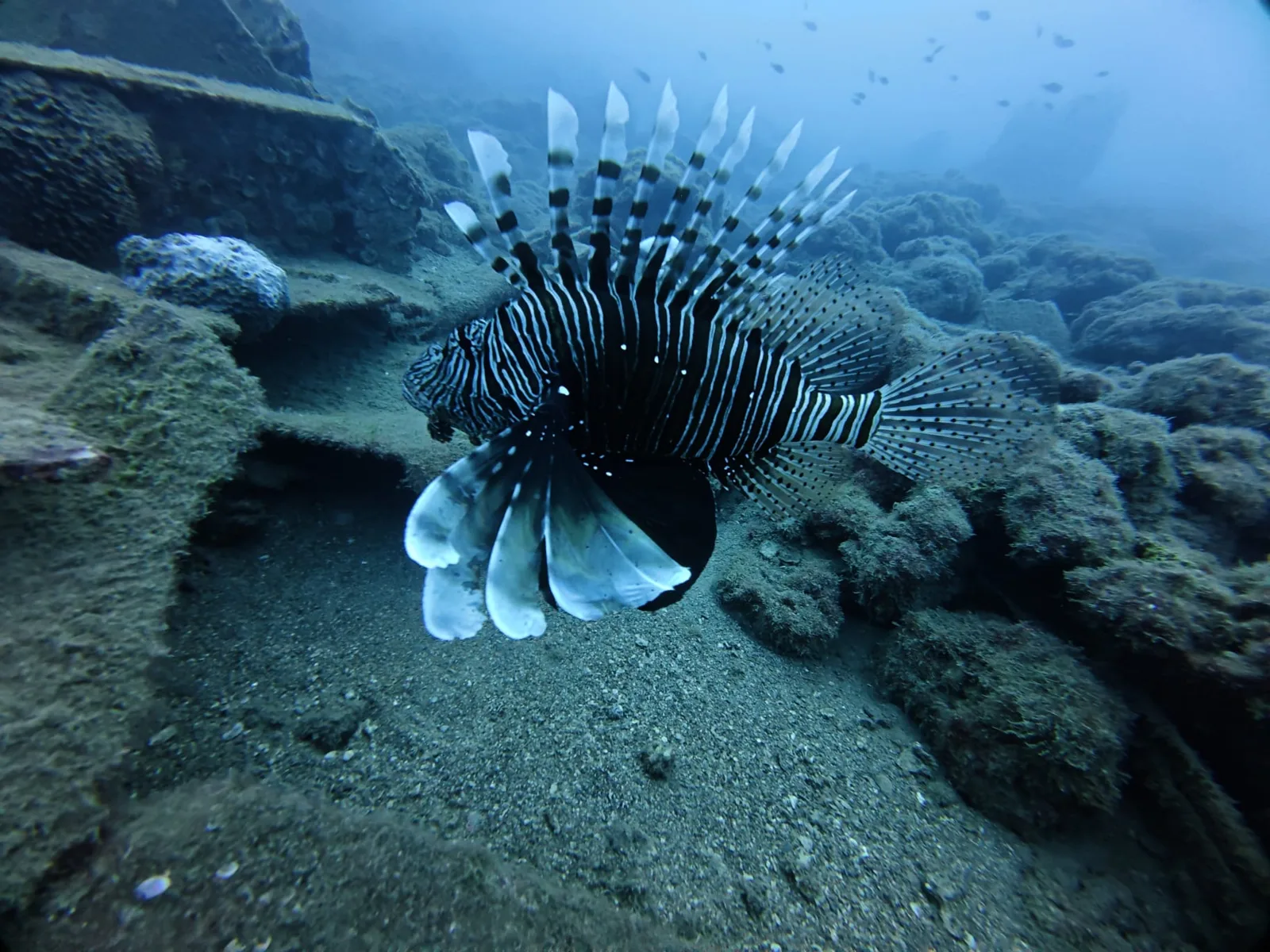 ° 4 min read
 What to Bring on a Scuba Diving Trip (and What to Leave at the Hotel)
Packing for a diving day in Side is refreshingly simple — here is exactly what we provide, what you should bring, and what to leave in the hotel safe.
Read guide →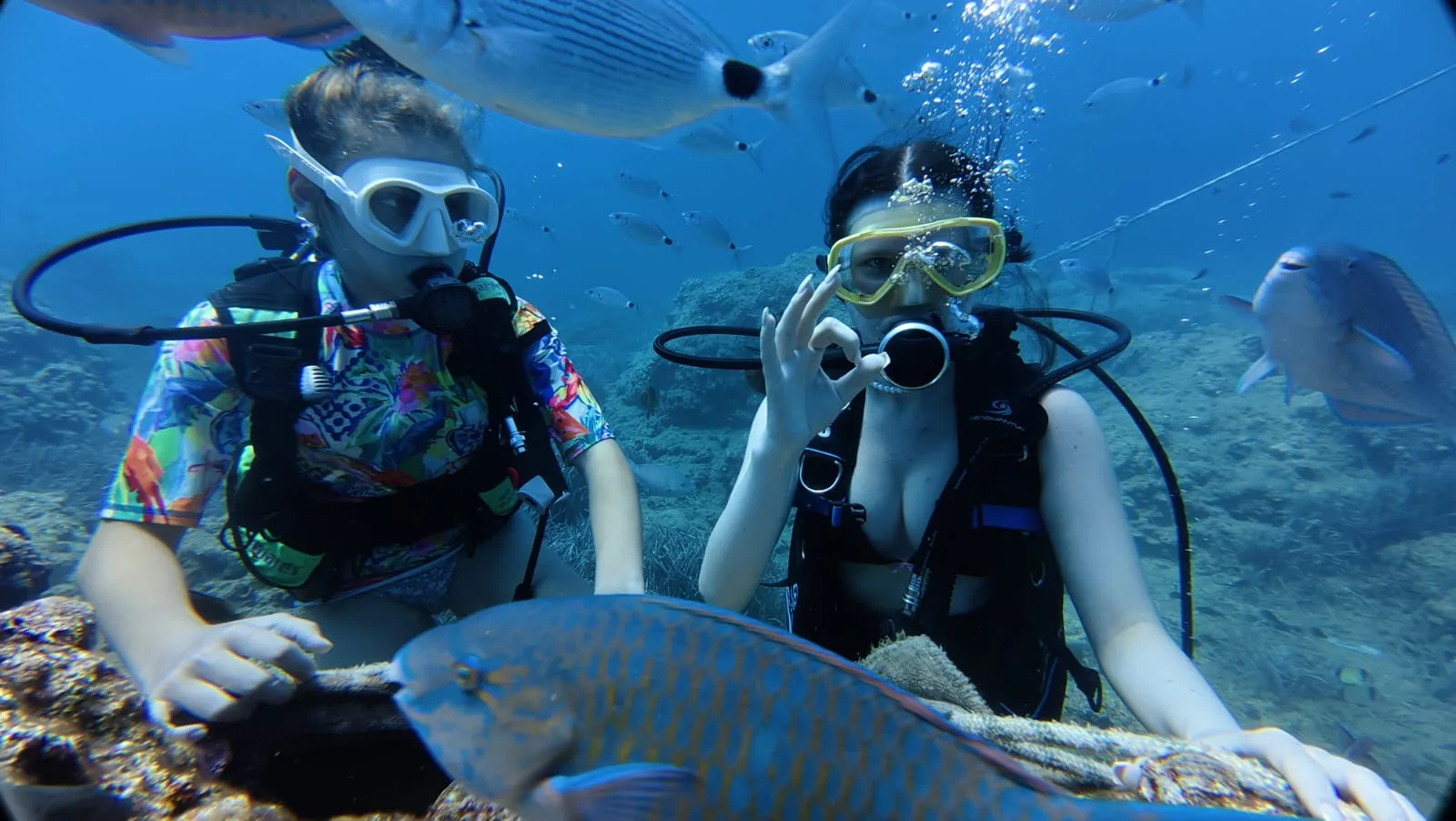 ° 4 min read
 The Best Season for Scuba Diving in Antalya: A Month-by-Month Guide
From 17°C winter seas to 29°C late-summer bathwater — here is how the Antalya diving year really works, month by month, and when to book your trip.
Read guide → ° 4 min read
 Can Non-Swimmers Try Scuba Diving? An Honest Answer
The question we hear most often, answered without marketing spin: what non-swimmers can and cannot do on a diving trip, and how instructors support you.
Read guide → ° 5 min read Scuba Diving with Kids: How a Family Diving Day in Side Works
Junior try-dives from around age ten, patient instructors, a boat day the whole family shares — here is how family diving in Side actually works.
Read guide → ° 5 min read Snorkeling vs Scuba Diving: Which One Is Right for You?
Snorkeling and scuba diving both put you face to face with the Mediterranean, but they are very different experiences. Here is an honest comparison — and why you may not have to choose at all.
Read guide → ° 4 min read Freediving vs Scuba Diving: What's the Difference?
One discipline is built on a single breath, the other on a tank of air. Here is how freediving and scuba diving really compare — and which one makes sense for your first time underwater.
Read guide → ° 4 min read Diving Certifications Explained: From Try-Dive to CMAS and PADI
CMAS stars, PADI Open Water, logbooks, try-dives — the certification world can look like alphabet soup. Here is the clear, honest map of how diving qualifications actually work.
Read guide → ° 5 min read Why You Shouldn't Fly Within 24 Hours After Diving
It is the one diving rule that shapes your whole holiday calendar: no flying within 24 hours after a dive. Here is the simple science behind it — and how to plan around it painlessly.
Read guide → ° 5 min read Scuba Diving in Antalya: A Guide to the Five Coasts We Dive
The Turkish Riviera is not one dive destination but a string of them. Here is our local's guide to the five coasts we dive — Side, Kumköy, Kemer, Antalya and Alanya — and how to choose yours.
Read guide → ° 4 min read Underwater Photography for Beginners: Making Your First Dive Photos Count
Water eats colour, currents eat sharpness, and excitement eats composition. Here is how beginners actually get good underwater photos — and how to shoot without harming the sea.
Read guide → ° 4 min read How to Equalize Your Ears When Diving: Techniques That Actually Work
Ear pressure is the number one worry for new divers — and the easiest one to solve. Learn the Valsalva manoeuvre, when to equalize, and how our instructors walk you through it on your first dive.
Read guide → ° 4 min read Breathing Underwater: Scuba Breathing Techniques Every Beginner Should Know
Breathing through a regulator feels strange for about two minutes — then it becomes the most relaxing part of diving. Here is how to breathe slowly, safely and efficiently on your first dives.
Read guide → ° 4 min read Nervous About Your First Dive? Read This Before You Go
Almost everyone is nervous before their first dive — including many people who now dive every week. Here is exactly what will happen, why you stay in control, and the calm-down techniques that work.
Read guide → ° 4 min read Mask Clearing for Beginners: The Simple Skill That Ends Mask Worry
A few drops of water in your mask is the most normal thing in diving — and clearing them out takes one relaxed breath. Learn the exhale-through-nose technique before your first dive.
Read guide → ° 4 min read 7 Scuba Diving Myths That Keep People Out of the Water
You do not need a licence, a swimmer's physique or nerves of steel to breathe underwater. Here are the seven myths we hear most often on our boat — and the truth behind each one.
Read guide → ° 4 min read Diving with Glasses or Contact Lenses: What Actually Works
Around a third of our guests wear glasses or lenses on land. The good news: contact lenses work fine under a dive mask. Here is exactly how to handle imperfect eyesight underwater.
Read guide → ° 3 min read Antalya Sea Temperature Month by Month: A Diver's Guide
The Antalya coast has some of the warmest water in Turkey — but the sea follows its own calendar, not the air's. Here is the month-by-month curve and what it means for your dive.
Read guide → ° 4 min read What Happens in a Dive Briefing (and Why It Matters)
Before anyone on our boat gets wet, everyone gets briefed. Here is exactly what your instructor covers — from hand signals to buddy roles — and why this half of diving matters as much as the dive.
Read guide → ° 4 min read Mediterranean Fish You May Meet on a Dive in Side
The Mediterranean rewards slow, curious eyes. Here are six underwater characters you may meet on a guided dive around Side — and the simple etiquette that keeps every encounter good for you and for them.
Read guide → ° 4 min read The Side Underwater Museum Story: When Sculpture Becomes Reef
An art gallery you fly through rather than walk through: how the sunken sculpture park off Side works as an artificial reef, and what diving it actually feels like.
Read guide → ° 4 min read Dive Boat Etiquette: How to Be a Great Guest at Sea
A dive boat is a small village of strangers for a day. Here are the unwritten rules — briefing manners, gear care, deck sense and seasickness tactics — that make the day smoother for you, the crew and the sea.
Read guide → ° 5 min read The Diver Safety Checklist: Habits That Keep Every Dive Boring
Good diving is boring in the best way: nothing unexpected happens. Here is the safety checklist we wish every guest read before a guided dive — from health honesty to the 24-hour no-fly rule.
Read guide → ° 4 min read How to Choose a Dive Operator in Turkey: An Honest Checklist
Dozens of dive boats leave the Turkish coast every summer morning, and quality varies enormously. Here is the five-point checklist we would use ourselves — even if you never dive with us.
Read guide → ° 4 min read Alcohol and Scuba Diving: Why the Rakı Waits Until After the Second Dive
The all-inclusive wristband makes every drink free, but a scuba tank changes tomorrow's plans. Here is what alcohol really does to a diver — and why the toast belongs after the second dive.
Read guide → ° 4 min read Sunscreen and the Sea: A Diver's Guide to Reef-Safer Sun Protection
A day on a dive boat means hours of Mediterranean sun — but what you rub on your skin ends up in the water you dive in. Here is how to protect both at once.
Read guide → ° 4 min read Your First Logbook Stamp: Why Divers Collect Them and How to Get Yours
Wet hair, salt on your skin, and an instructor pressing a stamp onto a fresh page — the logbook ritual is one of diving's best small pleasures. Here is what it means and how to start your own.
Read guide → ° 4 min read Is Scuba Diving in Side Safe for Beginners?
A properly run try-dive is one of the most controlled ways to enter the sea — but no honest instructor will call diving risk-free. Here is exactly what keeps beginners safe on our boats, and who should stay on deck.
Read guide → ° 4 min read Is Diving in Side Worth It? An Honest Answer
We sell diving trips, so you would expect an automatic yes. Here is the honest version instead: what the Mediterranean genuinely offers, what it does not, and the one dive that makes Side different from anywhere else.
Read guide → ° 4 min read Diving Age Limits: Kids and Seniors
How young is too young, and how old is too old? Try-dives start from around age 10, there is an ask-us option for younger kids, and there is no strict upper age — as long as health is judged honestly. Here is the full picture.
Read guide → ° 4 min read Can You Dive With Asthma, Heart Conditions or Diabetes?
We are dive professionals, not doctors — so this guide will not diagnose you. It will tell you honestly which conditions rule diving out, what the medical form is for, and when the only right answer is your doctor's.
Read guide → ° 4 min read How Deep Do You Go on a First Dive? The Honest Answer
The plain numbers: 5–8 metres in the morning, about 13 metres in the afternoon — and why depth is the least important part of your first dive.
Read guide → ° 4 min read Seasickness on the Dive Boat: How Bad Is It Really?
The honest answer to the question everyone asks quietly: how rough is the boat, how long are you on it, and what actually helps.
Read guide → ° 4 min read Diving While Pregnant: Why the Answer Is a Clear No
Some diving questions have nuance. This one does not — and an honest dive centre should say so plainly.
Read guide → ° 3 min read Visibility When Diving in Side: Honest Numbers by Season
No brochure gloss: typical Mediterranean visibility ranges off Side, season by season, and what actually moves the numbers up or down.
Read guide → ° 4 min read How Long Does a Diving Day Take? The Full Timeline
Six to eight hours door to door: what actually happens between hotel pickup and drop-off on a full-day boat diving trip from Side.
Read guide → ° 4 min read Underwater Photos on Your Dive: Who Takes Them and What to Expect
Photos and video of your dive are available as an optional extra — here is who takes them, how to arrange it, and the honest truth about phone pouches.
Read guide → ° 3 min read Is Lunch Included on the Dive Boat? Yes — Here Is What to Expect
Every full-day boat diving trip includes a fresh lunch cooked on board. What the meal is like, what drinks cost extra, and why you should flag dietary needs early.
Read guide → ° 4 min read Your Second Dive: Why It Is Better Than the First
The first dive is the one you were nervous about. The second — deeper, calmer, wide-eyed — is the one you will talk about at dinner. Here is why.
Read guide → ° 5 min read Side vs Kemer Diving: Where Is the Water Clearer?
Two very different days at sea from the same coast: crystal-clear blue water and classic sites in Kemer, or a field of around 110 sculptures in Side.
Read guide → ° 4 min read Side vs Alanya Diving: Sculptures or Caves?
Both days cost 43 to 45 euro and include everything. The difference is what you swim over: a field of sculptures, or dark rocky caves and old amphoras.
Read guide → ° 4 min read Underwater Museum vs Reef Dive: Which One First?
One is a man-made sculpture field with a route to follow. The other is natural rock and fish life with no script. Here is how to choose, and why you may not have to.
Read guide → ° 4 min read Diving or a Boat Trip? Two Very Different Days at Sea
One day is built around two guided dives. The other is built around sun, swimming and the coastline. The good news: your group does not have to split up.
Read guide → ° 4 min read Diving in Side in Summer: Warm Water, Early Starts and Big Blue Days
Summer is when most of our guests breathe underwater for the first time — and the warm 27–29°C Mediterranean makes it easy. Here is what a summer diving day in Side really looks like, and how to get the best out of the busiest season.
Read guide → ° 4 min read Spring and Autumn Diving in Side: The Sweet Spot Nobody Talks About
Everyone dives in August. The divers who get the clearest water and the calmest boats come in late spring and autumn. Here is why the shoulder seasons are Side's best-kept diving secret.
Read guide → ° 4 min read Winter Diving in Side: Does It Run, and What Is It Like?
Can you dive in Side in winter? Sometimes — and honestly, it depends. The sea sits around 17°C, many operators wind down, and the weather sets the schedule. Here is the truthful version, and what a winter dive is like when it happens.
Read guide → ° 4 min read The Best Month for Diving in Side: An Honest Month-by-Month Guide
From ~17°C in winter to 28–29°C in late August, the sea off Side changes character every month. Here is the honest month-by-month picture — and our genuine picks for the best time to dive.
Read guide → ° 4 min read Diving in Side for Couples: A Day Underwater Together
Most holiday activities happen next to each other. Diving happens together. Here is how couples turn one Side dive day into the story they tell for years.
Read guide → ° 4 min read Diving in Side for German Guests: What to Expect, Honestly
German, Austrian and Swiss guests ask the best questions before booking a dive. Here are our honest answers — insurance, groups, language and pay-on-the-day.
Read guide → ° 3 min read Diving in Side for Russian-Speaking Guests: A Practical Guide
No prepayment, a family-friendly boat day and honest answers about language and safety — what Russian-speaking guests should know before diving in Side.
Read guide → ° 4 min read Diving in Side for UK and Dutch Guests: Book Direct, Expect Honestly
British and Dutch travellers like booking direct and hate being oversold. Here is the honest version of diving in Side — including how it compares to the Red Sea.
Read guide → ° 5 min read Is Scuba Diving Difficult?
The honest answer from instructors who take beginners down every morning: fitness is not the barrier, trusting the regulator is, and that trust arrives faster than you think.
Read guide → ° 5 min read Do Beginners Dive Alone? No — Here Is Who Is With You
No beginner ever goes underwater on their own. Here is exactly who is beside you, how many divers each instructor takes, and what a guide is really doing down there.
Read guide → ° 5 min read Beginner Diving Mistakes to Avoid
Almost every difficult first dive comes down to the same handful of avoidable mistakes. Here they are, in the order they usually happen, with the fix for each.
Read guide → ° 5 min read What Equipment Do Beginners Use?
Bring a swimsuit and a towel. Everything else is handed to you on the boat, fitted before you get in and explained piece by piece. Here is what each item actually does.
Read guide → ° 5 min read Can Older People Scuba Dive? Age, Health and the Honest Answer
Age alone does not stop anyone from diving. Here is what actually decides it - health, comfort and the medical questionnaire - and what we do on the boat for guests in their sixties, seventies and beyond.
Read guide → ° 5 min read Do You Need to Be a Strong Swimmer to Dive?
The honest answer from a working dive boat: technique matters far less than calm. What we actually ask of beginners, why the buoyancy vest changes everything, and when swimming ability does count.
Read guide → ° 5 min read Can You Dive With Ear Problems?
Ears are the single most common reason a dive gets postponed. Here is how equalisation really works, when to wait, when to see a doctor, and what we do on the boat.
Read guide → ° 5 min read Diving and Body Size: Can Anyone Fit the Equipment?
An honest, dignity-first answer to a question people hesitate to ask. How wetsuits and BCDs are sized, what buoyancy really depends on, and why one sentence at booking solves almost everything.
Read guide → ° 4 min read What Happens If You Run Out of Air While Diving?
It is the fear almost every beginner arrives with, and the one a real dive day answers fastest. Here is what actually stands between you and an empty tank.
Read guide → ° 4 min read Diving Hand Signals You Will Learn on Your First Dive
You cannot talk with a regulator in your mouth, so divers built a language out of hands. It takes about ten minutes to learn the part you actually need.
Read guide → ° 4 min read Why You Must Never Hold Your Breath Underwater
Every dive briefing in the world contains one rule that outranks all the others. Here is the physics behind it, in language that needs no diagram.
Read guide → ° 4 min read Diving, Heat and Dehydration on the Antalya Coast
You spend the day in water and still finish it dehydrated. Dry tank air, a hot deck and a wetsuit do more than the Antalya sun ever gets blamed for.
Read guide → ° 5 min read What Does a BCD Do? The Vest That Lets You Hover
The BCD is the piece of kit that turns swimming into hovering. Here is exactly what it does, how your instructor sets it for you, and why beginners never touch the dump valve on the first dive.
Read guide → ° 5 min read What Does a Regulator Do? 200 Bar into a Normal Breath
The regulator is the piece of equipment that keeps you alive, and it does something quietly brilliant: it turns the violent pressure inside a scuba tank into a breath that feels completely ordinary.
Read guide → ° 5 min read Why Divers Wear Wetsuits in a Warm Sea
The sea off Side reaches 28–29 °C in late summer, so the wetsuit looks like overkill. It is not. Here is what water does to body heat, what happens on the second dive, and how sizing works on the boat.
Read guide → ° 4 min read Can I Rent Diving Equipment in Side?
The short answer is that you do not need to rent anything, because all the equipment is already in the price. Here is what that covers, what a certified diver might still want to bring, and how fit is handled.
Read guide → ° 4 min read Discover Scuba vs Open Water: Which Do You Actually Need?
One is a single holiday morning with an instructor beside you. The other is a card that lasts for life. Here is the honest comparison — time, depth, cost — so you book the right one.
Read guide → ° 4 min read How Long Does Scuba Certification Take?
Not an afternoon. An entry-level certification is theory plus confined-water skills plus open-water dives — several consecutive days, best placed at the start of your trip.
Read guide → ° 4 min read Can Tourists Get Scuba Certified in Turkey?
Yes. You do not need residency, a Turkish licence or perfect Turkish. Here is what a visiting diver actually needs, what they leave with, and how our on-request scheduling works.
Read guide → ° 4 min read What Your Certification Actually Lets You Do
A certification card is permission, not a promise. Here is exactly what an entry-level card opens up on this coast, what an advanced one adds, and where the deep sites begin.
Read guide → ° 4 min read Where Does the Dive Boat Leave From?
You never have to find the harbour on your own: every trip includes a free two-way hotel transfer, and each of our five dive days leaves from the port closest to its dive sites. Here is exactly how the morning works.
Read guide → ° 4 min read What If the Weather Is Bad?
If conditions are unsafe, the trip does not run: you move to another day or you pay nothing at all. Here is how sea state is judged, who decides, and what rain actually means for diving.
Read guide → ° 4 min read Can I Book Diving Last Minute?
Yes, subject to space on the boat. Reservation is free, payment is on the day, and the only genuine limit is how many divers an instructor can safely look after.
Read guide → ° 4 min read What to Do After Your Dive Day
Take it easy, drink water, and do not fly for 24 hours. Here is what the rest of your day should look like after two dives, and how soon you can get back in the water.
Read guide → ° 4 min read Side vs Antalya Diving: Honest Comparison
Two very different dive days on the same coast: the sculpture-filled Underwater Museum off Side, or the reefs, caves and shoals of the Antalya city coast. Here is the honest comparison.
Read guide → ° 4 min read Group vs Private Diving: Which Suits You?
Our small-group standard is already close attention: three to four divers per instructor. So who actually needs a private arrangement, and who is better off in the group?
Read guide → ° 4 min read One Dive vs Two Dives: Why Our Day Includes Both
Almost everyone finds dive one overwhelming and dive two enjoyable. That is not a coincidence, and it is why every trip we run includes two guided dives.
Read guide → ° 4 min read Diving vs Other Side Activities: An Honest Guide
A boat trip, rafting, a jeep safari or a dive day: they cost roughly the same and fill roughly the same hours, but they leave very different memories.
Read guide →