The Strangest, Most Wonderful Part of Learning to Dive
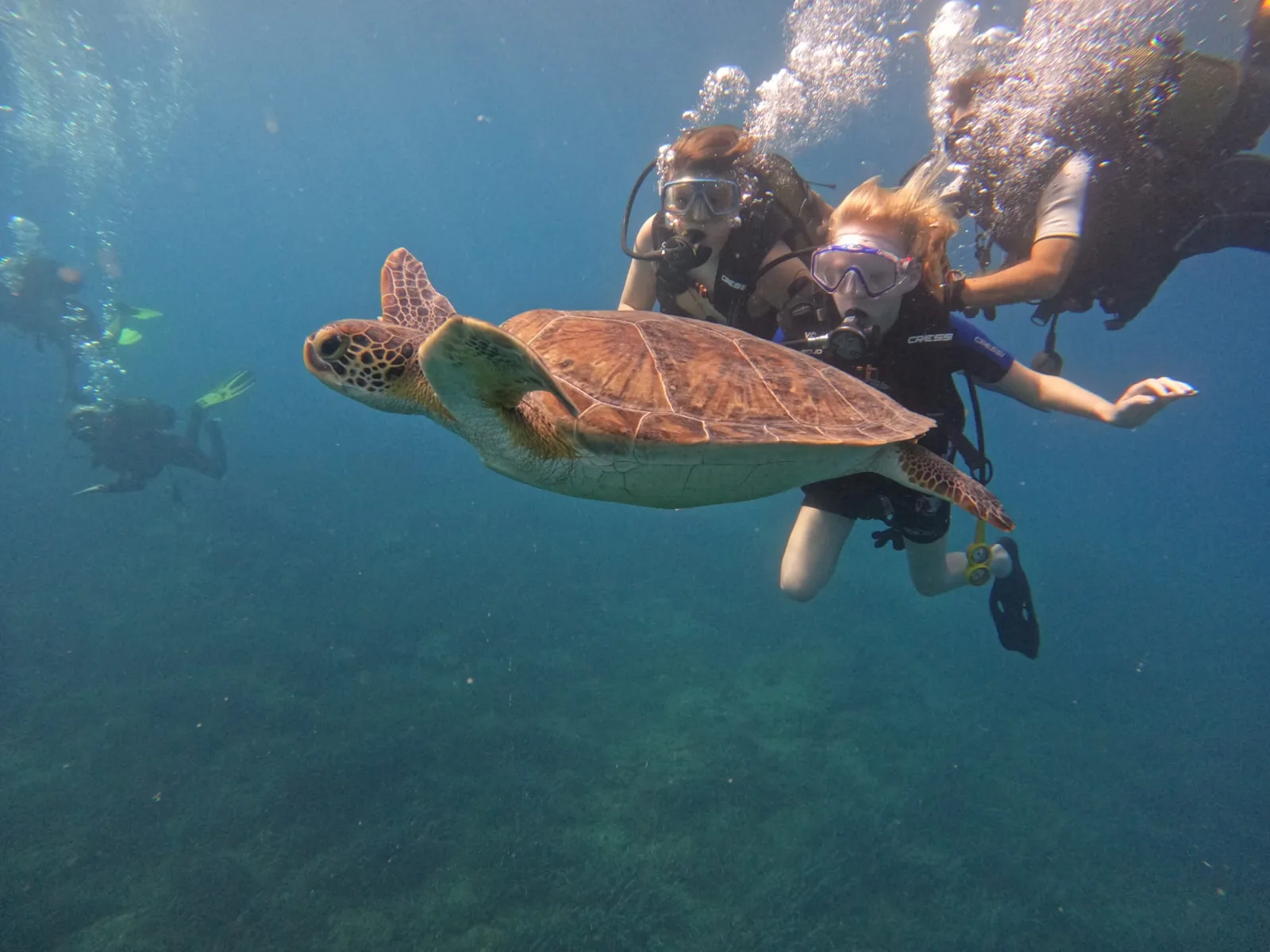
Every diver remembers their first breath underwater. For a second or two your brain protests — you are not supposed to be able to do this — and then the regulator quietly delivers exactly the air you asked for, and something clicks. Within minutes, most beginners on our discover scuba trips stop thinking about breathing at all. The goal of this guide is to get you to that point faster, and to teach you the small habits that make your air last longer and your dive calmer.
Rule Number One: Never Hold Your Breath
If you remember a single sentence from any scuba course, make it this one: keep breathing, always. On land we hold our breath instinctively when we concentrate or feel surprised. Underwater that habit must go, for a simple physical reason: as you ascend, the air in your lungs expands. If your airway is open and you are breathing normally, the expanding air simply flows out. This is why instructors repeat the rule at every briefing, and why it is the first thing covered in the full safety briefing before all of our trips. Breathe in, breathe out, without pause — that is the whole rule.
How to Breathe Through a Regulator
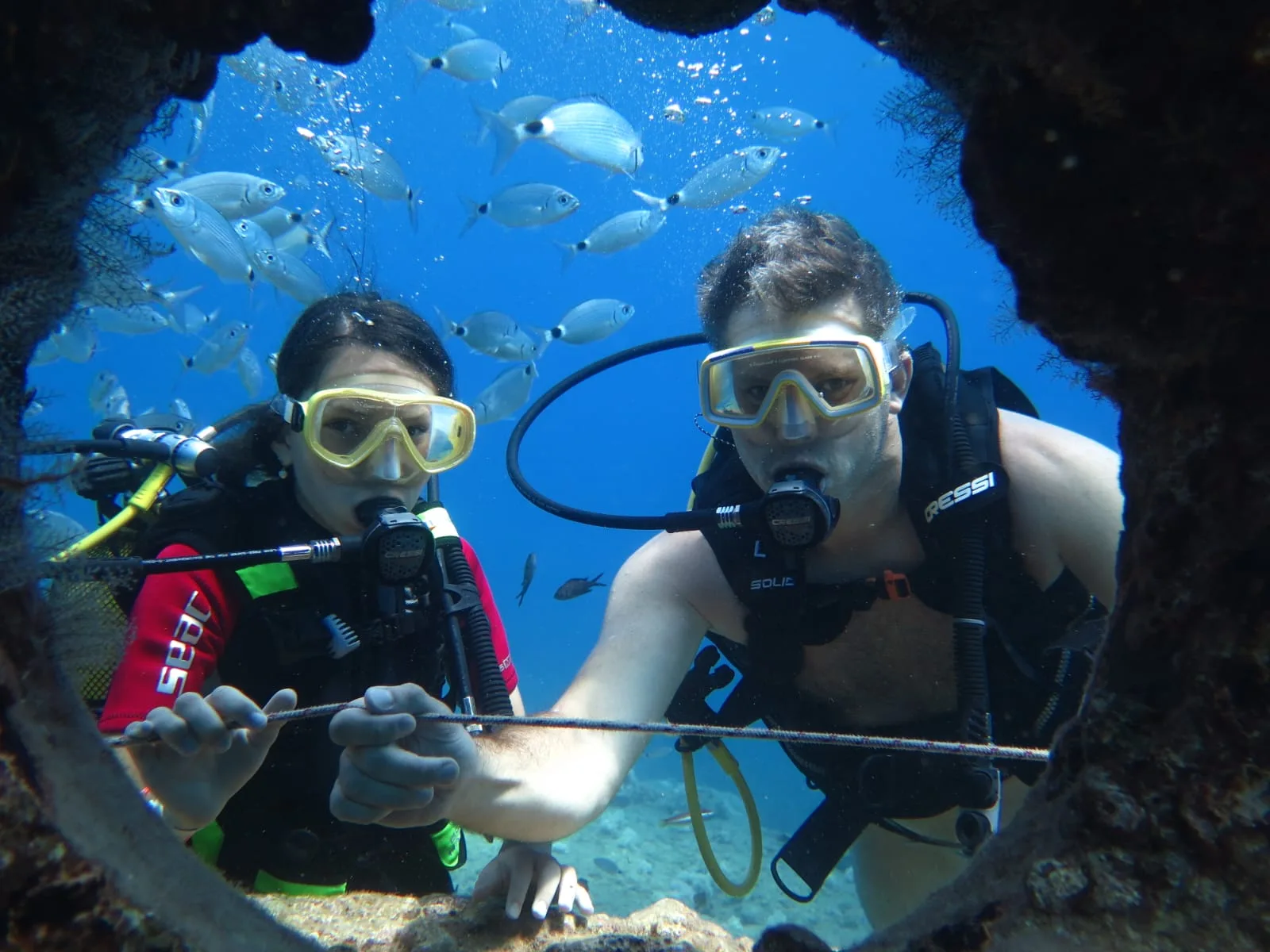
A regulator gives you air on demand: inhale and it delivers, stop and it stops. There is no wrong way to trigger it — but there is a better way to use it.
- Breathe slowly and deeply. Long, unhurried breaths from the diaphragm — the kind you would take in a yoga class — move air efficiently and keep you relaxed. Fast shallow sips do the opposite.
- Make the exhale longer than the inhale. A relaxed count of roughly four in and six out slows your heart rate and quiets the mind. The stream of bubbles rising past your mask becomes surprisingly meditative.
- Breathe through your mouth, let your nose rest. The regulator sits in your mouth; the mask covers your nose. New divers sometimes try to inhale through the nose out of habit — the feeling passes quickly, and practising a few breaths at the surface fixes it.
- Do not fight the small noises. The hiss on the inhale and bubbles on the exhale are normal. Many divers come to love the sound — it is the rhythm section of every dive.
Why Calm Divers Use Less Air
Air consumption is the beginner topic, and the answer is almost embarrassingly simple: relaxed divers breathe less. Stress and hurry raise your heart rate, your breathing rate follows, and the tank empties faster. That is why everything about a well-run beginner dive is designed to keep you calm — the unhurried briefing, the slow descent, the instructor beside you. On our trips with PADI-certified instructors in Kemer and at all our other locations, your guide sets a gentle pace precisely because slow diving is better diving.
Depth matters too. The deeper you go, the denser the air you breathe, so the faster it is used. Our morning dive at five to eight metres is not only ideal for learning skills — it is also the depth where your air naturally lasts well, giving you fifteen to twenty-five relaxed minutes to settle in before the afternoon dive to about thirteen metres.
Practical Tips to Make Your Air Last Longer
- Move less, glide more. Let slow, wide fin kicks do the work and keep your hands still. Sculling with your hands burns air and achieves almost nothing.
- Stay streamlined. Horizontal body, arms relaxed — less drag means less effort means less air.
- Stay warm. A cold body burns energy fast. The wetsuit included with our equipment keeps you comfortable, and every trip provides the full set: tank, regulator, wetsuit, mask and fins.
- Pause and float. If you feel your breathing speed up, stop finning, hover, and take three long exhales. The rate resets in seconds.
- Do not compare tanks. Every beginner uses air faster than every instructor. It is experience, not lung size — your consumption improves with every single dive.
How This Works on Our Trips
Every full-day boat trip includes two guided dives — the shallow morning dive to practise exactly the habits above, and the deeper afternoon dive to enjoy them. Your instructor watches your air gauge with you, agrees simple hand signals in advance, and keeps the group small enough that nobody is out of sight. Beginners need no licence, non-divers can join the boat at a reduced rate, and lunch, hotel transfer and insurance are included. One health note: diving is not possible during pregnancy or with severe asthma, heart or respiratory conditions, and you should not fly within twenty-four hours after diving — details on our safety page.
Come Breathe With Us
Breathing underwater cannot really be learned from an article — it has to be felt, ideally somewhere beautiful. Check current prices, reserve online for free and pay on the day, with free cancellation up to twenty-four hours before. Your first breath underwater is closer than you think.