Can Older People Scuba Dive?
Yes. Recreational diving has no upper age limit in itself, and we regularly take guests in their sixties and seventies on our boat trips along the Antalya coast. What decides whether someone can dive is not the number on a passport but two practical things: general health, and comfort in the water. If your health is stable and you feel calm floating in the sea, age is rarely the obstacle people expect it to be.
The honest version is this: a first guided dive asks less of your body than a long walk uphill. You are weightless, you move slowly, and an instructor is within arm's reach the entire time. What it does ask for is a heart, a set of lungs and a pair of ears that can handle mild pressure and mild exertion without drama.
What Actually Matters More Than Age
Three things decide the day, and none of them is your birth year.
- Cardiovascular and respiratory health. Diving is gentle, but it is still exercise in a wet, cool environment. A heart and lungs that cope well with everyday activity usually cope well underwater.
- Comfort in water. You do not need to be a strong swimmer for the guided programme, but you do need to be able to relax when your face is in the sea rather than tense up. If that worries you, read our honest take on how much swimming ability diving really needs.
- Ears and sinuses. Equalising pressure is the one skill everybody learns. It works at any age, but a blocked ear or an active cold means postponing.
There are firm limits we never bend, whatever the age: no diving during pregnancy, and no diving with severe asthma, heart conditions or respiratory conditions. These are safety rules, not paperwork.
The Medical Questionnaire, Explained Without Anxiety
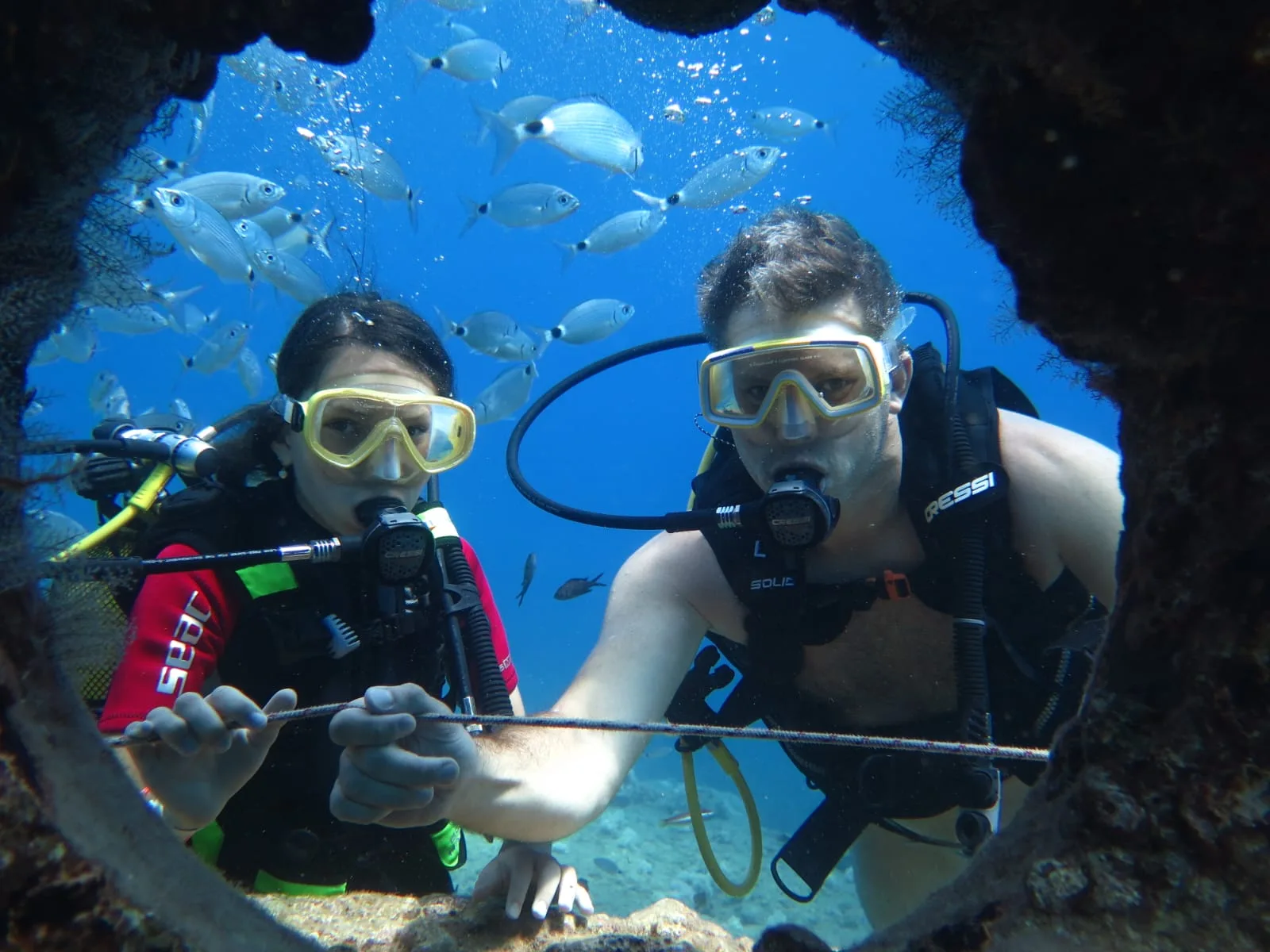
Every diver on our boats completes the standard diving medical questionnaire before the briefing. It is a short list of yes/no questions about your heart, lungs, ears, medication and recent surgery. Most guests tick nothing and hand it back in two minutes.
If something is flagged - blood pressure medication, a past operation, a lung condition - it does not automatically mean no. It means we ask for a doctor's sign-off before you get in the water. We never diagnose anyone and we never make medical promises: that judgement belongs to your own doctor, who knows your history. Getting that signature at home, before your holiday, is far easier than trying to arrange it on the morning of the trip. If you already know something will be flagged, our guide to diving with medical conditions is worth reading first, and you are welcome to message us with the details.
How Deep Do You Actually Go?
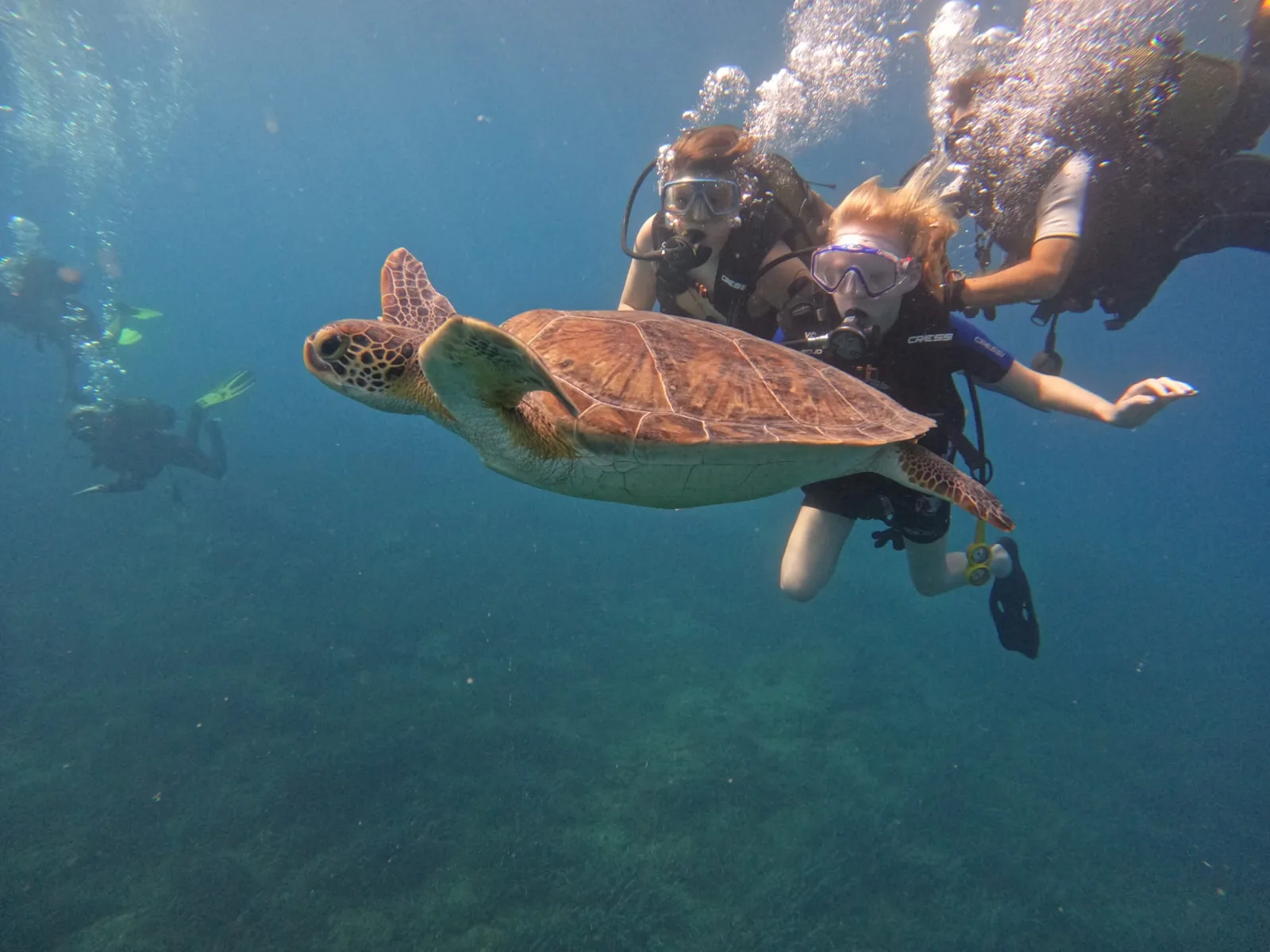
This is where a lot of unnecessary worry comes from. Beginners and discovery divers stay at 5 to 8 metres on the morning dive and go to about 13 metres maximum on the second dive, always with an instructor beside them and no more than three or four divers in the group. That is shallow, bright water with plenty of light and no decompression concerns.
Certified divers are a different story: standard certified dives run to around 30 metres, and up to 60 metres on the deep sites when suitably qualified. Named deep sites like the Paris II wreck at 21-31 metres or the DO-28 aircraft at 19.5-23.3 metres sit firmly in the certified range - they are never part of a first-time dive. You can read more about the certified diver programme if you have logged dives behind you.
Not Diving Today? You Still Come Along
Nobody sits in a hotel lobby because of a knee, an ear or a plain change of mind. Guests who prefer not to dive join the same boat as visitors at a reduced rate: same free two-way hotel transfer, same fresh lunch cooked on board, same view of the coast, and the same passenger insurance. Many couples and families do exactly this - one dives, one enjoys the deck and the swim stops. On our Side Underwater Museum trip the visitors often get the better photographs.
Practical Notes for the Day
All standard equipment is included and fitted for you - tank, regulator, BCD, wetsuit, mask, fins and weights - so there is nothing to carry and nothing to buy. The full safety briefing happens before anyone enters the water, in plain language and with time for questions. Pickup is in the morning from your hotel, and the exact time is confirmed the evening before.
The Antalya sea runs from around 17°C in winter to about 28-29°C in late summer, and visibility is generally best in late spring, early summer and again in autumn - warm, calm water makes a first dive noticeably easier. Remember the flying rule: no flights within 24 hours after diving, so plan your dive day at least a full day before you travel home.
Book Without Committing Money
Reserving is free, you pay on the day in cash or by card, and cancellation is free up to 24 hours before. That means you can hold a place now and decide later once you have spoken to your doctor or simply seen how you feel. Browse all five boat trips, check the prices, and tell us your questions honestly - we would much rather answer them a week early than at the ladder.