Do You Need to Be a Strong Swimmer to Scuba Dive?
No. For a guided dive with an instructor you do not need to swim well, and you certainly do not need a swimming style anyone would call good. What you need is comfort: the ability to be in deep water, with your face wet, and stay calm rather than panic. Technique can be worked around. Panic cannot.
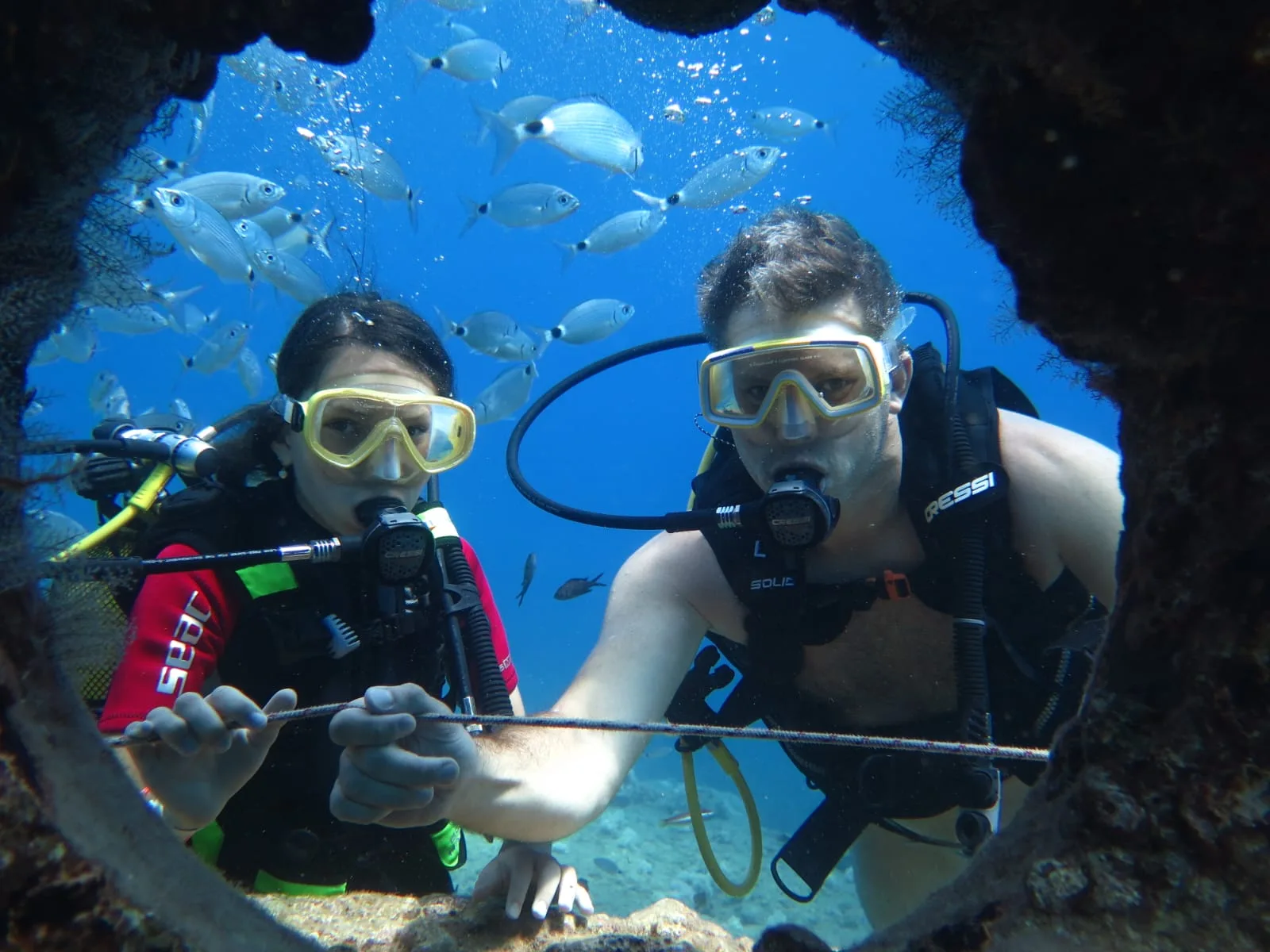
That is the honest version, and it is not a marketing softening. Scuba diving barely resembles swimming. You are held up by a vest, pushed along by fins, and breathing continuously through a regulator. The physical skills that make a fast swimmer - a strong arm stroke, breath-holding, head turns for air - are almost irrelevant underwater.
Why Diving Is Not Swimming
Three pieces of equipment do the work your swimming technique would otherwise do.
- The BCD, or buoyancy vest. Inflate it and you float on the surface without moving a muscle. This is the part beginners underestimate most: you cannot sink while it is inflated, and it stays with you from the moment you step off the boat.
- The wetsuit. Neoprene is buoyant. Wearing one, an average adult floats even with an empty vest - which is exactly why we add weights to let you descend at all.
- Fins. Slow, lazy leg kicks move you further than arms ever would. Arms are mostly along for the ride; good divers keep them still.
Add an instructor who takes only three or four divers and stays within arm's reach, and the swimming question largely dissolves. If you would like the full picture of a first dive, our first-time diving guide walks through the day step by step.
What We Actually Ask of You
Not much, and all of it honest:
- That you can be in water over your head without freezing up.
- That you can put your face in the water and breathe through the regulator without fighting it.
- That you tell us the truth about your water experience at booking. Nobody is judged, and nobody is turned away for admitting it - but an instructor who knows will plan differently, stay closer, and go slower.
- That you follow the briefing. Every trip starts with a full safety briefing in plain language, before anyone gets wet.
Guests who genuinely cannot swim at all still dive with us regularly, one-to-one with an instructor and a slower entry. We wrote about this in detail in can non-swimmers try scuba diving, because it is one of the most common questions we get and it deserves a real answer rather than a slogan.
Where Swimming Ability Does Start to Matter
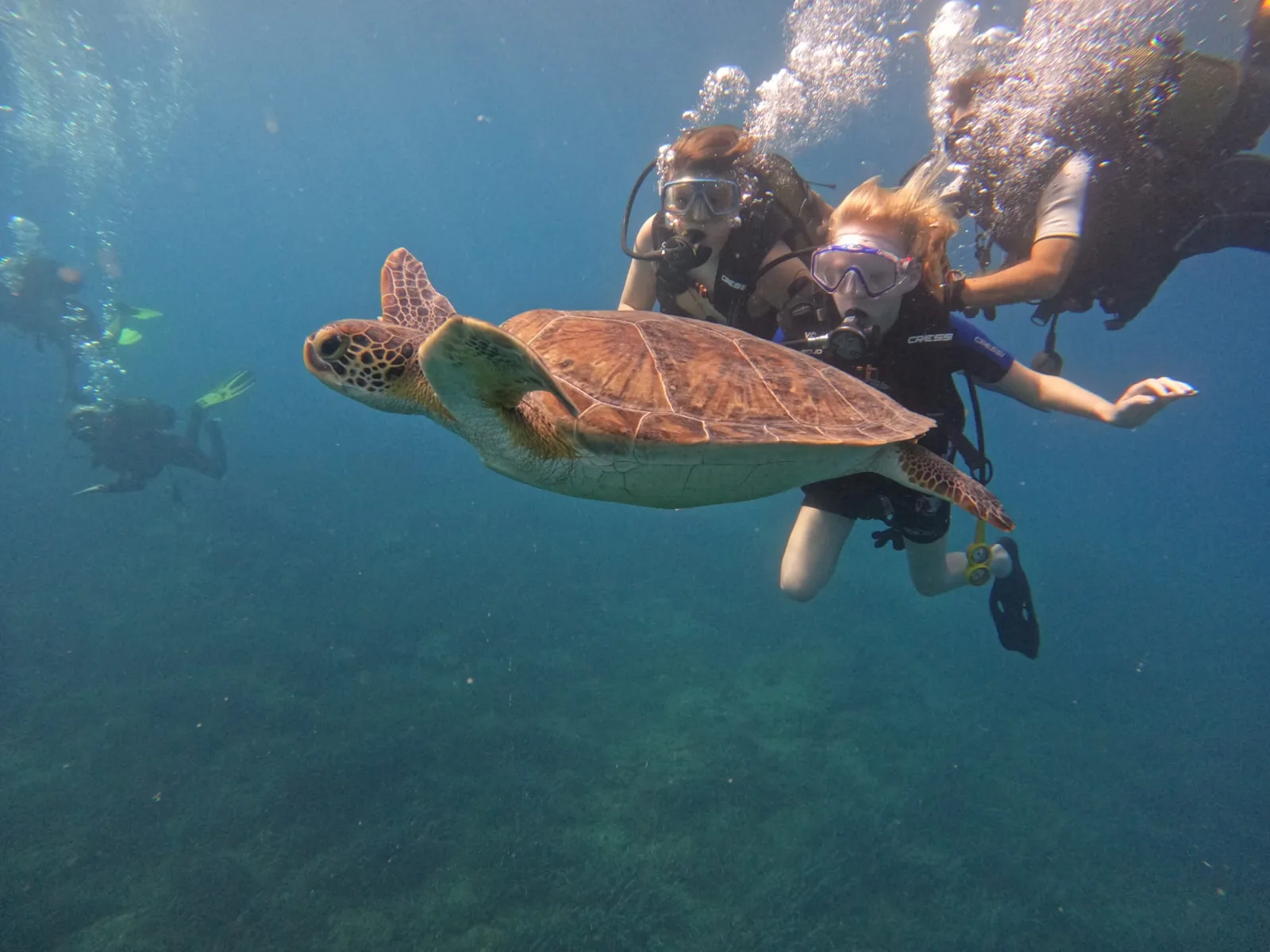
It matters more as you go further. On a discovery dive the instructor manages your buoyancy, your route and your depth. Beginners stay at 5-8 metres on the morning dive and go to about 13 metres maximum on the second dive, always accompanied.
Certified diver training is different. Recognised entry-level courses include a basic watermanship element - a swim and a float, with no time limit and no style requirement - because a certified diver is expected to be self-sufficient. Certified divers on our boats dive to around 30 metres on standard dives, and up to 60 metres on the deep sites when suitably qualified, which is a level of independence that assumes real comfort in open water. If a course interests you, ask us about CMAS and course options and we will explain what is involved.
Seasickness, Nerves and the Things Nobody Admits
In practice, swimming ability is rarely what troubles beginners. Nerves are. The two moments people find hardest are the first breath underwater, which feels wrong for about ten seconds and then feels natural, and the descent, where you need to equalise your ears gently and often. Both are covered in the briefing and both are done at your pace - there is no schedule pushing you down.
If the sea is choppy, tell the crew early. If your ears are blocked or you have a cold, tell us before the boat leaves; forcing an ear is never worth it. And if you decide at the ladder that today is not your day, you simply stay on board as a visitor at a reduced rate, with the same lunch and the same free hotel transfer. Nobody loses anything.
All the Gear, None of the Shopping
Every trip includes the full standard kit: tank, regulator, BCD, wetsuit, mask, fins and weights, plus two guided dives, free two-way hotel transfer, fresh lunch cooked on board, and passenger and diving insurance. Nothing to buy, nothing to rent on the side. Bring a swimsuit and a towel - our what to bring list covers the rest. A thermal inner suit (diving undergarment) or any extra neoprene layer is not included in the price and is available as an optional extra on request.
Try It Without Risk
Reserve free online, pay on the day in cash or by card, and cancel free of charge up to 24 hours before. Pickup is in the morning from your hotel, with the exact time confirmed the evening before. The sea here runs from about 17°C in winter to 28-29°C in late summer, with the clearest water generally in late spring, early summer and autumn.
If you are still unsure whether your swimming is enough, do not guess - write to us and describe honestly what you can and cannot do. Then pick a trip: the Kumkoy dive day at 43 EUR is a gentle, popular first choice, and the Side Underwater Museum at 45 EUR is the one people remember.