What Does a Regulator Do?
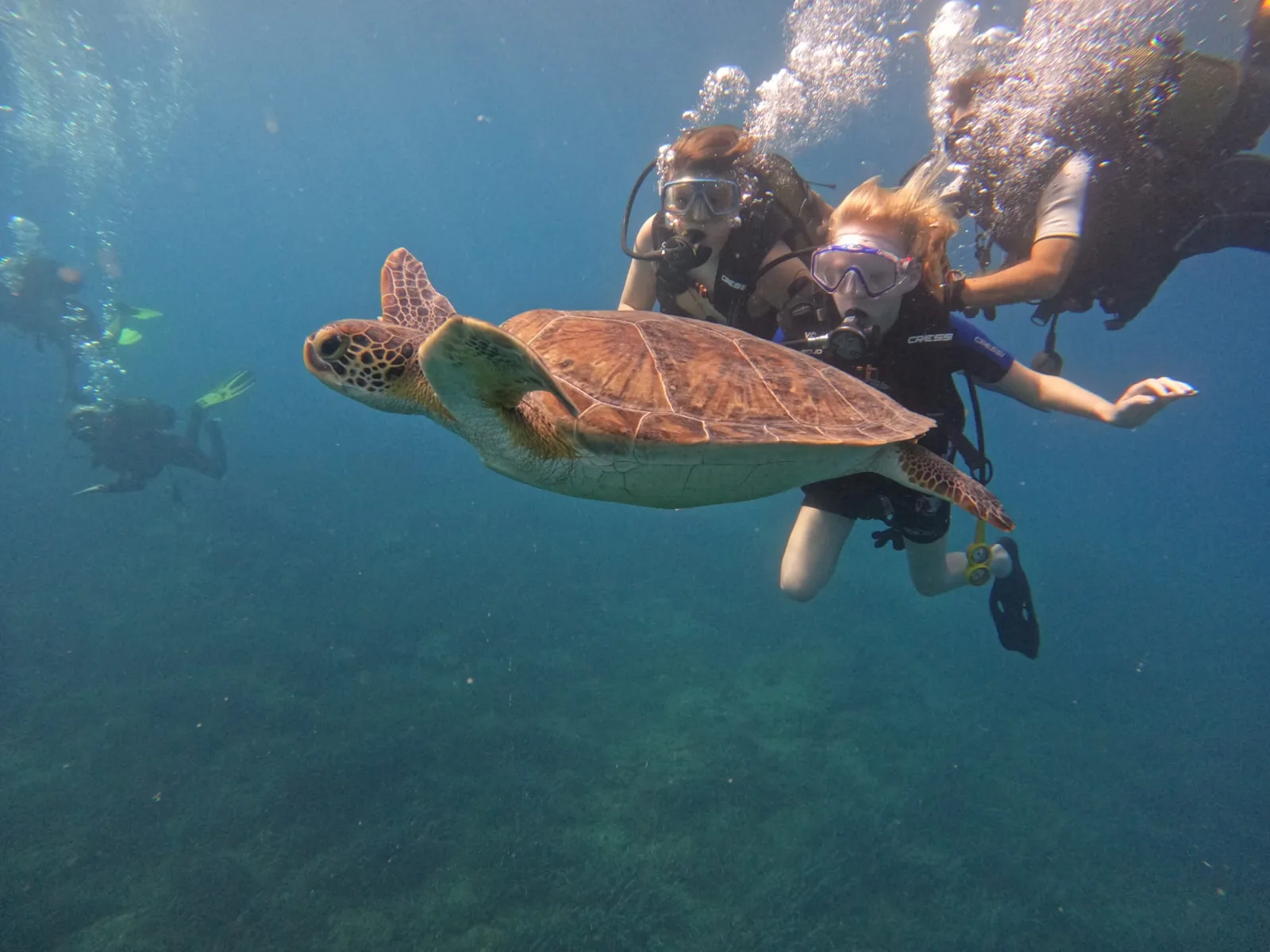
A scuba regulator takes the air stored in your tank at around 200 bar — pressure that would injure you instantly if you breathed it raw — and delivers it to your mouth at exactly the pressure of the water around you, on demand, one breath at a time. That is the whole trick. Because the air matches the surrounding pressure, your lungs work normally at five metres or thirty, and breathing underwater feels like breathing at the surface.
On every Side Diving trip the regulator is included, assembled and pressure-checked by your instructor before you put it in your mouth, and you get a full briefing on how to use it. You do not need to own one or know how it works to dive with us — but knowing takes most of the mystery out of your first breath. A thermal inner suit (diving undergarment) or any extra neoprene layer is not included in the price and is available as an optional extra on request.
Two Stages, Two Jobs
The first stage
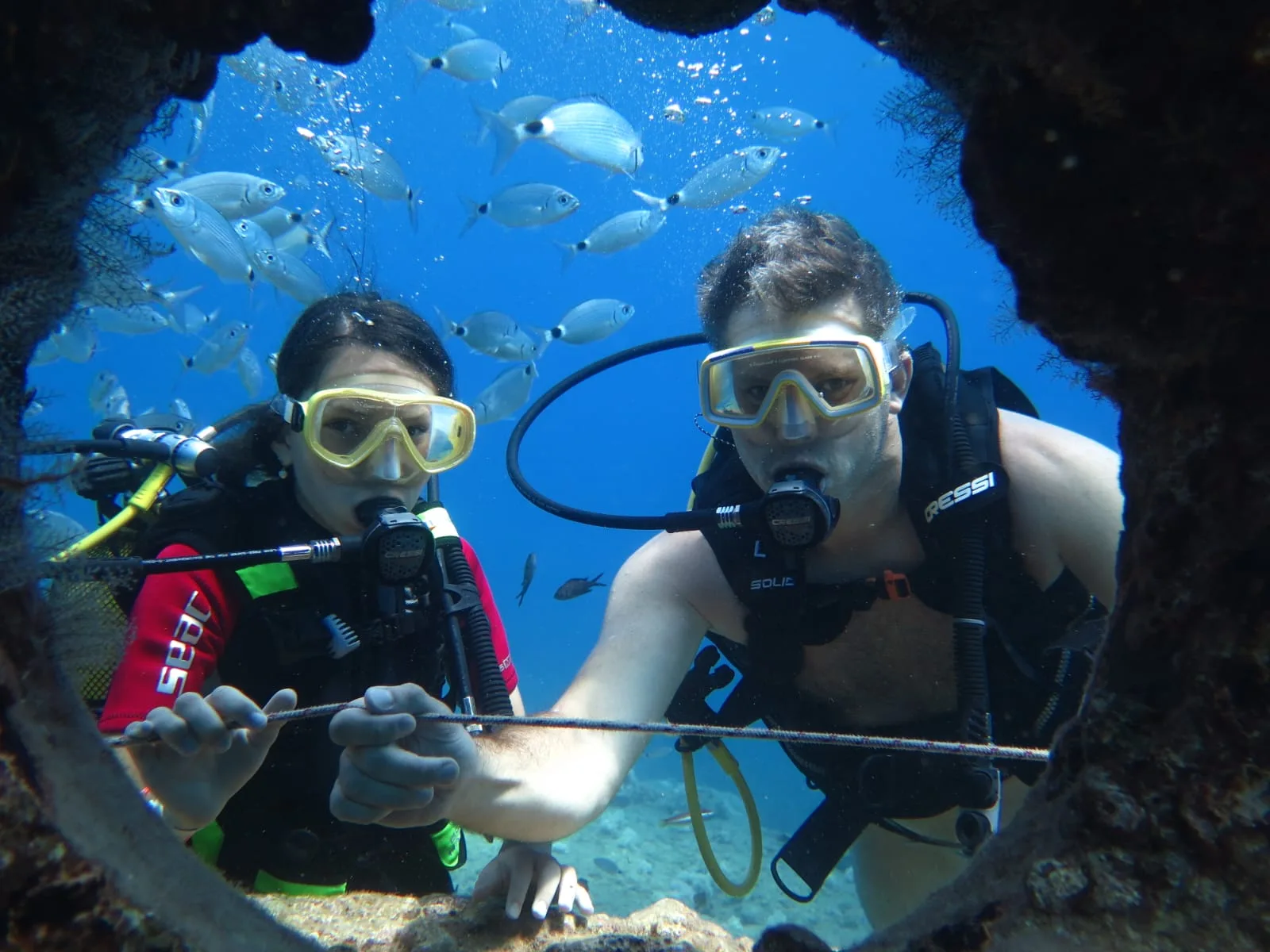
This is the chunk of metal that screws onto the tank valve. Its job is to drop roughly 200 bar down to a manageable intermediate pressure, and — crucially — to keep that pressure a fixed amount above the water pressure around you. As you descend and the sea presses harder, the first stage automatically pushes back harder. That is why you never feel the depth in your breathing. Hoses leave it in several directions: one to the second stage in your mouth, one to the spare, one to the pressure gauge, one to the inflator on your BCD.
The second stage
This is the part in your mouth, and it is beautifully simple. Inside is a rubber diaphragm. When you inhale, you lower the pressure behind that diaphragm, it flexes inward, and it opens a valve that lets air through — only while you are actually breathing in. Stop inhaling and it shuts. Exhale, and your breath leaves through a one-way rubber flap and becomes the stream of bubbles above your head. That is why a scuba set does not blow air constantly: it is a demand valve, and you are the demand.
The Octopus: Your Second Mouthpiece
Every set has a spare second stage, usually on a bright yellow hose, called the octopus or alternate air source. It exists for one reason: so that a diver who runs low on air can breathe from a buddy's set while both ascend calmly together. On a guided dive your instructor carries it clipped where you can reach it, and shows you in the briefing exactly where it hangs. You will almost certainly never need it — but knowing it is an arm's length away is a large part of why divers feel calm underwater. More at /diving/safety.
What Else Is on Those Hoses
- The pressure gauge, showing how much air is left in the tank, in bar. Your instructor checks it regularly and will signal you to check yours.
- The low-pressure inflator hose to the buoyancy jacket, so you can add air to the vest without ever using your mouth. We explain the jacket at /blog/what-does-a-bcd-do.
- The alternate second stage, the octopus described above.
Why It Feels Strange for About One Minute
Almost everyone's first breath through a regulator feels wrong, and it is worth knowing why before you are floating next to the boat wondering if something is broken.
The air is dry, because compressed air holds almost no moisture. It is also slightly cool. You are breathing through your mouth only, with a rubber mouthpiece between your teeth, which is not something adults ever do. There is a faint resistance at the start of each inhale — a fraction of a second before the valve opens — and your own bubbles are surprisingly loud on the exhale. Together these things make the brain say: this is not normal breathing.
Then, usually within a minute, it stops mattering. The jaw relaxes, the rhythm slows, and most divers find they are breathing more calmly underwater than they were on the boat. The trick is to make your exhales long and unhurried. Slow breathing out settles the nervous system, uses less air, and improves your buoyancy at the same time. If you feel any unease, hold your instructor's hand — that is normal, and with three to four divers per instructor there is always a hand available.
Skills You Will Be Shown in the Briefing
Two simple regulator skills are covered before any beginner enters the water: how to clear it, by breathing out gently into it or pressing the purge button, and how to find it again if it comes out of your mouth, by sweeping your right arm back along your thigh. Both take seconds to learn and both are practised in shallow water with the instructor holding you. First-timers can read the full sequence at /blog/first-time-scuba-diving-guide and /diving/discover-scuba-diving.
Servicing, and What Certified Divers Bring
Regulators are serviced on a schedule — the single most important thing about equipment you will breathe from. Ours are maintained as routine, and assembled and pressure-tested before every dive by the instructor who will be next to you. Certified divers are welcome to bring their own regulator if they prefer the familiar feel of it; most travelling divers bring a mask and a dive computer and use our regulators. That comparison is at /blog/can-i-rent-diving-equipment-side, and the full standard kit list at /diving/equipment.
Take Your First Breath in Side
The best place to discover that breathing underwater is easy is the Side Underwater Museum trip: around 110 sculptures at roughly twelve metres, 45 euro for seven hours with two guided dives, all standard equipment, free two-way hotel transfer, fresh lunch on board and insurance. Kumköy is 43 euro, Kemer 43 euro, Alanya 43 euro, Antalya 50 euro. Reserve free online and pay on the day, cash or card, free cancellation up to 24 hours before. Pickup is in the morning and we confirm the exact time the evening before. Book at /tours/side-underwater-museum-diving, or ask us anything at /contact.