What Does a BCD Do?
A BCD — buoyancy control device — is the inflatable jacket a diver wears over the wetsuit. It does three jobs at once: it carries the tank on your back, it floats you comfortably at the surface, and, by holding or releasing tiny amounts of air, it lets you hang motionless in mid-water instead of sinking to the bottom or drifting to the roof. It is the single piece of equipment that turns swimming into hovering.
On every Side Diving trip the BCD is included in the price, fitted to you on the boat before the first dive, and set by your instructor while you are learning. A beginner does not have to master buoyancy on day one. That is what the instructor is there for.
The Three Jobs of a BCD
1. It holds the tank
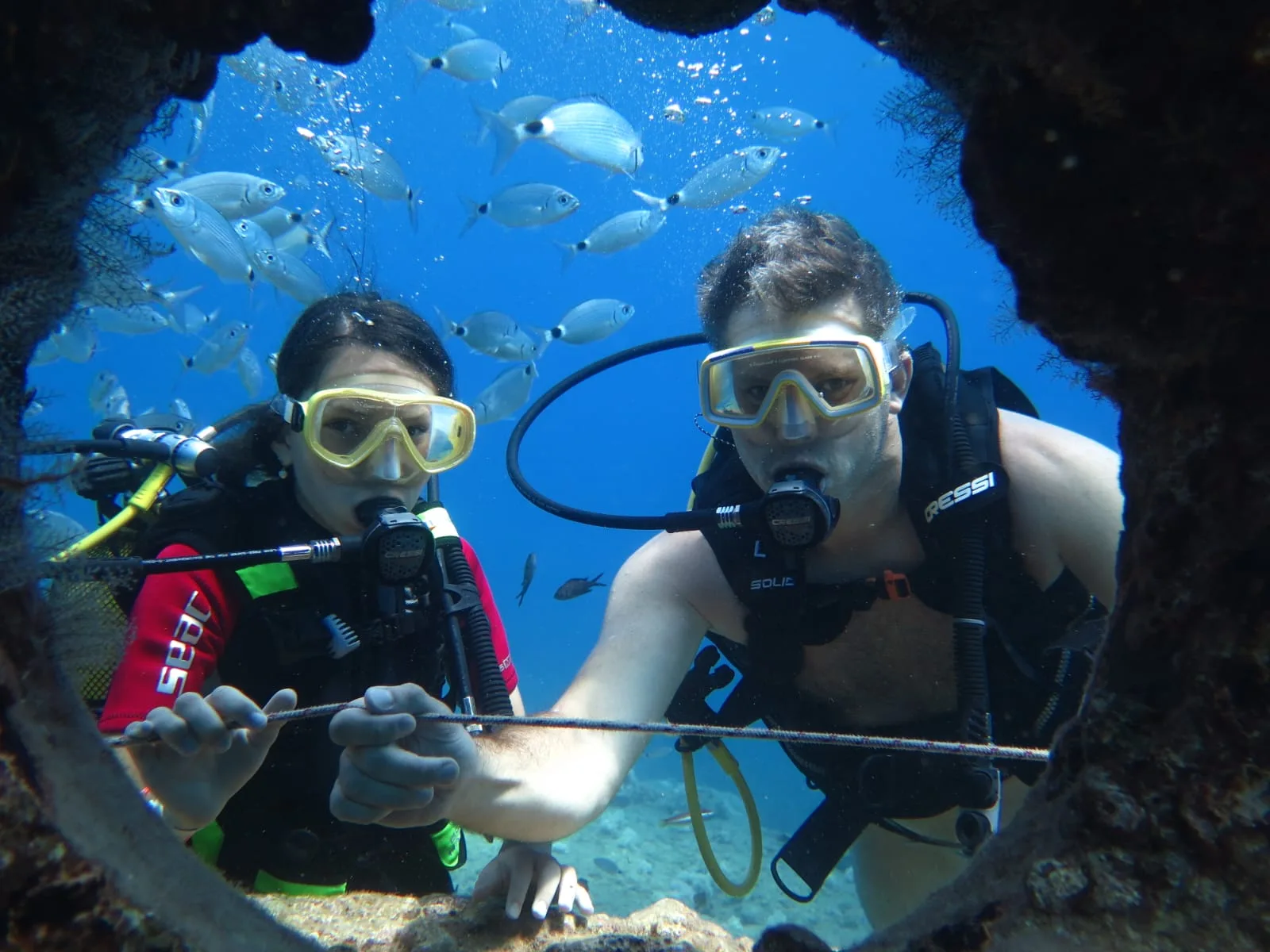
The tank sits in a band on the back of the jacket, so roughly fifteen kilos is spread across your shoulders and hips. On the boat it feels heavy; the moment you step into the water the weight all but disappears — the first pleasant surprise of every discovery dive.
2. It floats you at the surface
Before you descend and again when you come up, your instructor puts air into the jacket and you float upright, head well clear of the water, hands free, able to talk and rest. This is why non-swimmers can safely try a guided dive — you are never asked to tread water. More on that at /blog/can-non-swimmers-try-scuba-diving.
3. It gives you neutral buoyancy at depth
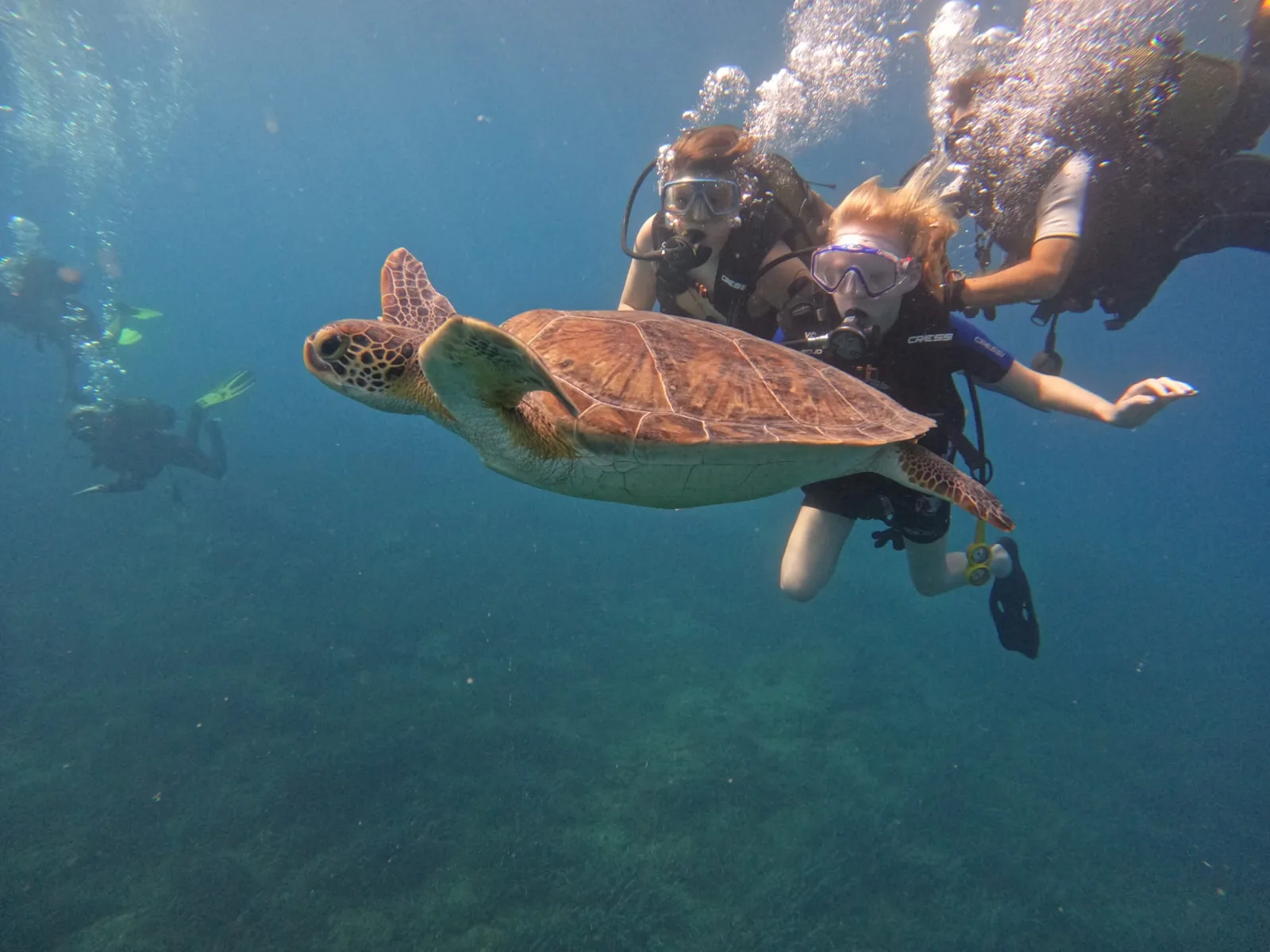
This is the clever part. A wetsuit compresses as you go deeper, so you lose buoyancy on the way down and gain it back on the way up. The BCD compensates. A short press on the inflator button adds a breath of air from the tank; lifting the shoulder valve lets a little out. Get it right and you hover, weightless, at whatever depth you choose — a metre above a sculpture at the Side Underwater Museum without touching it, or beside a rock while an octopus decides whether to stay out.
The Parts You Will Actually Touch
- The corrugated inflator hose on your left shoulder, with two buttons: one adds air from the tank, one dumps it.
- The dump valves — usually one on the right shoulder and one at the lower back, pulled by a cord, used to release air quickly.
- Waist buckle, shoulder straps and chest strap, adjusted so the jacket sits snug but never squeezes your chest. You must be able to take a full, deep breath.
The rest — the hoses, the pressure gauge, the alternate second stage — belongs to the regulator, which we explain separately at /blog/what-does-a-regulator-do.
How Your Instructor Sets It for a Beginner
On a guided dive the instructor assembles the equipment, checks your straps, and controls your buoyancy for you at the start. You will be given a small amount of weight on a belt, the jacket will be emptied for you as you begin the descent, and the instructor stays within arm's reach for the whole dive — our ratio is three to four divers per instructor, which is what makes that possible.
The morning dive for a beginner stays at five to eight metres, and the second dive of the day goes to around thirteen metres maximum. At those depths buoyancy changes are gentle and easy to correct. Certified divers work with much more of the range themselves: standard certified dives run to around thirty metres, and the deep sites go to sixty metres for suitably qualified divers — the Paris II wreck sits at twenty-one to thirty-one metres and the DO-28 aircraft at roughly nineteen and a half to twenty-three metres. Those are certified dives, never a first-time try dive.
Why Beginners Do Not Touch the Dump Valve at First
Dumping air is the fastest way to change your depth, and on a first dive a diver who is nervous tends to pull the cord and keep pulling. That sends you down faster than your ears want to equalise. So the rule on a discovery dive is simple: hands on the front of your jacket, breathe, and let the instructor handle the air. As the dive settles and your breathing slows, most people are shown the inflator button and start making small corrections themselves — usually by the second half of the second dive.
There is a second reason: your lungs are already a buoyancy device. A long inhale lifts you slightly, a full exhale lowers you. Divers who learn to trust their breathing first end up with far better control than those who chase every change with the valve. If your ears are the part that worries you, read /blog/how-to-equalize-ears-diving before you come.
You Do Not Need to Own One
Every trip we run includes the full set: BCD, tank, regulator, wetsuit, mask, fins and weights, plus free two-way hotel transfer, fresh lunch on board, passenger and diving insurance and a full safety briefing. Jackets come in a wide range of sizes and fitting happens before the briefing, so there is time to swap. Certified divers who prefer their own are welcome to bring it — see /blog/can-i-rent-diving-equipment-side.
You can see the whole kit list at /diving/equipment, and how a first dive is structured at /diving/discover-scuba-diving.
Try It on the Sculptures
The best place to feel what a BCD really does is the Side Underwater Museum, where around a hundred and ten sculptures stand at roughly twelve metres. That trip is 45 euro for seven hours including everything above. Kumkoy is 43 euro, Kemer 43 euro, Alanya 43 euro and Antalya 50 euro. Reserve free online and pay on the day, cash or card, with free cancellation up to twenty-four hours before. Pickup is in the morning and the exact time is confirmed the evening before. Book at /tours/side-underwater-museum-diving or ask us anything first at /contact.