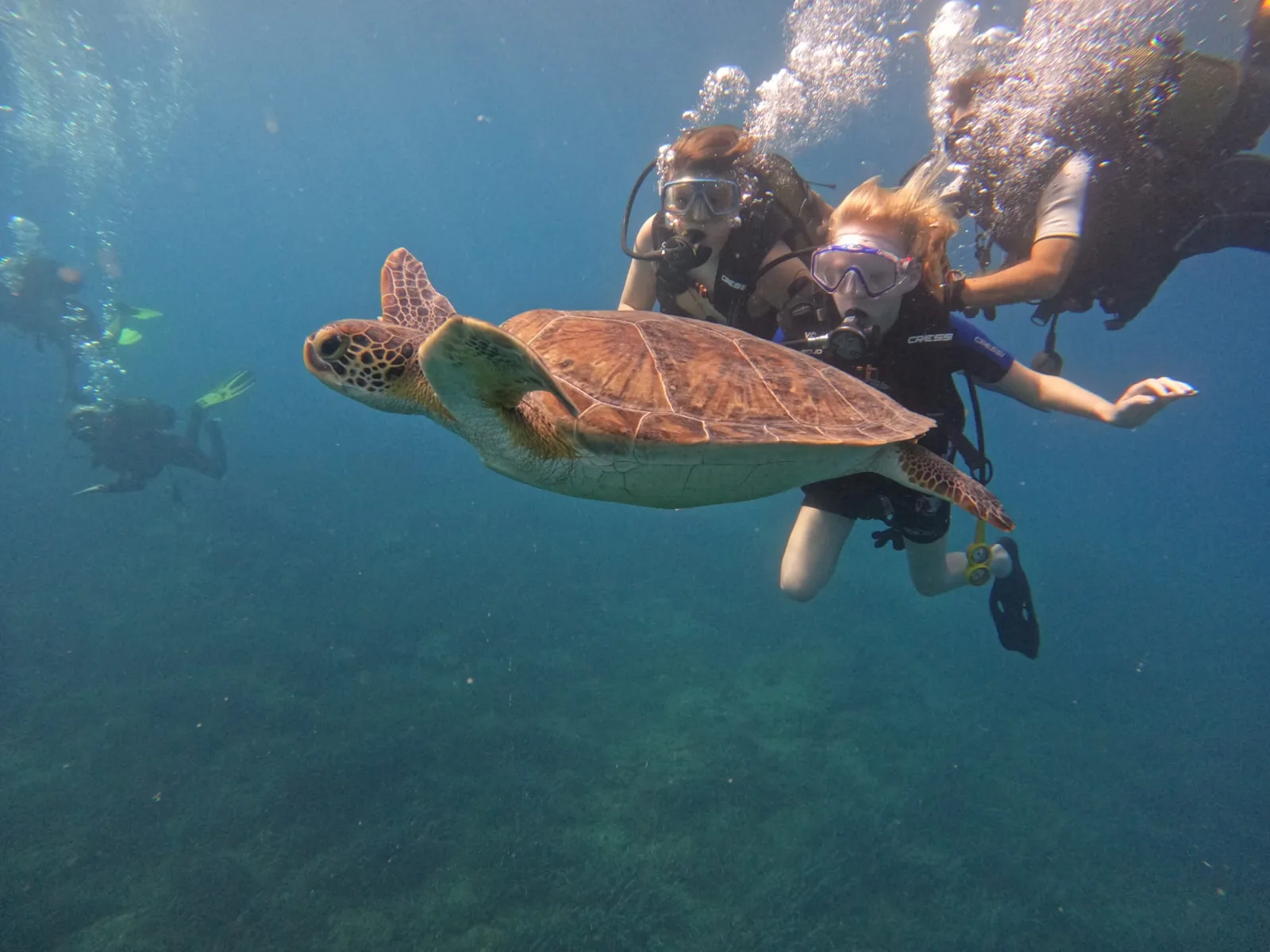
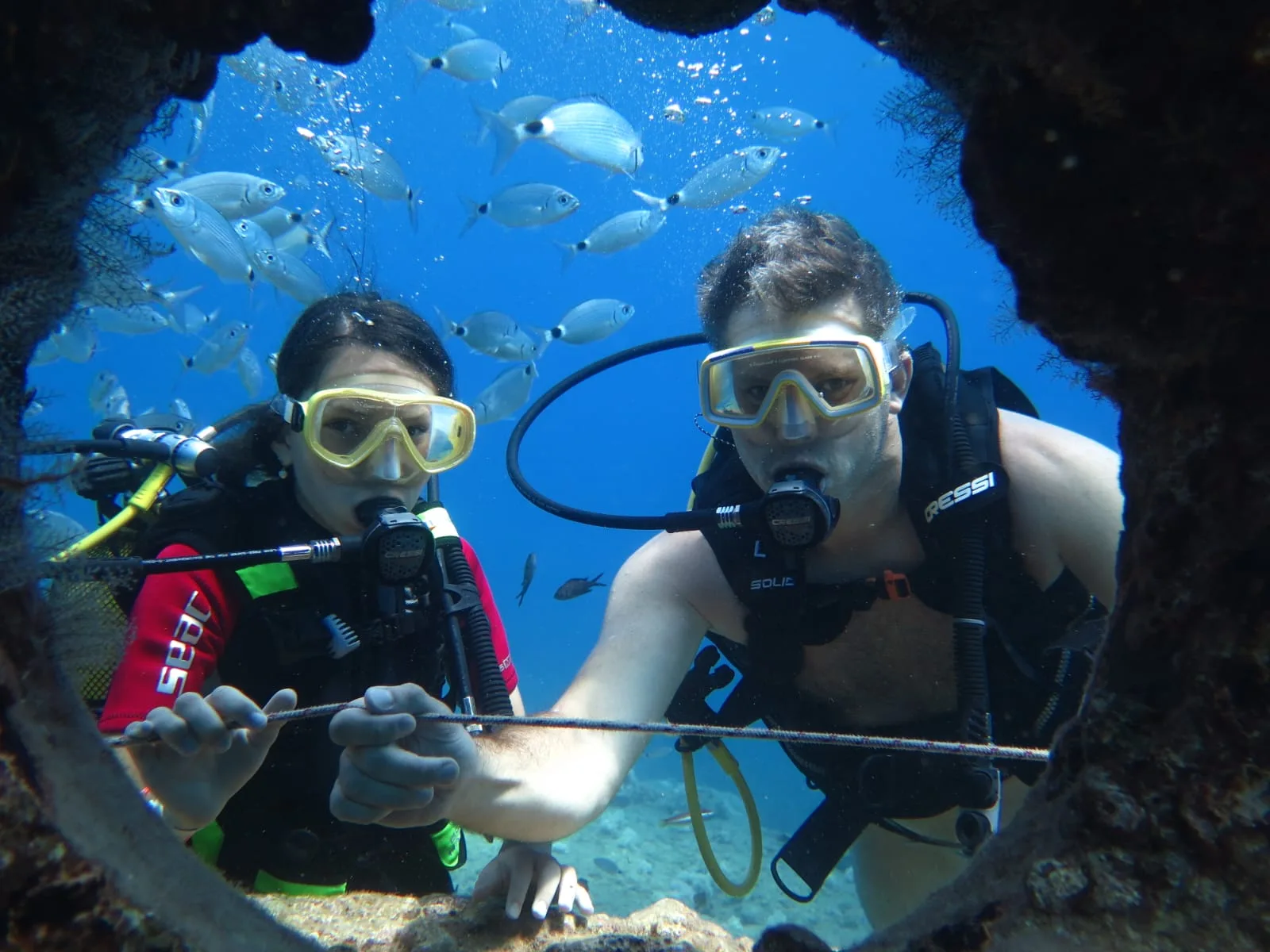
There is a small ritual at the end of every good dive day. The boat is heading back, your hair is still wet, and someone hands a little booklet to the instructor, who writes a few lines, signs, and presses a stamp onto the page. That booklet is a dive logbook — and that stamp is one of diving's most quietly satisfying pleasures. Here is what it all means, how it works on our boats, and how a first-timer's single page can grow into a certified diver's history.
What a logbook actually is
A logbook is simply a personal record of your dives. A typical entry holds the date and location, the maximum depth, how long you were underwater, what equipment and weights you used, the conditions, and what you saw. Then comes the part that gives it weight: the signature and stamp of the dive professional or buddy who was there with you. Some divers keep classic paper booklets, others use apps — many happily keep both, because a phone backup is practical but a rubber stamp on paper is a small ceremony no app has managed to replace.
Why divers collect stamps
Three reasons, in rising order of importance:
- Proof of experience. Dive centres around the world may ask to see your recent dives before taking you on more advanced trips, and training courses build on documented experience. A signed logbook is the diver's CV.
- Practical memory. Which wetsuit thickness? How much lead? Your own past entries answer the questions every diver forgets the answers to.
- The story. Years later, a logbook reads like a passport of your underwater life — every stamp a place, a boat, a day. Divers who have logged hundreds of dives still remember their first page.
How signing and stamping works on our boats
If you are a certified diver joining any of our daily dive trips, bring your logbook — paper or app. After the day's two dives, your instructor confirms the details with you, signs your entries and stamps them. A day with us gives you two entries to log, with lunch on board in between: beginners log a first dive at 5–8 metres and a second at about 13 metres, while certified divers log the real profiles — around 30 metres on standard certified dives, and down to 60 metres on the deep sites for suitably qualified divers.
And if you are a complete beginner? Your try-dive is absolutely worth recording. Ask your instructor after the second dive — the details of your first breaths underwater deserve a page of their own, signed by the person who guided them. Many divers with thick logbooks today can point to exactly that kind of first entry, made on a holiday very much like yours. Our beginner diving page explains how a no-licence day works from start to finish.
What to write in your first entries
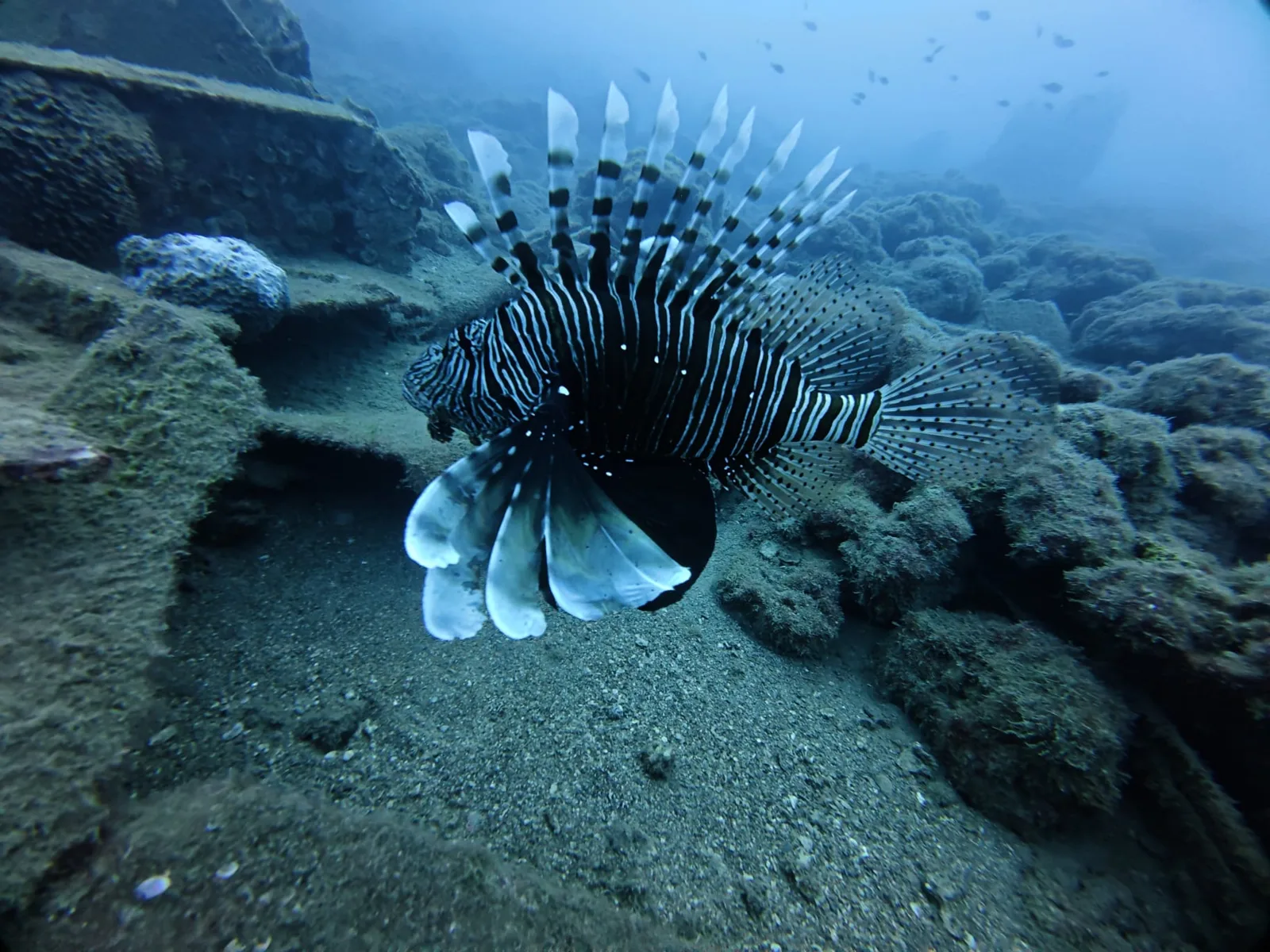
Write more than the numbers. Depth and time matter, but the entries you will love re-reading are the ones with detail: the fish that followed the group, the moment your breathing went calm, the name of the boat, who you dived with. Add the practical notes too — suit thickness, weight used, how cold or comfortable you felt — because they quietly make your next dive better.
From first stamp to certification
For some people, one stamp is a perfect souvenir. For others, it is the beginning of an itch. If the second group sounds like you, the structured path is a certification course: theory, skills practice and training dives that end with a card recognised worldwide — and a logbook that starts filling up fast. We offer CMAS courses on request — message us and we will explain the steps honestly, with no pressure. You can read about the wider journey on our open water diving page, and about where the road leads on the advanced diving side.
Start your first page this week
Every logbook in the world began with a page one. Ours get signed on boats leaving Side, Kumköy, Kemer, Antalya and Alanya — full-day trips with two guided dives, all equipment, hotel transfer, lunch and insurance included, from €43. Reserve free online, pay on the day, cancel free up to 24 hours before. The flagship Underwater Museum trip makes a particularly memorable first entry: not many logbooks open with a dive among sunken sculptures.