If you have never breathed underwater before, asking this question is exactly the right instinct. Here is our honest answer as a dive centre: a properly organised beginner try-dive is one of the most controlled ways there is to enter the sea — and at the same time, no honest instructor will ever tell you diving carries zero risk. The difference between a safe day and a bad one is almost never luck. It is structure: who is next to you, how deep you go, what you were told before the water, and what happens if something feels wrong. Let us walk through each of those.
Small groups: why the instructor ratio matters
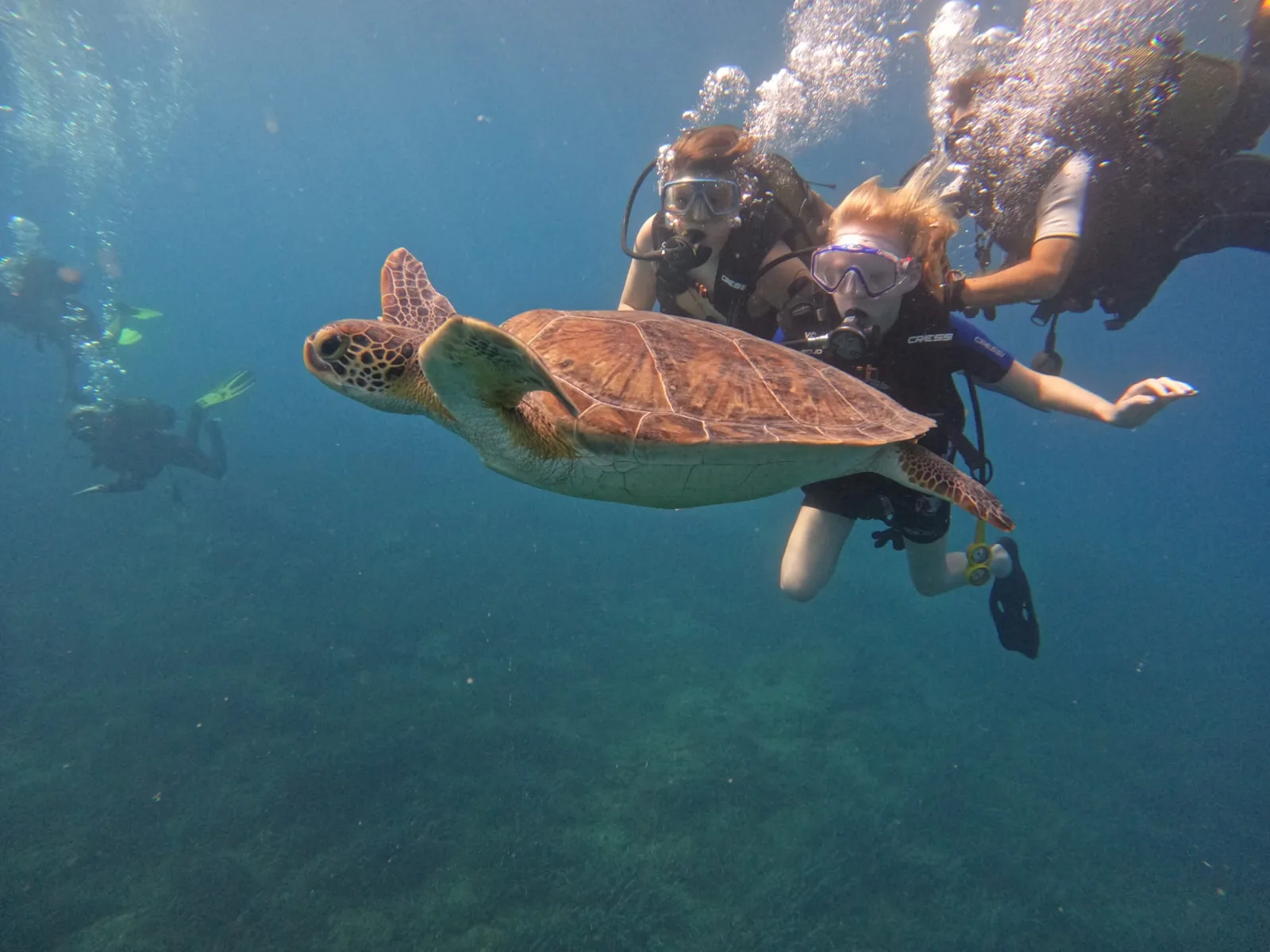
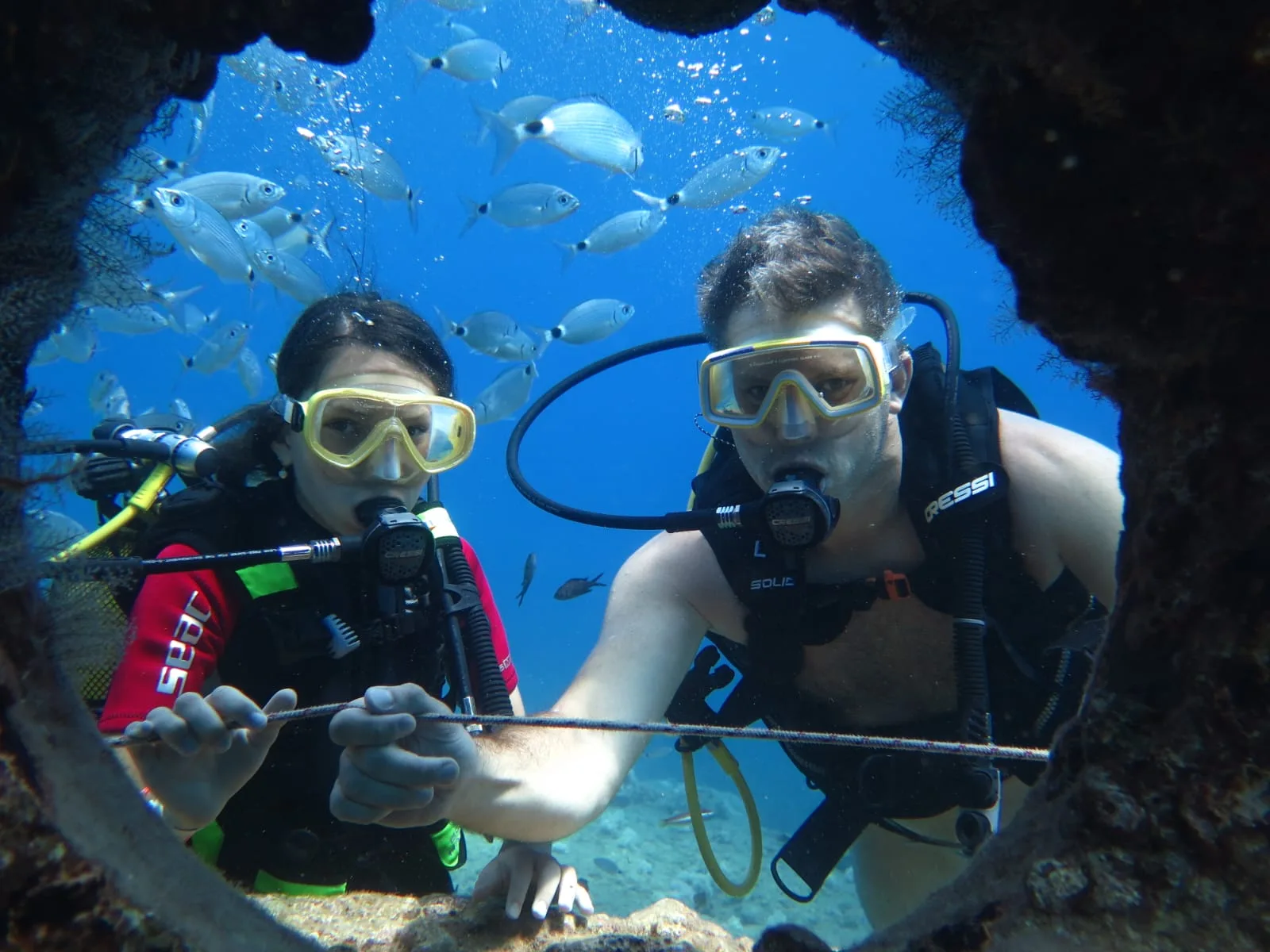
The single biggest safety factor for a first dive is how many beginners one instructor is watching. On our flagship Underwater Museum trip we keep it to a maximum of 3–4 divers per instructor, and small guided groups are the standard across all five of our boat trips. At that ratio your instructor is close enough to check your eyes, your breathing rhythm and your buoyancy continuously — not scanning a crowd. Our Kemer trips, for example, run with PADI-certified instructors, and every guide on our boats leads beginners daily through the season. You are never sent down alone, and you are never expected to manage anything yourself on a first dive: the instructor controls the descent, the depth and the pace.
Depth limits that are deliberately conservative
Every full-day trip includes two guided dives, and the structure is intentional. The morning dive stays at 5–8 metres for roughly 15–25 minutes — shallow enough that your body and your nerves can adjust, deep enough to genuinely dive. Only in the afternoon, once you have proven to yourself that breathing underwater works, do we go to about 13 metres — the ceiling for a beginner, and always right beside your instructor. This is the depth band where beginner diving has an excellent safety record worldwide: no decompression stops are ever needed, the surface is seconds away, and pressure changes are gentle enough to equalise comfortably. Certified divers sail on the same boats and dive the real profiles instead: around 30 metres on a standard certified dive, and down to 60 metres on the deep sites for suitably qualified divers.
The briefing: the part you should actually listen to
Before anyone enters the water, you get a full briefing: how the regulator works, how to clear your mask, how to equalise your ears, and the small set of hand signals you will use to talk to your instructor. None of it is complicated — the skills for a 5–8 metre guided dive are genuinely learnable in one session — but the briefing is where safety is built. If anything is unclear, ask twice. We would far rather repeat something on deck than explain it underwater. You can read more about what is covered in our guide to the dive briefing at /blog/dive-briefing-explained.
Equipment and insurance are included — and that matters
All equipment, including a wetsuit, is provided on every trip, checked and assembled by the crew. You do not need to buy or rent anything, and you do not need to guess whether your gear is right — the people who maintain it are the people diving with you. Every guest is also covered by passenger and diving insurance, included in the price. You can compare what each trip includes on our /prices page.
Who should not dive — the honest part
Diving is not for every body, and pretending otherwise is where real risk starts. We do not take divers who are:
- pregnant,
- living with severe asthma,
- living with heart conditions,
- living with serious respiratory conditions.
If you are unsure where you fall, the answer is never guesswork: consult your doctor and go through the standard diving medical form together. We are dive professionals, not physicians, and we will never diagnose you at the boat. We have written an honest, detailed guide on this at /blog/diving-with-medical-conditions. One more hard rule that applies to everyone: no flying within 24 hours after diving — plan your dive day accordingly.
What you can do to make a safe day safer
- Sleep properly the night before and go easy on alcohol.
- Answer the medical form honestly — it protects you, not us.
- Signal early. Ear discomfort, mask trouble, nerves — your instructor can fix all of it, but only if you tell them.
- Do not book a flight for the next morning.
The bottom line
Is scuba diving in Side safe for beginners? With small groups, conservative depths, a real briefing, maintained equipment and included insurance — yes, it is about as controlled as a first adventure in the sea can be. It is not risk-free, and anyone who says otherwise is selling, not informing. If that honest version sounds right to you, browse our five boat trips at /tours, or start with the one most beginners choose: the Side Underwater Museum dive at /tours/side-underwater-museum-diving. Reserve free, pay on the day, and cancel free up to 24 hours — so booking costs you nothing while you decide.