The Difference in One Paragraph
A reef dive is the sea as it made itself: rock, sand, ledges, shoals of fish going about their day, and no particular place you are supposed to end up. The Side Underwater Museum is the opposite in origin but not in feeling: roughly 110 sculptures deliberately placed at about twelve metres, arranged so a diver can follow a route from one figure to the next. Both are underwater, both are beautiful, and they ask slightly different things of you.
If you only have one diving day on this holiday, the question is worth two minutes of thought, because the answer is not the same for everyone.
What a Reef Dive Gives You
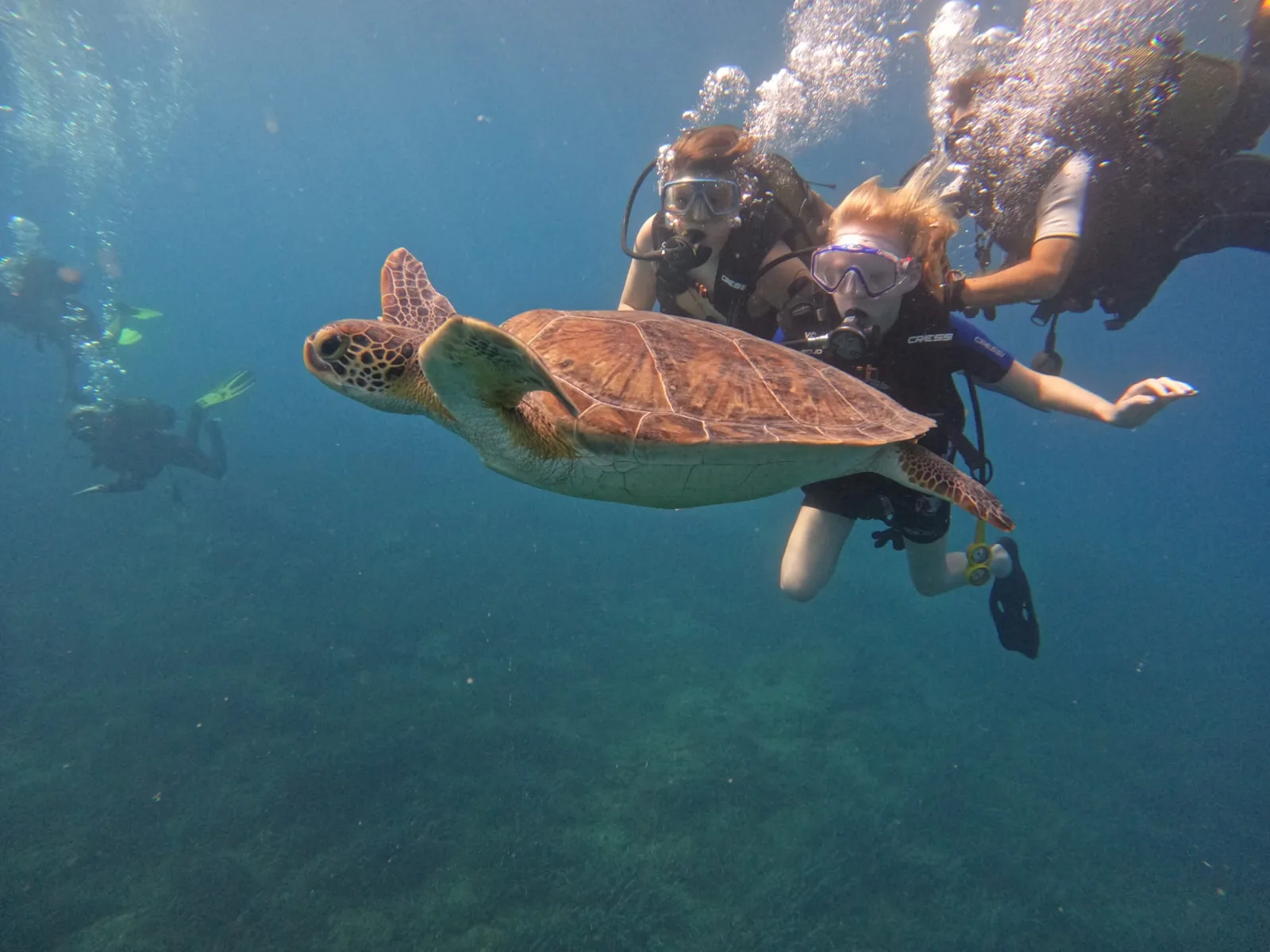
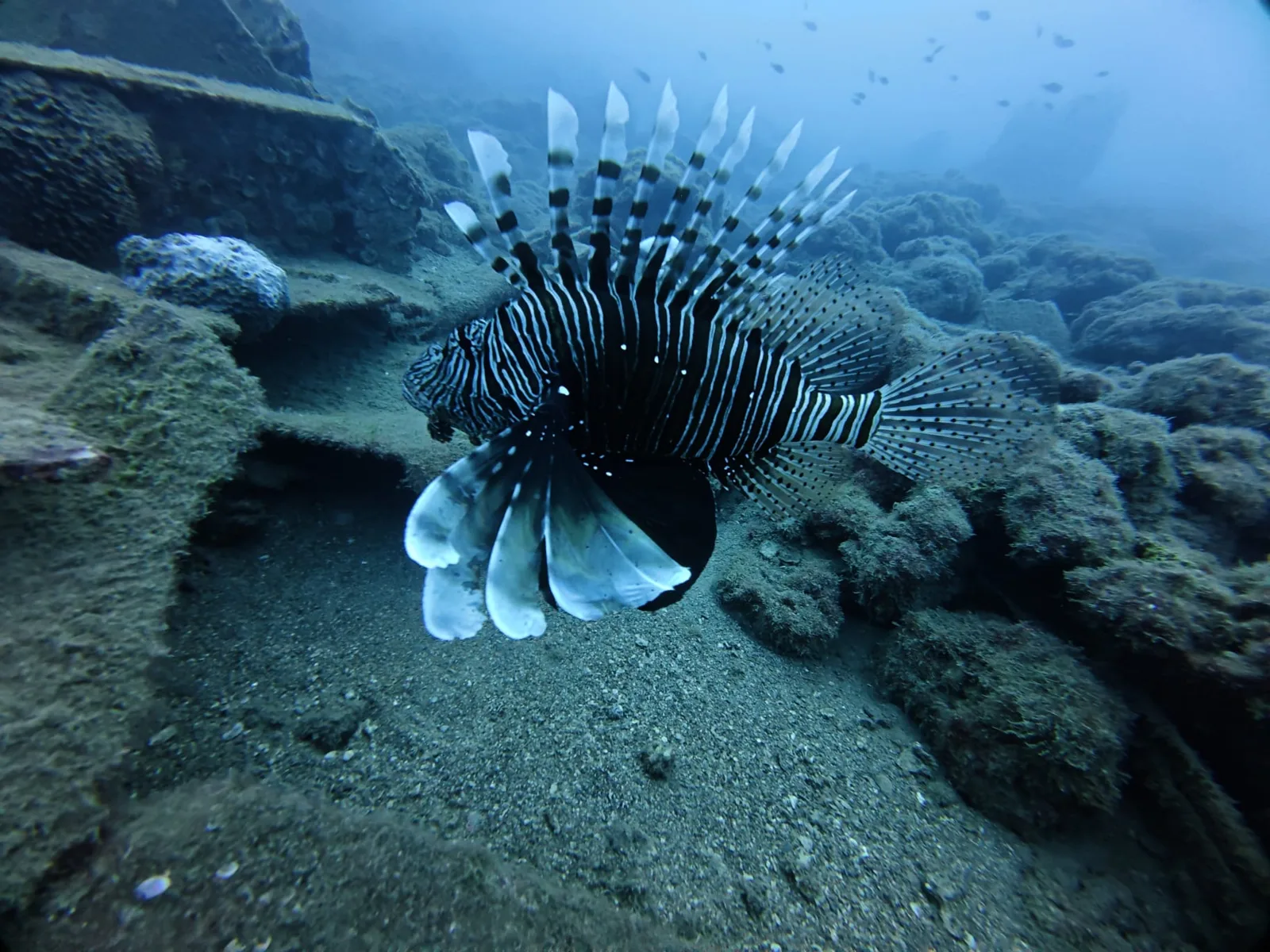
Natural sites reward patience. Our Kumköy trip, the Antalya day with its reefs, caves and shoals, the rocky reefs and caves near Cleopatra Beach on the Alanya trip and the walls and swim-throughs around Kemer are all natural terrain. Nothing is arranged for you, which is exactly the appeal.
- Life first: fish density and behaviour are the show, not a backdrop
- Terrain and light: overhangs, tunnels and cave mouths change the light constantly
- Different every time: the same site is never quite the same dive twice
- Less obvious to photograph: subjects move, and beginners often surface with pictures of blue
What the Museum Gives You
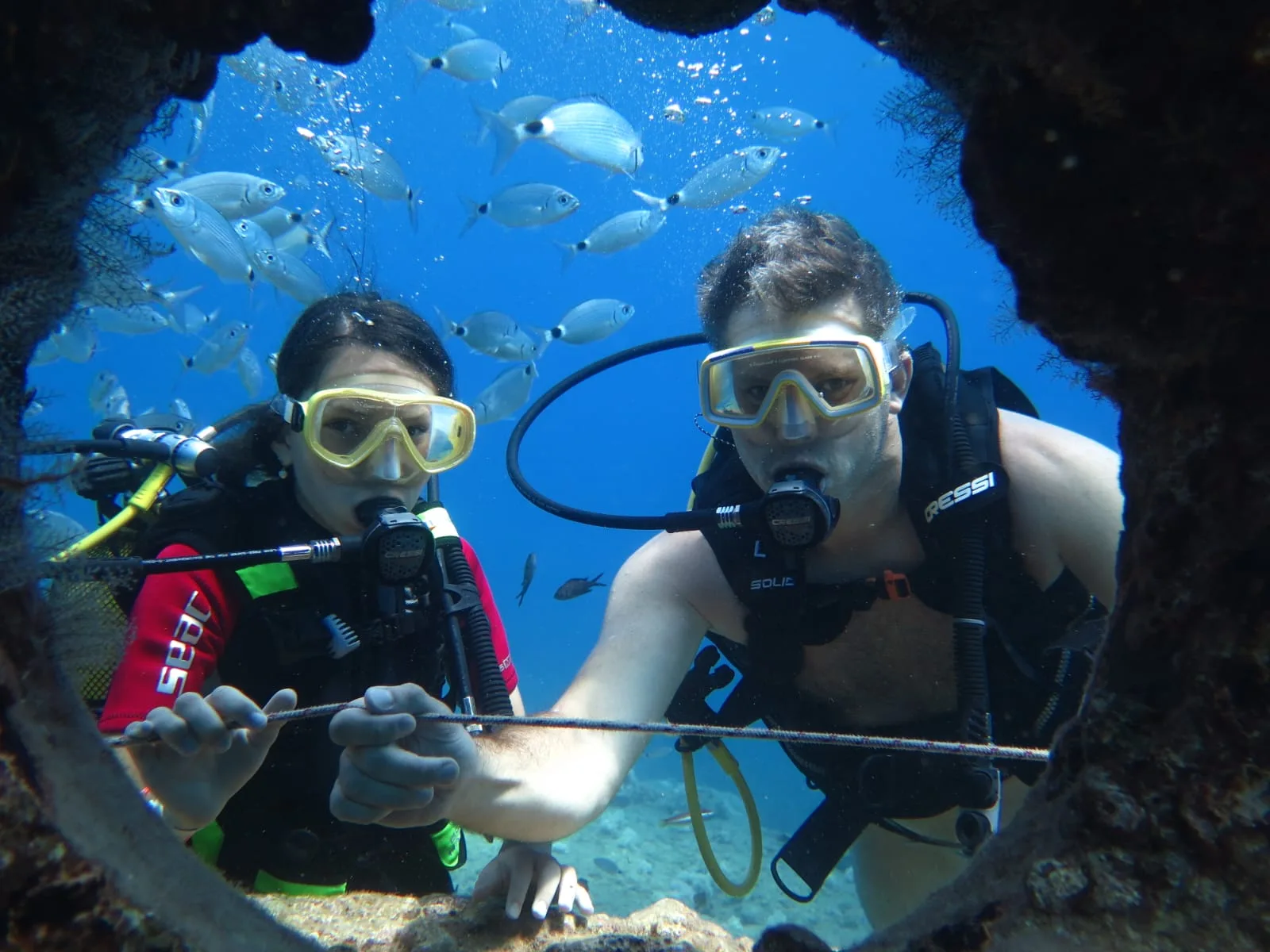
The museum is a different kind of dive, and for a first-timer it is often the easier one to enjoy. Sculptures do not swim away, they sit at a known depth, and they give your brain something to navigate by while you are still learning to breathe slowly and stay level.
- Something always in view: a route through around 110 figures rather than open water
- A comfortable depth: about 12 metres, shallow enough for daylight and colour
- Fish anyway: the statues have become an artificial reef, and hand-feeding is part of the day
- Small groups: three to four divers per instructor, which keeps a first dive calm
- Photos that work: a still subject is a beginner photographer's best friend
The Part Most People Miss: You Get Both
Here is the honest and slightly unromantic truth about the Side Underwater Museum trip. It is a full day of two guided dives, not one. The morning dive is the gentle one, at five to eight metres for fifteen to twenty-five minutes, over natural ground where you settle your breathing, sort out your ears and get used to the gear. The afternoon dive is the deeper one, at twelve to thirteen metres, and that is when you meet the sculptures.
So the flagship day is not a choice between reef and museum. It is a shallow natural dive first and the museum second, in the order a new diver would want them. Every one of our five trips follows that same two-dive shape, which is why nobody has to gamble their whole day on a single site.
Which Should You Book First?
- Never dived before: the museum day. The structure helps, the depth is friendly and the second dive is genuinely memorable
- Already have a few dives: a natural site suits you, and Kemer offers the clearest water on this coast while Antalya adds caves and shoals
- Travelling with a nervous partner: the museum, because there is always something in front of them
- Underwater photography: museum for a guaranteed subject, reef for atmosphere
- Two diving days: museum first, natural site second, and enjoy how differently they read
What You Should Not Expect
We will not promise you specific animals on either kind of dive, because nobody honestly can. The wrecks people ask about, the Paris II at 21 to 31 metres and the DO-28 aircraft at 19.5 to 23.3 metres, are dives for certified divers only and never for a discovery diver: certified guests here dive around 30 metres as standard and down to 60 metres on the deep sites when their qualification allows, with the exact site depending on level, conditions and the day's plan. Visibility is usually at its best in late spring, early summer and autumn, and the sea runs from about 17 degrees in winter to around 28 or 29 degrees in late summer, but conditions on the day are the sea's decision, not ours.
Practicalities
Every trip includes two guided dives, all equipment, free two-way hotel transfer, a fresh lunch cooked on board, passenger and diving insurance and a full briefing. Beginners need no licence, logbooks are signed and CMAS courses can be arranged on request. Try-dives are possible from around age ten. Non-divers and snorkelers can join as boat visitors at a reduced rate. Do not dive if you are pregnant or have severe asthma, heart or respiratory conditions, and do not fly within 24 hours after diving.
Compare all five days on the tours page, check what we run from your resort on the diving from your hotel page, and reserve free online with payment on the day and free cancellation up to 24 hours before. If you want a straight recommendation for your level, just ask us.