It is one of the most common questions we hear before a dive trip — and one of the least honestly answered on the internet: will I get seasick on the boat? Here is the truthful version, from a crew that spends six to eight hours a day on the water off Side.
The honest answer first
Most guests are completely fine. Summer mornings on this stretch of the Mediterranean are usually calm, the boat works close to the coast, and a large part of the day is spent lying at anchor at the dive sites — not pushing through waves. Seasickness is real, and pretending otherwise would be silly, but on a typical summer dive day out of Side it is the exception, not the rule.
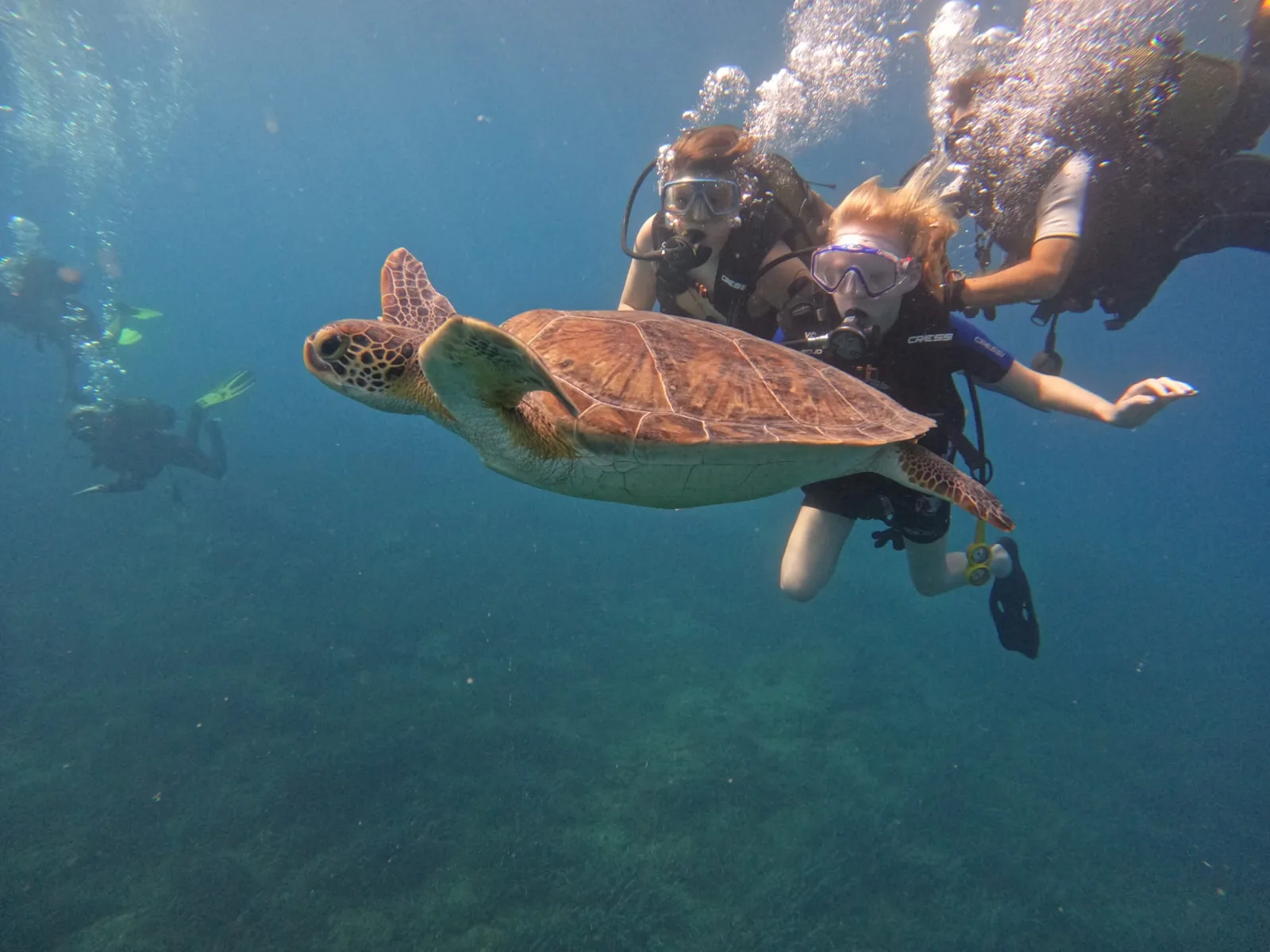
And here is the part few first-timers know: seasickness lives at the surface. The rolling motion that confuses your inner ear happens on deck. Once you descend — even to the 5–8 metres of a first dive — that motion largely disappears, and with it, usually, the queasiness. More than one green-faced guest has come up from a dive grinning and hungry.
How much boat time are we talking about?
Our full-day trips run six to eight hours door to door, including the free hotel transfer both ways:
- Kumköy — about 6 hours, the shortest day on the water;
- Side Underwater Museum — about 7 hours;
- Kemer, Antalya and Alanya — about 8 hours each.
Crucially, that is not six-to-eight hours of steaming. The day is broken up by two dives, swim breaks and a fresh lunch cooked on board, most of it while the boat sits at anchor. If you know you are sensitive, the shorter Kumköy day close to home is a sensible first choice — and you can compare all boat trips before deciding.
Why the morning departure helps
Pickup is in the morning, and we confirm your exact pickup time the evening before. That schedule is not just logistics: on the Turkish Mediterranean coast the wind typically builds through the afternoon, so the morning legs — when the boat does most of its travelling — tend to be the calmest water of the day. By the time an afternoon breeze picks up, you are usually anchored, fed, and getting ready for your second dive.
Remedies that actually work
- Eat a light breakfast. An empty stomach is just as treacherous as a greasy one. Toast, fruit, a little protein — then stop.
- Stay on deck and watch the horizon. Fresh air plus a stable visual reference is the oldest trick at sea, and it still beats most others.
- Put the phone away. Reading a screen while the boat moves is the fastest known route to nausea. The coastline is better content anyway.
- Sit midship. The middle of the boat moves least; the bow bounces most.
- Ginger and water. Ginger sweets or tea genuinely help some people, and mild dehydration makes everything worse.
- Ask about tablets — before the trip, not on it. Standard motion-sickness tablets work well for many people, but some cause drowsiness, which matters when you are about to dive. Speak to your pharmacist or doctor beforehand and take them as directed. We are dive professionals, not doctors — when in doubt, consult your doctor and the standard diving medical form.
If it hits you anyway
Tell the crew. You will not be the first, nobody bats an eyelid, and there is always a calmer corner of the deck and a bottle of water for you. Fix your eyes on the coast, breathe slowly, and remember the strange but true cure: the dive itself. Under the surface there are no waves. And if you would rather skip the second dive and enjoy the deck instead, that is completely fine — nobody is ever pushed into the water.
Worried? Book without the gamble
Here is the good news for anyone on the fence: you reserve for free, pay on the day, and can cancel free of charge up to 24 hours before. If you wake up genuinely unwell, you have lost nothing. Curious what the diving part actually feels like? Read how deep a first dive really goes, or message us — we will honestly tell you which trip suits a nervous stomach best, sea conditions included.