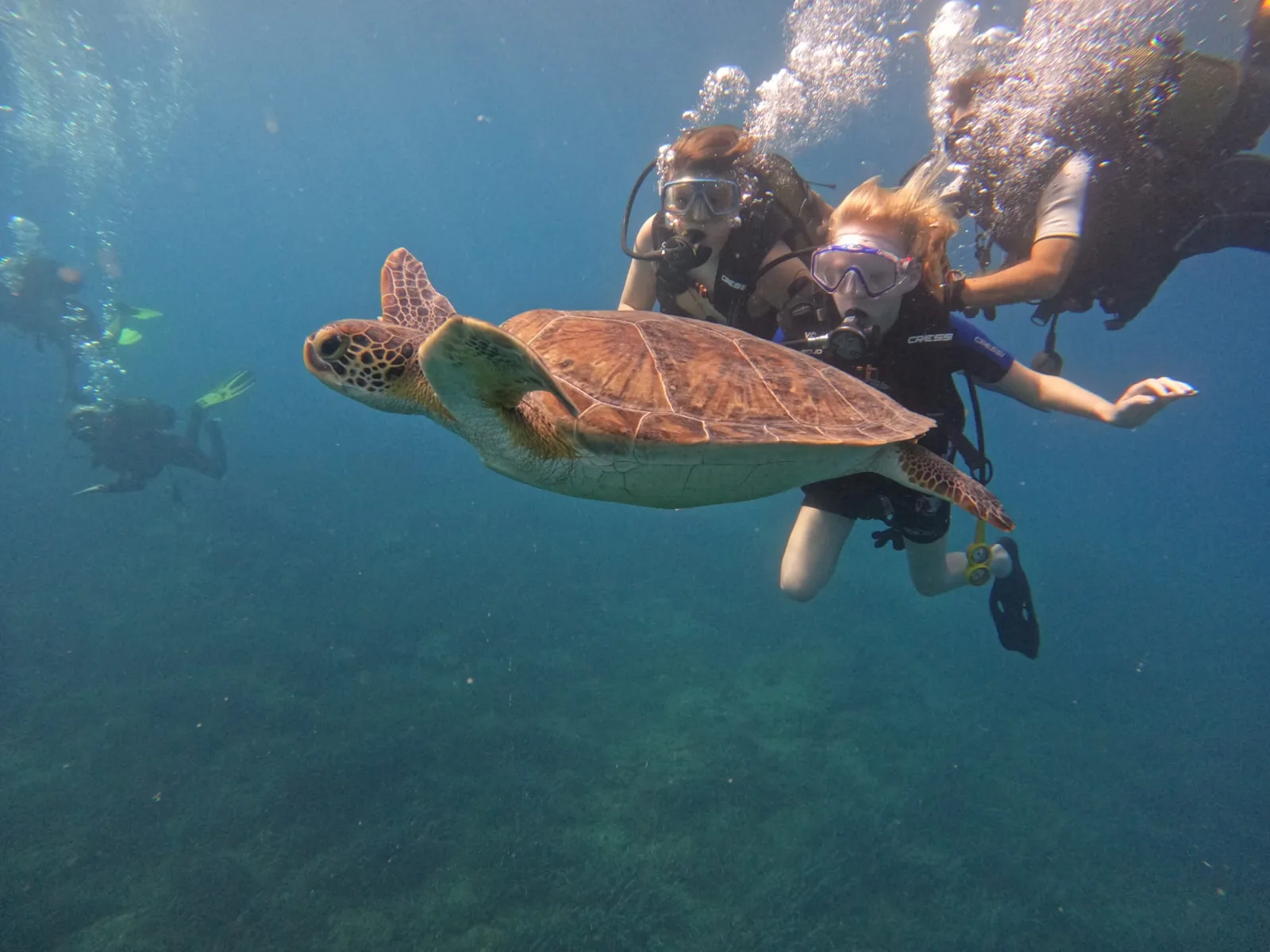
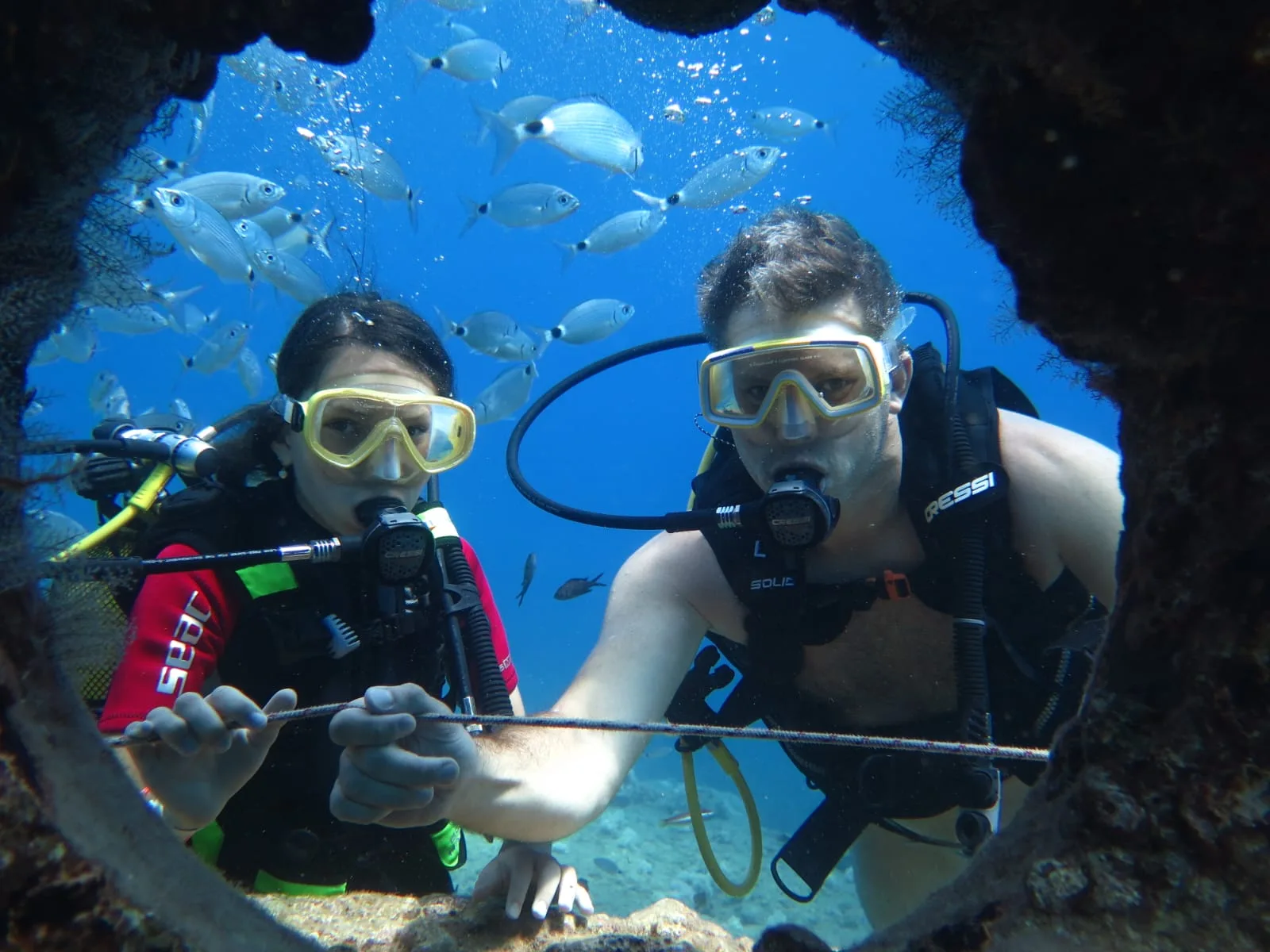
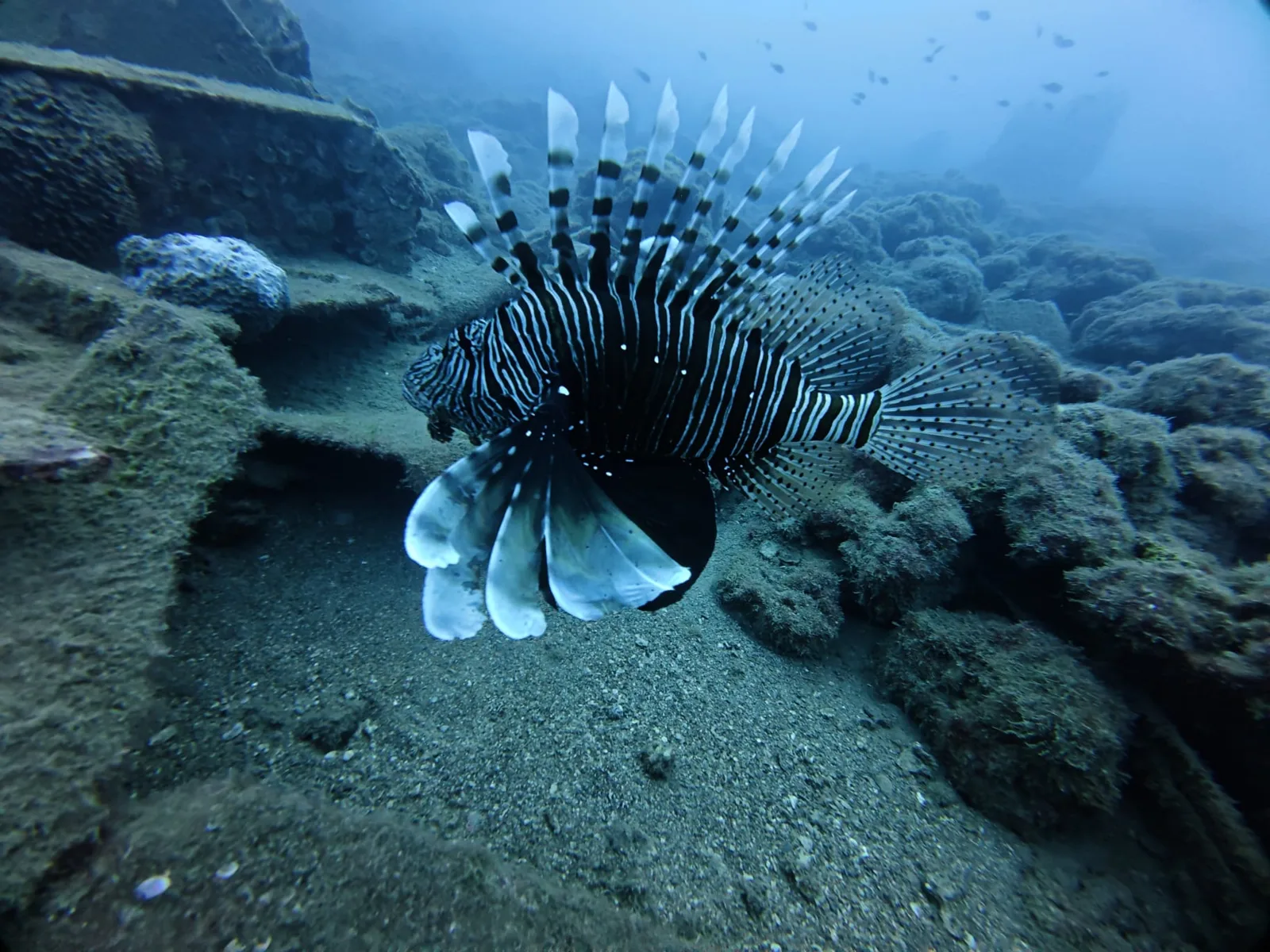
Most disappointing first dives are not caused by fear, bad weather or bad luck. They come from six avoidable mistakes: carrying too much weight, holding your breath, finning too hard, leaving equalisation too late, hiding a health condition, and booking the dive on the day you fly home. Every one of them is fixed before you get in the water, and the fix takes a sentence each.
1. Over-weighting yourself
Beginners often ask for extra lead because they are afraid of bobbing on the surface. The result is the opposite of what they want: too much weight makes you sink, so you compensate by pumping air into the buoyancy jacket, and then you rise and fall like a lift for the whole dive. Over-weighted divers also swim head-up and feet-down, which turns every fin kick into a cloud of sand.
The fix: let the instructor set your weight and trust it. Correct weighting means you float at eye level with an empty jacket and a normal breath, and start to sink gently when you breathe out. If you feel like you are fighting to stay down, say so on the boat rather than adding lead yourself.
2. Holding your breath
This is the only rule in diving that is truly absolute, and beginners break it by accident, usually while concentrating on something else. Under pressure the air in your lungs expands as you rise, and a closed airway has nowhere to send it. Even a small ascent with held breath is a bad idea.
The fix: keep breathing, always, even when you are busy, even when you are startled, even when you are clearing your mask. Slow in, slow out. If you notice you have stopped, simply exhale. Long, unhurried breathing also makes your air last far longer, which is why the calmest diver in the group is usually the last one to reach the turnaround pressure.
3. Finning too fast
Diving is not swimming. New divers push hard with their arms and legs because that is what the water usually asks of them, and they finish the dive exhausted, out of air and disappointed. Speed also destroys your view: fish do not wait for someone barrelling towards them, and stirred-up sand ruins visibility for the whole group.
The fix: hands still, ideally folded, and slow kicks from the hip rather than the knee. Go slower than feels natural. Underwater the reward for moving less is seeing more, and octopus, shoals and everything else are far more likely to stay put for a diver who drifts.
4. Skipping or delaying equalisation
Ear pain is the single most common reason a beginner ends a dive early, and it is almost always caused by starting too late. Pressure builds fastest in the first few metres, exactly where people are distracted by everything else that is new.
The fix: equalise before you feel any discomfort and repeat every metre on the way down. Pinch your nose, blow gently, swallow, and never force it. If one ear will not clear, rise half a metre and try again. Our guide to equalising your ears covers the technique properly. Diving with a heavy cold or blocked sinuses is a mistake in itself.
5. Hiding a health condition
People sometimes leave a box unticked on the medical questionnaire because they are afraid of being turned away. That is the most serious mistake on this list, because the questionnaire exists precisely so the crew knows what to plan for.
The fix: declare everything. Pregnancy, severe asthma, heart conditions and respiratory conditions mean no diving. Anything else that is flagged needs a doctor's sign-off before you dive. We never diagnose and we never offer medical guarantees, but we would far rather have the conversation on land. Our article on diving with medical conditions explains how this works in practice.
6. Booking the dive on your flying day
Every season somebody books a dive for the morning of their departure. It cannot be done. You must not fly within 24 hours of diving, because nitrogen absorbed underwater needs time to leave your body before cabin pressure drops.
The fix: dive early in your holiday, not late. It also gives you the option of a second trip if you love it, and a spare day if the sea is rough. The reasons are explained in why you cannot fly after diving.
Three smaller mistakes worth avoiding
- A heavy night before. Alcohol and dehydration make you tired, cold and prone to seasickness. Water and an early night are genuinely the best preparation.
- Skipping breakfast, or eating an enormous one. Something light beats both. Lunch is served on board anyway.
- Trying to remember everything. You do not need to. The briefing is repeated in the water and the instructor stays within arm's reach, so the only thing you must actually carry with you is the habit of breathing slowly.
Start on the right dive
A good first trip forgives everything on this list. Our beginner diving programme keeps depths at five to eight metres on the first dive and about thirteen metres maximum on the second, with an instructor beside you throughout. The Kumköy diving trip at 43 euro includes two guided dives, all standard equipment, free two-way hotel transfer, lunch on board, insurance and a full safety briefing. Reserve free online, pay on the day in cash or by card, and cancel free up to 24 hours before. A thermal inner suit (diving undergarment) or any extra neoprene layer is not included in the price and is available as an optional extra on request.