Every one of our trips begins the same way: before anyone gets wet, everyone gets briefed. The full safety briefing is included on all our boat diving trips, and it is quietly the most important part of the day. It is where nervous first-timers turn into calm divers — because almost all diving anxiety comes from not knowing what happens next, and the briefing removes exactly that. Here is what your instructor will cover.
The plan for the day
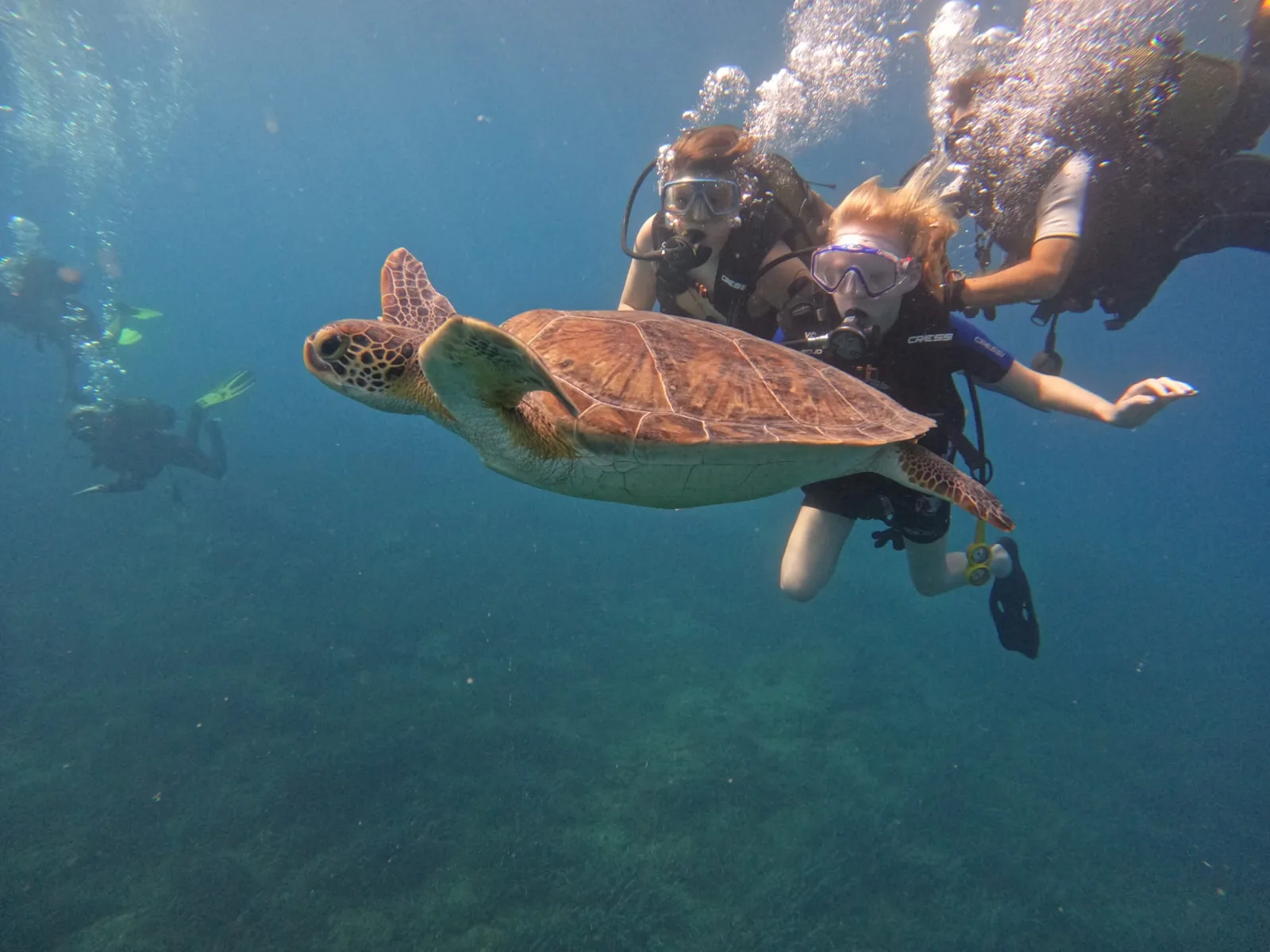
First, the shape of the day itself. You will make two guided dives: a morning dive in shallow water of 5–8 metres lasting 15–25 minutes, where you learn the basics and build confidence, and an afternoon dive to about 13 metres once you have found your fins — 13 metres is the ceiling for beginners. Between them there is time on deck and a fresh lunch on board. The instructor explains how you will enter the water, how the group descends together, and how every dive ends back at the boat. Once you can picture the whole day, there is nothing left to be surprised by.
Hand signals: your underwater vocabulary
You cannot talk underwater, so divers use a small, standardised set of hand signals. Your instructor demonstrates each one and has you repeat it back:
- OK? — thumb and index finger forming a circle. It is both the question and the answer: your instructor asks, you reply.
- Up / Down — thumb up means end the dive and ascend (not great job!), thumb down means descend.
- Something is wrong — a flat hand rocking side to side, then pointing at the problem. Not an emergency signal, just honest communication.
- Ear problem — pointing at your ear tells the instructor to pause the descent so you can equalize in peace.
- Look — two fingers towards the eyes, then towards the octopus your instructor has just found for you.
Five signals, thirty seconds to learn, and suddenly you can hold a conversation at 8 metres.
Equipment, fitted piece by piece
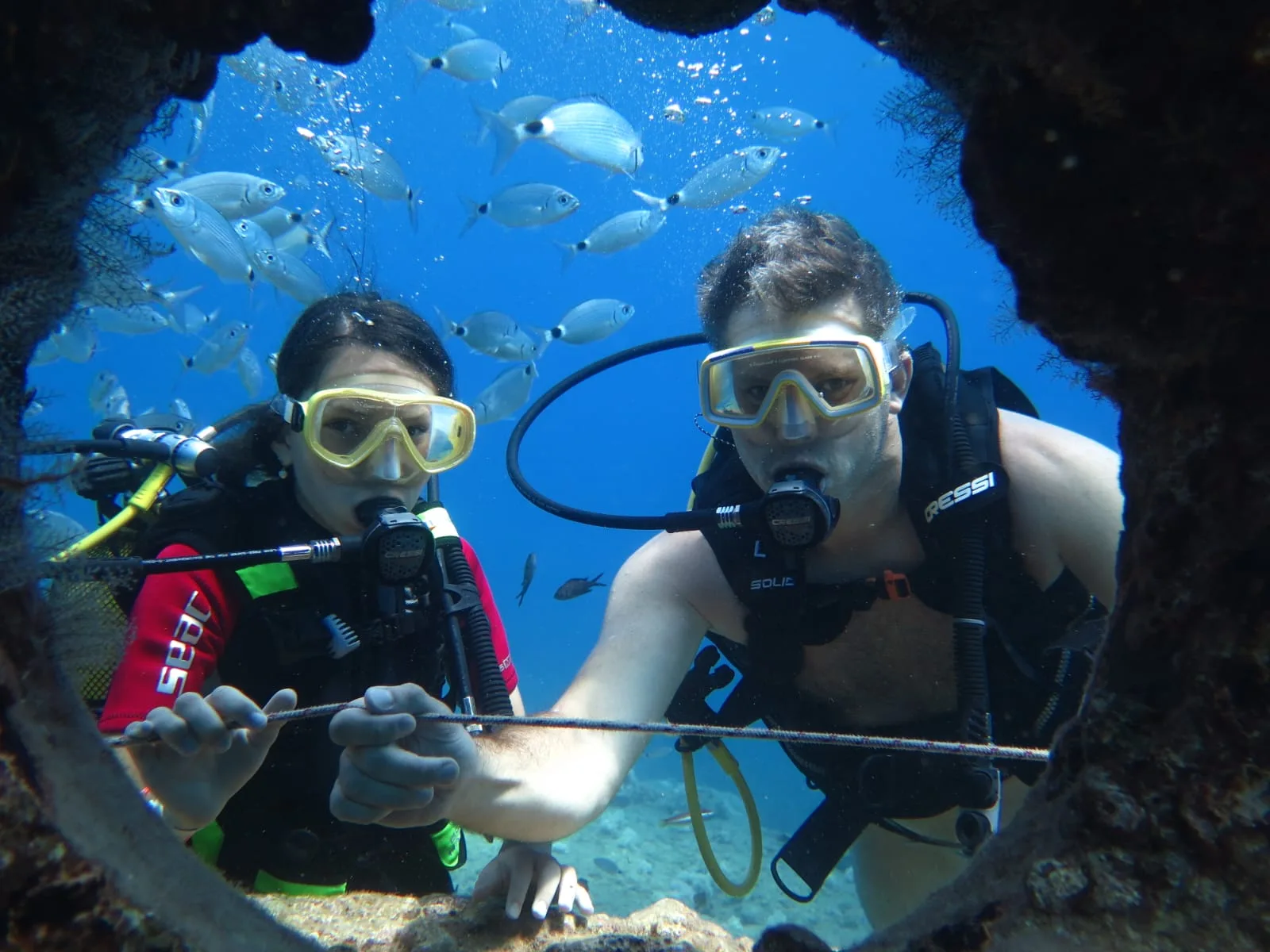
All gear is provided on every trip — tank, regulator, wetsuit, mask and fins — and the briefing is where it gets fitted to you personally. The crew helps you find a wetsuit in your size, tests the mask seal on your face, and has you take your first breaths from the regulator on deck, where it feels easy. You learn the two-finger check for your air gauge and how to clear a mask calmly. Curious what exactly is in the package? Our equipment page lists it all.
Who does what: instructor and buddies
Diving is a team activity. You dive in a small group with your instructor leading — on our flagship Underwater Museum trip, that means just 3–4 divers per instructor. The briefing establishes the simple rules: stay close, stay behind or beside the leader, and keep your buddy in sight. Certified divers get a site orientation and buddy assignment, dive the real profiles on the same boats — around 30 metres on standard certified dives, and down to 60 metres on the deep sites for suitably qualified divers, with the exact site depending on qualification, conditions and the day's plan — and can have their logbooks signed and stamped afterwards. Beginners get something even better: an instructor whose full attention is on them.
The health questions and the 24-hour rule
The briefing also covers the rules that exist purely to protect you. Diving is not possible during pregnancy or with serious heart, respiratory or severe asthma conditions — answer the health questions honestly, because they are about your safety, not paperwork. And one rule surprises many guests: no flying within 24 hours after diving, so plan your dive day at least a full day before your flight home. Our safety page explains all of this in detail before you ever book.
Why it matters more than you think
A good briefing is not a lecture — it is a rehearsal. Every skill you might need underwater has already been named, shown and practised before your face touches the water. That is why questions are not just allowed but actively welcome: the only bad question in diving is the one you did not ask. Guests who arrive anxious routinely tell us afterwards that the briefing was the moment the fear left.
The best way to understand a briefing is to sit through one with a boat swaying gently underneath you. Whether it is your first ever dive or your hundredth, browse our trips from Side, Kumköy, Kemer, Antalya and Alanya, reserve free online and pay on the day. Questions before then? Message us — consider it your pre-briefing briefing.