First Things First: Being Nervous Is Completely Normal
If your stomach flutters at the thought of breathing underwater, congratulations — you are exactly like almost every diver before their first dive. A little anxiety before doing something genuinely new is not a warning sign; it is your brain doing its job. The difference between people who dive and people who only think about it is rarely courage. It is information: knowing precisely what will happen, in what order, and how much control you keep at every moment. That is what this article gives you.
What Actually Happens Before You Get Near the Water
Your day starts with a morning pickup from your hotel — transfer is free and included on every trip. On board, before anything else, comes the full safety briefing. Your instructor explains each piece of equipment in your hands: the regulator you breathe from, the mask, the wetsuit, how the tank works, what the gauges show. You learn the handful of hand signals divers use — okay, look at this, my ears, I want to go up — and you rehearse the skills you will use, on the boat, in normal air, at your own pace. Nobody is quizzed and nobody is rushed. By the time you enter the water, nothing that happens will be a surprise, and predictability is exactly what an anxious brain needs.
Your First Dive Is Shallow, Short and Guided
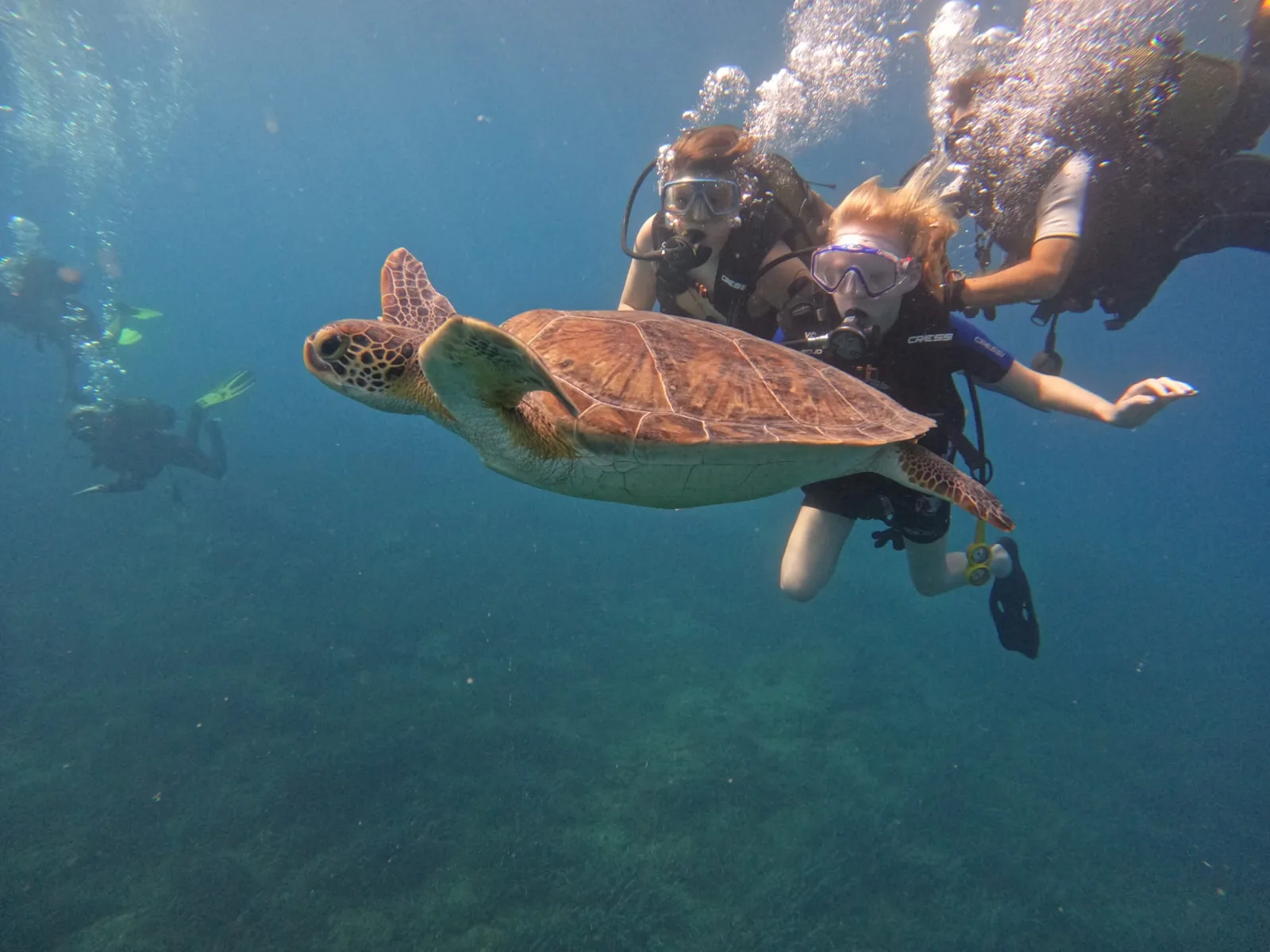
Forget images of dark, bottomless blue. Your first dive takes place at five to eight metres for fifteen to twenty-five minutes — shallow, bright, sunlit water where the surface is always visibly close overhead. This is the standard first dive on every one of our daily diving trips, and it exists precisely so beginners can get comfortable before the afternoon dive to about thirteen metres. At this depth you can see the boat, see the light, see your instructor — and your body quickly learns that everything works down here.
Your Instructor Stays Within Arm's Reach
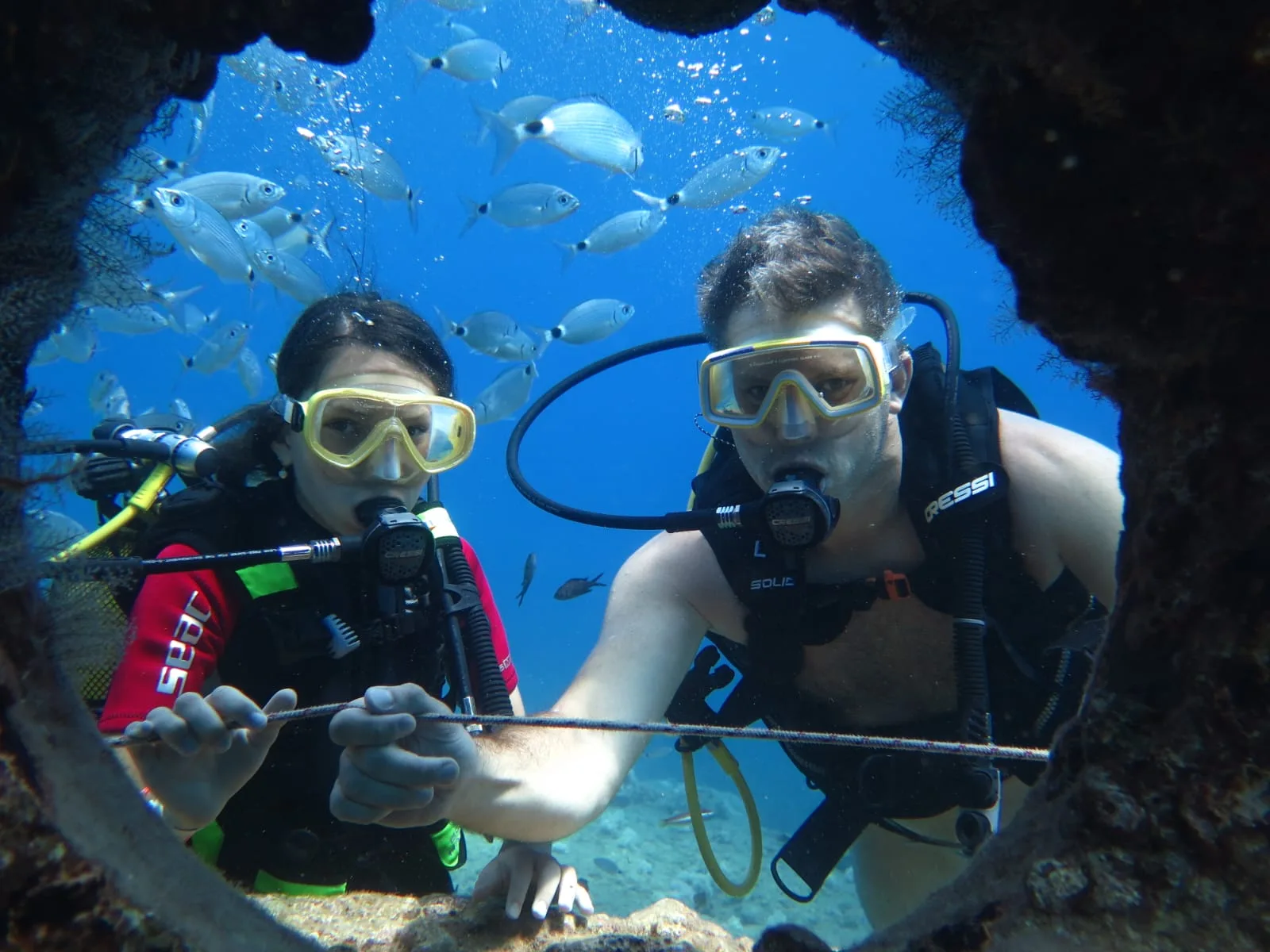
You are never sent off to explore alone. A professional instructor guides the dive from the first breath to the last, close enough to touch. On our flagship Underwater Museum trip in Side, groups are limited to three or four divers per instructor, so your guide genuinely watches you, not a crowd. Many nervous beginners hold the instructor's hand or arm for the first minutes — this is common, expected and absolutely fine. Instructors read body language constantly; often they know you are tense before you do, and slow things down without you asking.
You Can End the Dive at Any Time — Really
This is the fact that dissolves most anxiety: you are always one signal away from the surface. Show a thumbs-up — the divers' sign for let's go up — and your instructor brings you up calmly and correctly, no questions, no disappointment, no drama. Knowing you hold the exit ticket changes everything: paradoxically, the divers who know they can stop rarely want to. And remember there is no exam here — no licence is required for a guided beginner dive, try-dives are possible from around age ten, and if someone in your group prefers to stay dry, non-divers can join the boat trip at a reduced rate and enjoy the day, the swimming and the lunch on board.
Five Calm-Down Techniques That Actually Work
- Lengthen your exhale. Slow breathing out through the regulator is the fastest physiological brake on a racing heart. Count four in, six out.
- Name what you feel. Silently saying this is excitement, not danger sounds trivial — sports psychologists swear by it, because the body signals for both are nearly identical.
- Give your eyes one job. Pick a single fish or rock and watch it. Anxiety feeds on scanning; attention on one thing starves it.
- Wiggle your fingers and toes. A quick body check reminds your nervous system that you are relaxed, warm in your wetsuit, and fully in control.
- Look at your instructor. Calm is contagious. Your guide has done this hundreds of times, and their unhurried movements tell your brain everything is routine.
A Few Honest Words About Health
Guided beginner diving is gentle, but it is not for everyone: diving is not possible during pregnancy or with severe asthma, serious heart or respiratory conditions. And plan your flights with a buffer — you should not fly within twenty-four hours after diving. If you are unsure about a condition, ask us before booking — an honest answer costs nothing.
Book It the Low-Pressure Way
Here is the final anxiety-reducer: our booking works like our diving — no pressure. You reserve online for free and pay on the day, in cash or by card, and cancellation is free up to twenty-four hours before the trip. If you wake up and it does not feel right, you have lost nothing. But we suspect you will go — and that by lunchtime, somewhere between your first breath underwater and the fish swimming past your mask, you will wonder what you were ever worried about. Start with our discover scuba diving page or browse prices for all trips.