Scuba diving is physically far easier than almost everyone expects, and mentally harder than they expect for about five minutes. You do not need to be fit, strong or a confident swimmer to make a first dive. What you do need is the willingness to breathe underwater through a regulator for the first time, and that one moment is the entire difficulty. Once your body accepts that the air keeps arriving, the rest of the dive is slow, quiet and remarkably gentle.
The hard part is trust, not athleticism
On the boat the kit feels heavy and awkward: a tank on your back, a wetsuit, weights on your hips. Step into the sea and all of it disappears. Underwater you are close to weightless, you move at walking pace or slower, and a relaxed dive burns less energy than a hike along the coast road. Nobody is asked to swim lengths, tread water for minutes or pass a fitness test. The instructor controls the descent, the depth and the route while you concentrate on one thing only: breathing.
This is why people who describe themselves as unathletic often turn out to be the calmest divers in the group. Diving rewards stillness. Fighting the water, kicking hard and rushing are what make a dive tiring, and those are exactly the habits a good briefing removes before you ever get wet.
Why the first five minutes decide everything
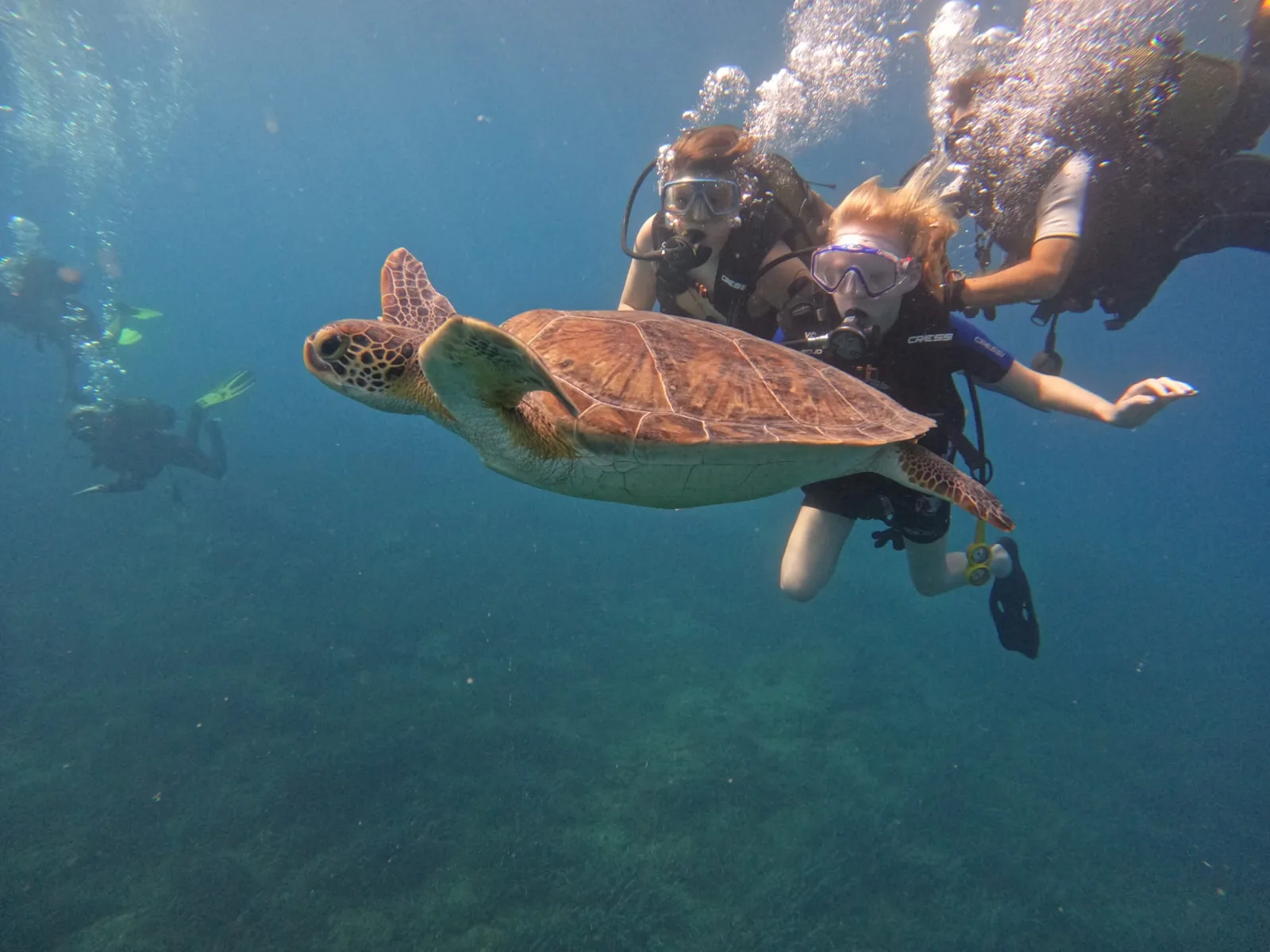
Almost every beginner follows the same curve. In the first minute the regulator sounds loud and strange, the mask presses against your face, and some stubborn part of your brain insists you should not be doing this. By minute three the breathing has slowed. By minute five your shoulders drop, your hands stop gripping, and the rock and fish in front of you become far more interesting than the equipment on your back. From that point the dive is simply enjoyable.
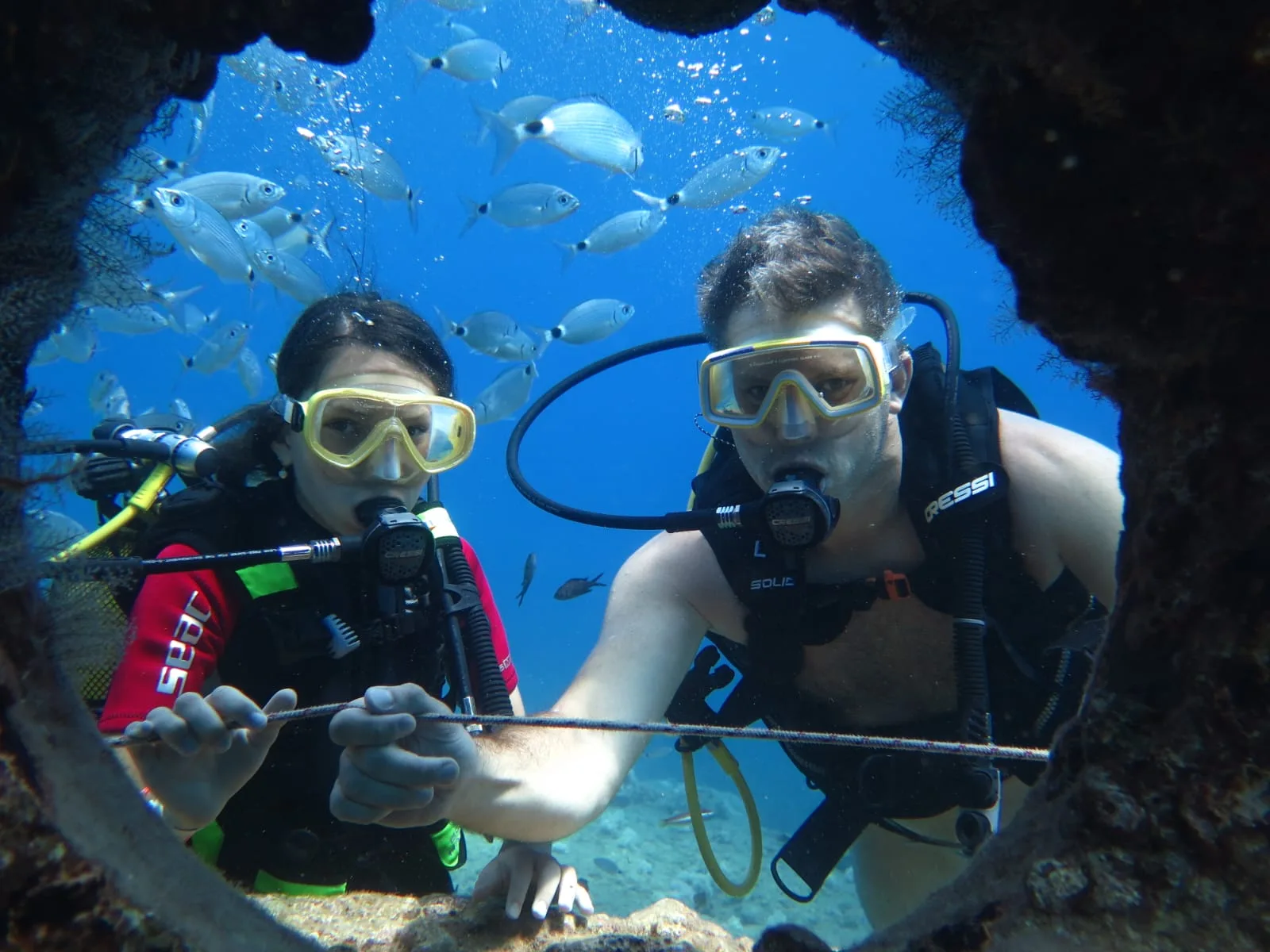
Because those minutes matter so much, we never rush them. You breathe from the regulator at the surface first, with the boat ladder within reach. Then the descent happens hand over hand along a line, a metre at a time, with the instructor facing you and stopping the instant you raise a hand. Nothing continues until you signal that you are ready. There is no queue, no pressure and no penalty for taking longer than the person before you. Our discovery dive is designed around that pace.
What the briefing actually covers
Before anyone enters the water the crew runs a full safety briefing in a language you understand. It is short, practical, and repeated in the water so you never have to memorise anything.
- Breathing: slow in, slow out, and never hold your breath. It is the single most important rule in diving.
- Equalising: pinch your nose and blow gently to relieve the pressure in your ears, early and often. Our guide on how to equalise your ears covers the technique in detail.
- Mask and regulator: how to clear a little water out of the mask, and how to find the regulator again if it ever leaves your mouth.
- Hand signals: OK, up, down, problem, ear trouble, and the signal that simply means you would like to stop.
- Staying with the guide: where the instructor will be, which is within arm's reach, and how the group moves together.
How deep a beginner really goes
Depth is the most common worry and it is easily answered. Beginners spend the morning dive at roughly five to eight metres and go to about thirteen metres maximum on the second dive, always with an instructor beside them. That is shallow, bright water where colours stay strong and light floods in. The deeper sites belong to certified divers, who work around thirty metres on standard dives and, when suitably qualified, go as deep as sixty metres on sites such as the Paris II wreck at 21 to 31 metres or the DO-28 aircraft at 19.5 to 23.3 metres. Those are never discovery dives.
The parts that genuinely can be awkward
Honesty helps more than reassurance. Two things do trouble some beginners. The first is ear equalisation: with a cold or blocked sinuses your ears may refuse to clear, and the right response is to signal, rise a metre and try again rather than force anything. The second is a mask that fogs or leaks, which is irritating rather than dangerous and is fixed in seconds once you know the trick. Motion on the boat ride is the third, best managed by staying on deck in fresh air and eating lightly beforehand.
If you cannot swim, that is not a barrier either, as our article on diving for non-swimmers explains. If you have a health condition, declare it on the medical questionnaire. Pregnancy, severe asthma, and heart or respiratory conditions mean no diving, and anything flagged needs a doctor's sign-off first. We never diagnose and we never guess.
The only way to really answer the question
Get in the water and find out. The Side Underwater Museum trip at 45 euro gives beginners something extraordinary to look at while they settle: around 110 sculptures resting at about twelve metres, with hand-feeding fish and three to four divers per instructor. Two guided dives, all standard equipment, free two-way hotel transfer, fresh lunch on board and insurance are included. Reserve free online, pay on the day in cash or by card, and cancel free up to 24 hours ahead. If you are still weighing it up, the first-time diving guide answers what happens hour by hour. A thermal inner suit (diving undergarment) or any extra neoprene layer is not included in the price and is available as an optional extra on request.