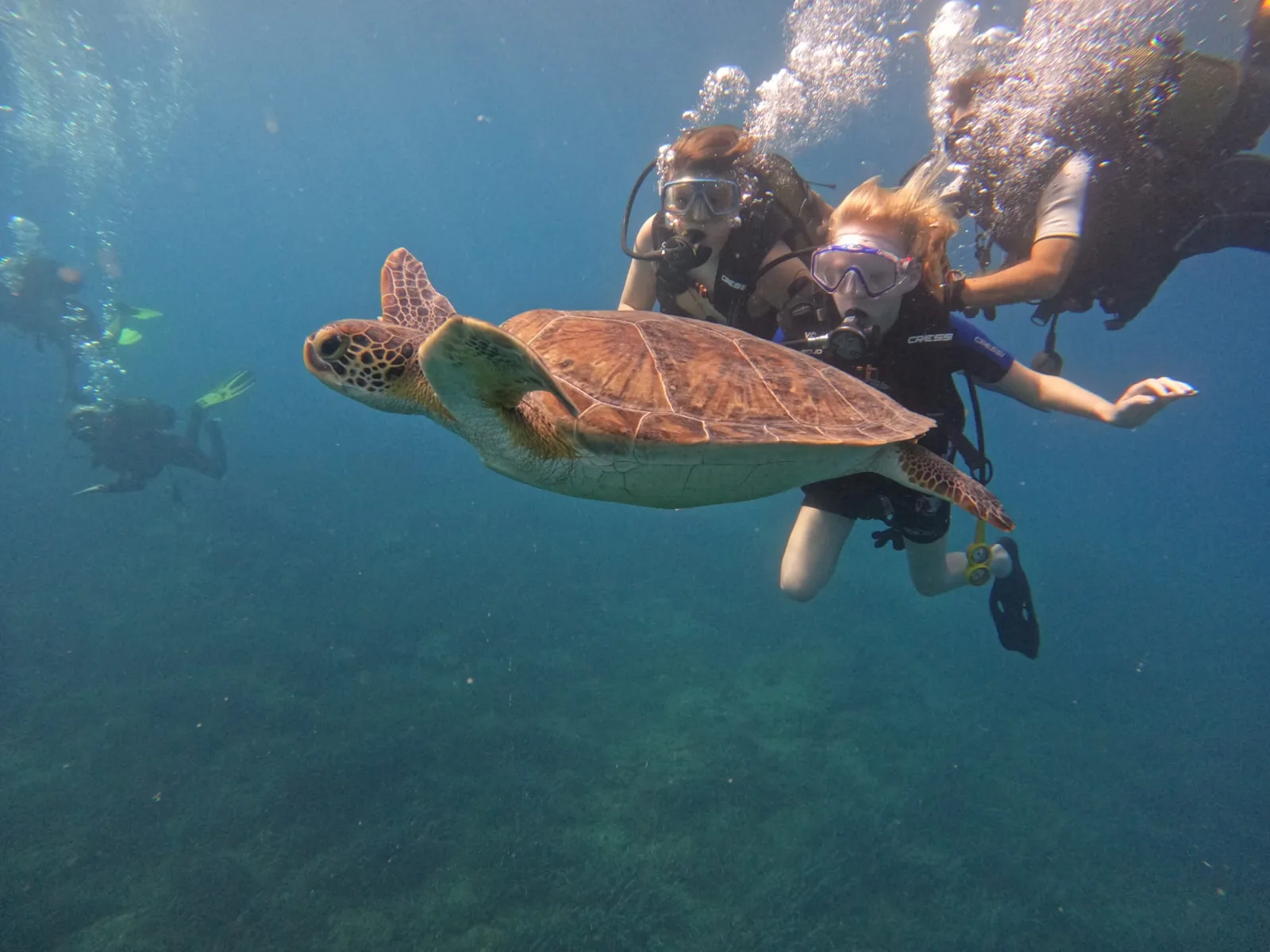
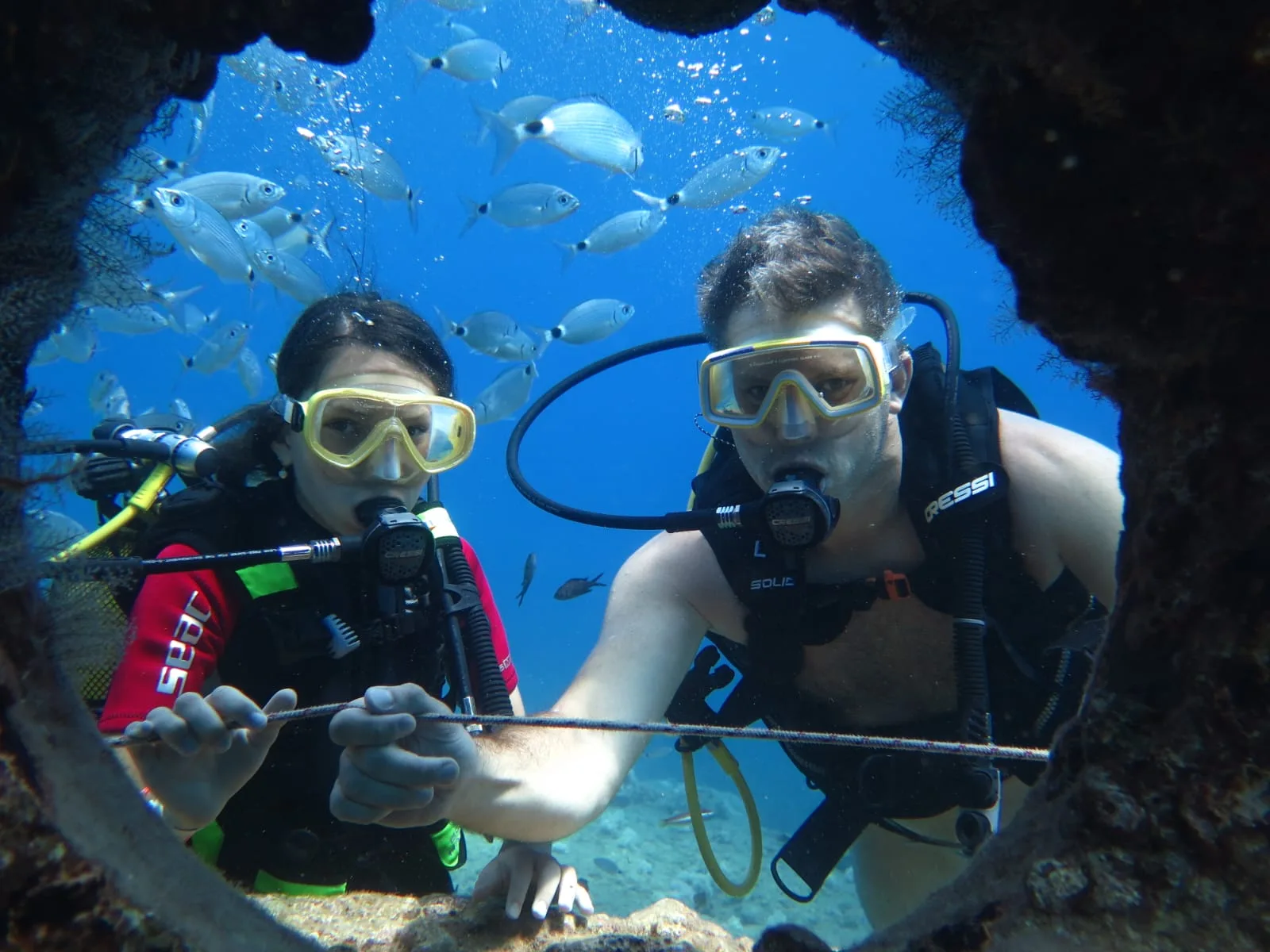
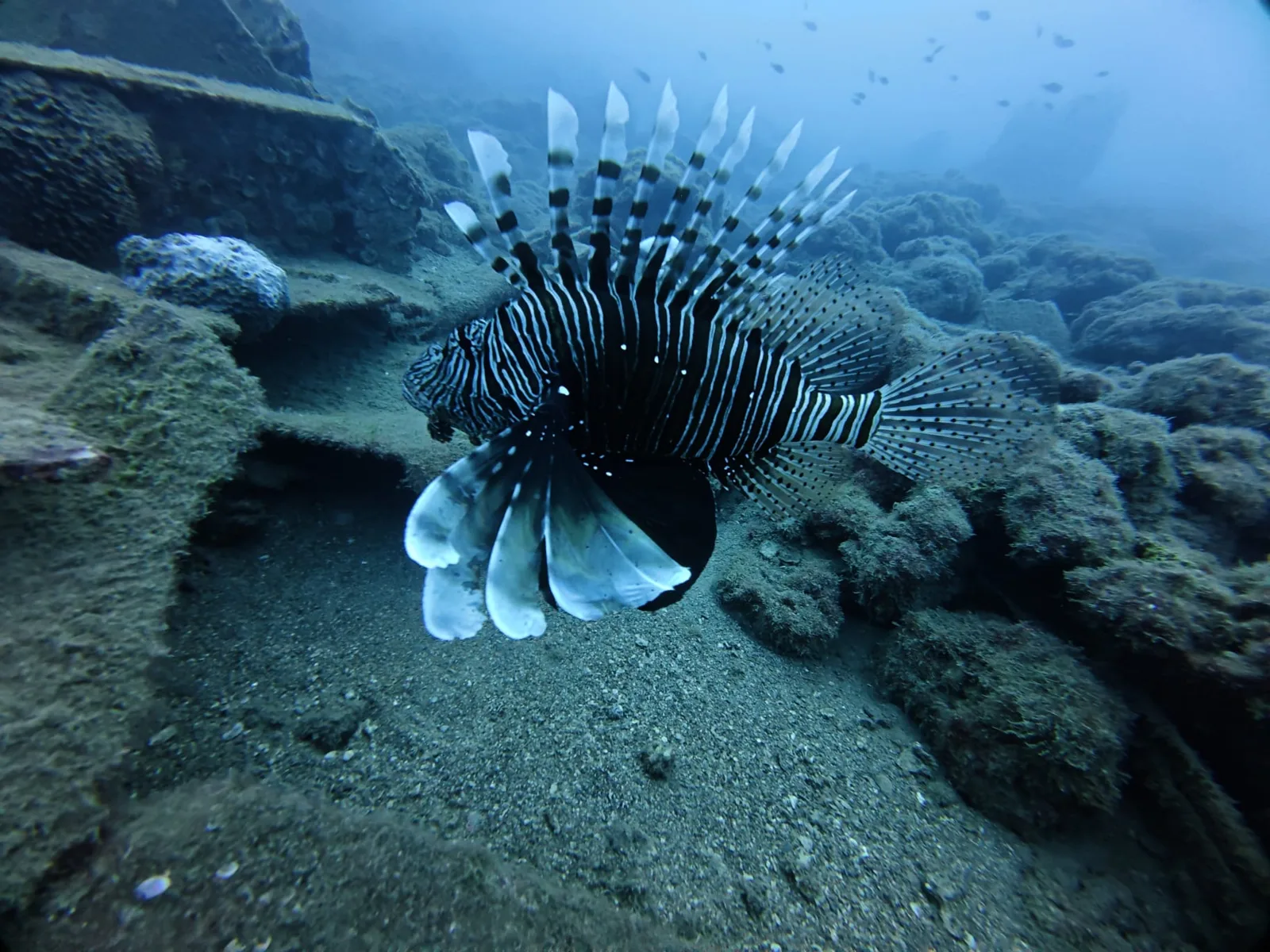
Scuba diving has an unusual safety profile: it looks adventurous, yet it runs on discipline as unglamorous as a pre-flight checklist. Guided diving removes most of the complexity — the planning, the navigation, the gas management all sit with your instructor — but a handful of responsibilities stay firmly with you, whether it is your first dive or your five-hundredth. Here they are, in the order they matter.
1. Be honest about your health
This is the only item on the list that starts before you leave your hotel. Diving places real demands on the heart, lungs and circulation, and some conditions rule it out completely. On our trips, diving is not possible when pregnant, or with severe asthma, heart conditions or respiratory illness. This is not small print to negotiate around — it is the line between a great day and a genuine emergency.
Honesty also covers the small stuff. A blocked nose or head cold makes equalising your ears difficult or impossible; strong medication can behave unpredictably at depth. Tell the team what is going on, even if it feels minor — and if you are unsure whether something matters, ask us before you book. For anything chronic, a doctor's opinion beats anyone's guess, including yours.
2. Give the briefing your whole attention
Every trip includes a full safety briefing before anyone touches the water, covering hand signals, buddy procedure, entries, exits and what to do if something feels wrong. The rule is simple: this is the one part of the day where listening is your job. Questions are welcome — instructors respect divers who ask far more than divers who nod.
3. Check the equipment you are given
All equipment is included on our trips — tank, regulator, wetsuit, mask and fins — and it is prepared professionally. Checking it is still your habit to build, and your instructor will walk you through it:
- Mask: place it on your face without the strap and inhale gently through your nose — a good seal holds it there.
- Regulator: take several breaths from it before entering the water. It should breathe easily and taste of nothing.
- Wetsuit: snug but not strangling. Cold, distracted divers make poor decisions.
- Fins: firm without crushing your toes.
- Releases and straps: know where your buckles are and how they open — and where your buddy's are, too.
You can read more about how each piece works on our equipment guide. If anything fits badly or behaves oddly, say so on the boat, not underwater.
4. Respect depth and time limits
Recreational diving stays safe by staying inside your level. For beginners our guided profile is deliberately conservative: a morning dive at 5–8 metres for 15 to 25 minutes, and an afternoon dive to about 13 metres, which is the beginner ceiling. Certified divers dive the real profiles on the same boats — around 30 metres on standard certified dives, and down to 60 metres on the deep sites for suitably qualified divers — always within their qualification, the conditions and the day's plan. Shallow water is not the junior version of diving — it is where the light is warmest, the fish are busiest and the safety margins are widest. Whatever your experience, the rule on a guided dive is absolute: never deeper than your instructor, never further than your instructor.
5. The golden rules underwater
- Never hold your breath. The first rule of scuba, and the one your instructor will repeat until it bores you. Breathe continuously, always.
- Equalise early and often — from the first metre down, before your ears hurt, not after.
- Stay close to your instructor and check for your buddy every minute or so.
- Ascend slowly. Your guide sets the pace; follow it.
- Signal problems early. A fogged mask or an uncomfortable ear is trivial to fix at three metres and much less trivial to ignore. There are no prizes for toughing it out.
6. After the dive: the 24-hour no-fly rule
Diving loads your body tissues with dissolved nitrogen, which leaves gradually over the hours after you surface. Cabin pressure in an aircraft is lower than at sea level, and flying too soon can turn that harmless leftover nitrogen into decompression trouble. The mainstream rule is simple and worth planning around: do not fly within 24 hours of diving. Book your dive day accordingly — not for the day before your flight home. Rest, drink water and enjoy the pleasant tiredness; you have earned it.
7. Insurance and paperwork
Every trip includes passenger and diving insurance in the price — one of those items you want included and never used. Certified divers should bring their certification card: your dives are signed and stamped into your logbook at the end of the day, and CMAS courses are available on request if you want to take the next step.
The checklist you can actually remember
- Healthy and honest about it — no diving pregnant or with severe asthma, heart or respiratory conditions.
- Briefing heard, questions asked.
- Mask, regulator, wetsuit, fins, releases — checked.
- Never deeper than the guide. Never hold your breath. Equalise early.
- Problems signalled early, ascents slow.
- No flying for 24 hours after diving.
Six lines, and they cover almost everything that matters. The rest — the sculptures, the fish, the blue — is the reward. Read more about how we run diving safely, see how a boat day flows in our dive boat etiquette guide, or pick your day from our full-day boat trips. Reserve free online, pay on the day, and cancel free up to 24 hours before.