The Short Answer
Yes. Visitors can train and certify on the Antalya coast, and the certification you leave with is internationally recognised — it works on a liveaboard in Egypt, a shore dive in Spain or a boat in Thailand, exactly the same as if you had trained at home. There is no residency requirement, no Turkish paperwork to chase and no local-only licence involved. You need your passport or ID, a completed medical questionnaire, and enough consecutive days in your holiday. A thermal inner suit (diving undergarment) or any extra neoprene layer is not included in the price and is available as an optional extra on request.
We run CMAS courses on request rather than on a fixed timetable, so the first step is simply to send us your dates.
Why the Antalya Coast Is a Good Place to Learn
Learning to dive is easier in warm, clear, calm water than in a cold quarry, and this coastline delivers all three for most of the year. The sea runs from around 17 °C in winter to about 28–29 °C in late summer, and visibility is generally best in late spring to early summer and again in autumn. Wetsuits are included, so the cooler end of the range is a comfort question rather than a barrier.
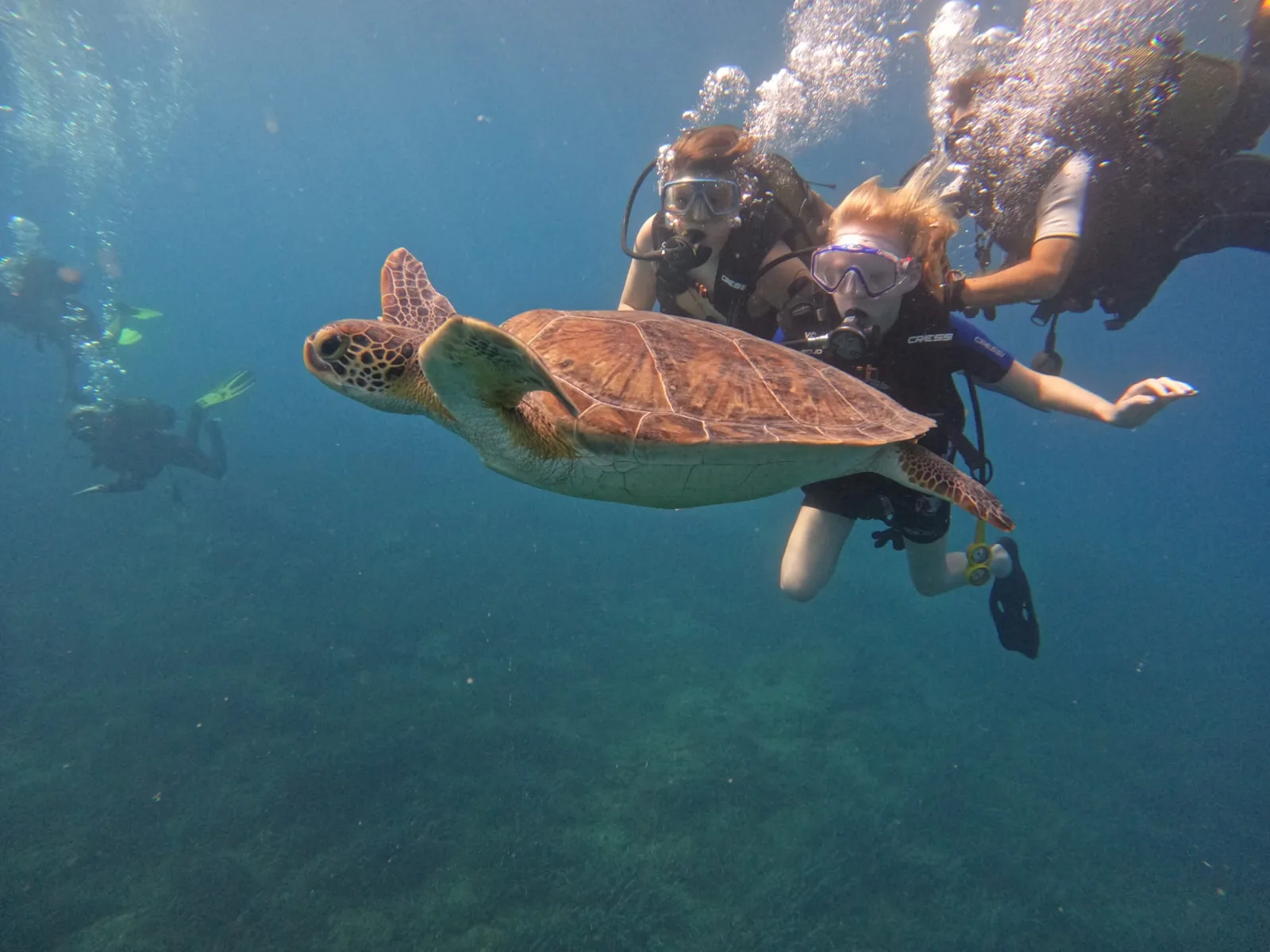
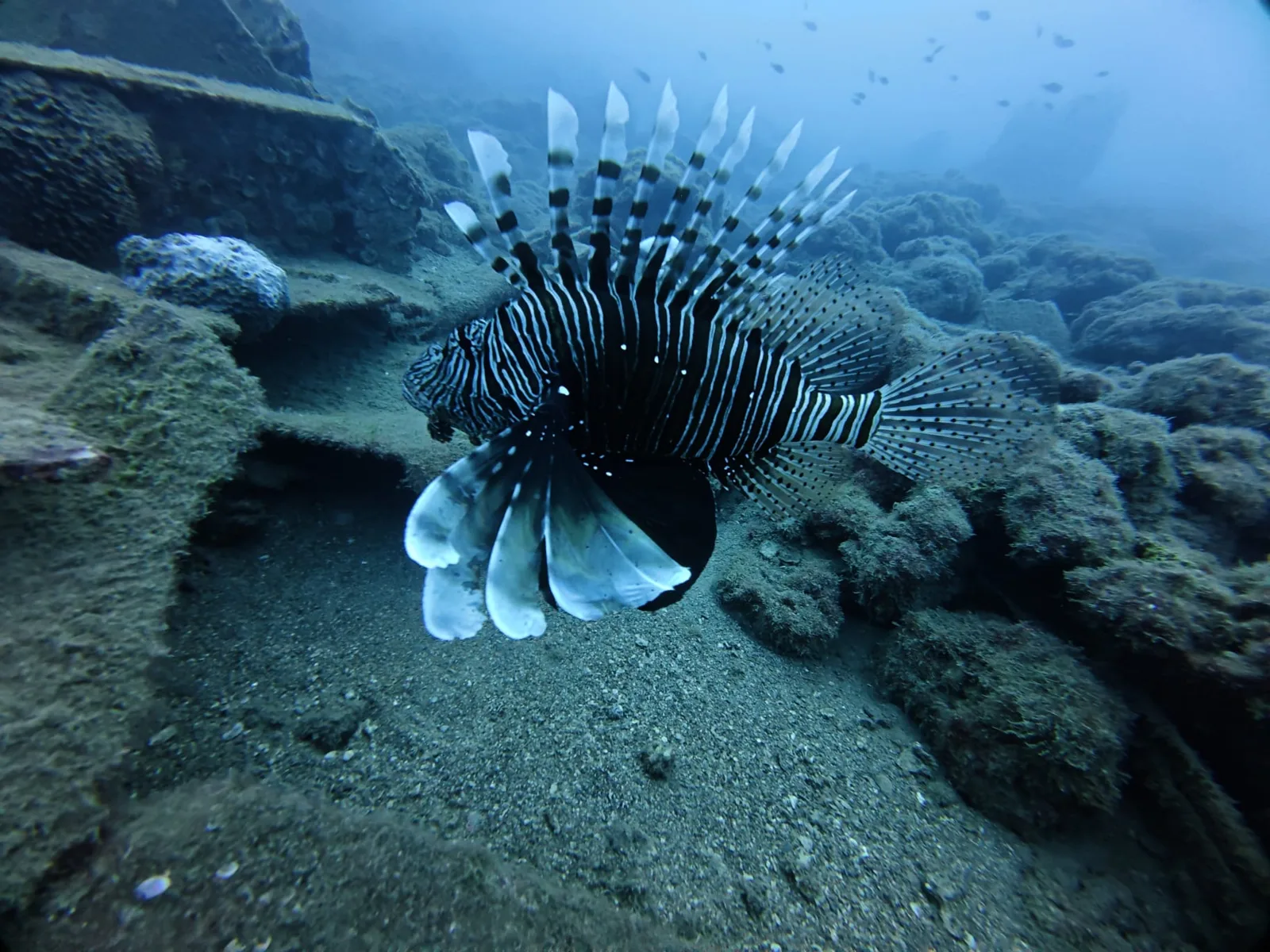
You are also learning somewhere with genuinely interesting places to put your new skills. The Side Underwater Museum holds around 110 sculptures at roughly 12 metres — shallow, bright, and unlike anything a training site normally offers. Kemer has the clearest water on this stretch of coast, with reef fish and octopus often spotted, while Antalya adds reefs, caves and shoals. Sightings always vary with conditions, but the settings do not disappoint.
What You Need to Bring
- Passport or ID. Your certification is issued in your name as it appears on your document, so bring it and check the spelling before you sign anything.
- A completed medical questionnaire. Standard for every diver. If anything is flagged — asthma, heart or respiratory conditions, certain medications — you need a doctor's sign-off. Arrange that at home if you already know it applies; it is far easier than on a holiday morning. See our medical guide.
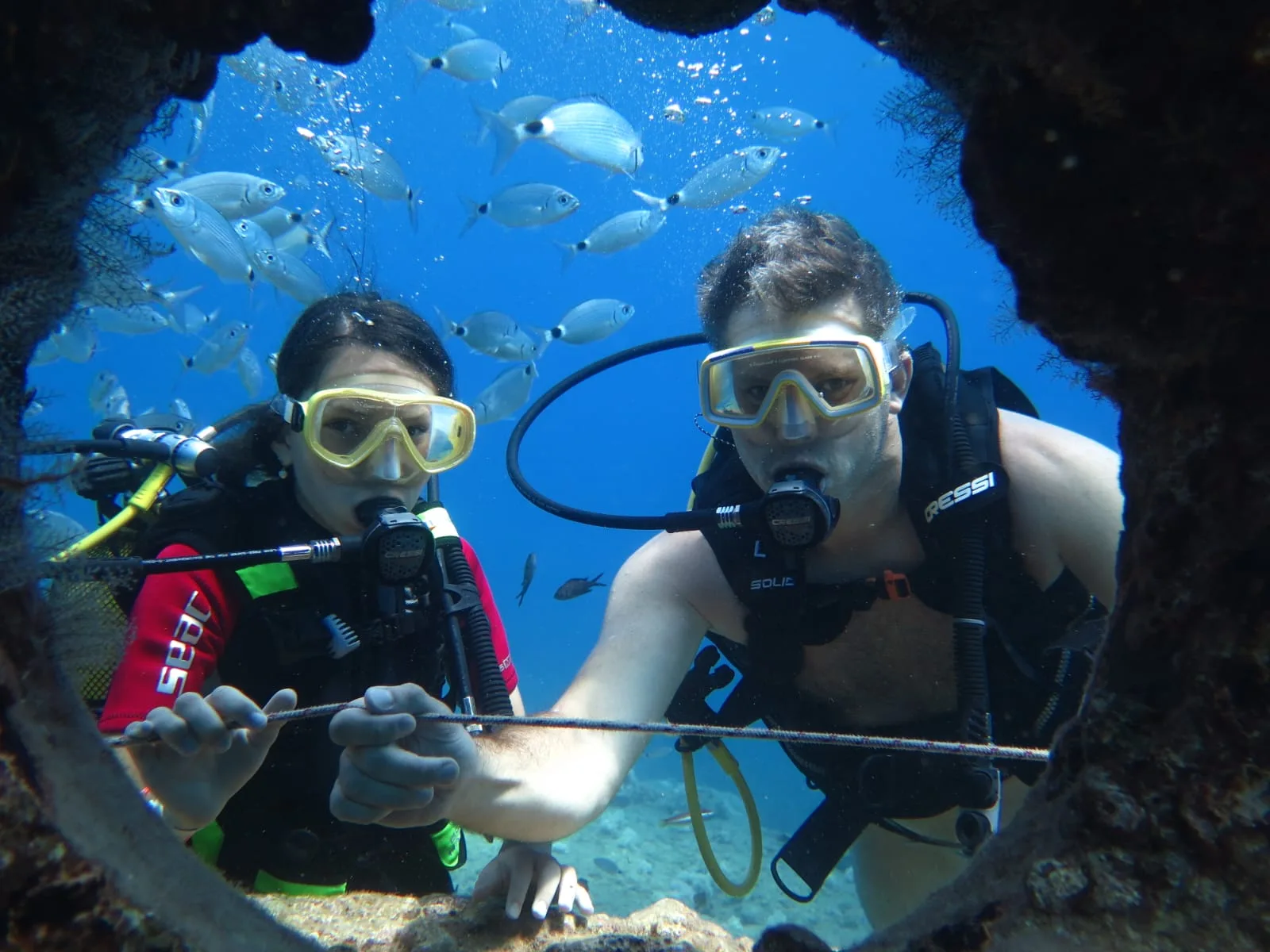
- Swimwear, a towel, sun protection and a hat. That is genuinely it for kit. Tank, regulator, BCD, wetsuit, mask, fins and weights are all included, on courses as well as on the day trips.
- Consecutive days. An entry-level course is not a one-afternoon affair — see how long certification really takes.
Language Is Rarely the Obstacle
Antalya has spent decades hosting visitors from across Europe and beyond, and dive briefings here are routinely delivered in more than one language. Tell us which language you are most comfortable learning in when you enquire — understanding a safety briefing fully matters far more than practising your holiday vocabulary. Where written theory material is involved, we point you to it in advance so you can read it in your own language before you travel.
What You Leave With
Two things. First, the certification itself — a qualification that does not expire, recognised by dive centres worldwide. Second, a logbook with your first dives recorded and signed. That logbook matters more than beginners expect: it is how a dive centre in another country sees where you have been, how deep, how recently, and decides what to offer you. We sign logbooks for certified divers on our regular trips too.
Here on this coast, entry-level certification puts you on the standard certified profile of around 30 metres, and further qualification opens the deep sites up to 60 metres — including the Paris II wreck at 21–31 m and the DO-28 aircraft at 19.5–23.3 m. See certified diver trips for what happens after the card arrives.
Not Sure You Want the Whole Course Yet?
Then do not start with it. Join a guided day first: our five boat trips take beginners without a licence, at 5–8 metres on the morning dive and to about 13 metres maximum on the second, always with an instructor within arm's reach and no more than 3–4 divers per instructor. The Underwater Museum trip is €45 for about 7 hours; Kumköy and Alanya are €43. Two dives, all standard equipment, free two-way hotel transfer, fresh lunch on board and insurance are in every price. If you surface certain, the course conversation is a natural next step — and you will already know the boat and the crew.
How to Arrange It
Because courses run on request, there is no schedule to squeeze into: message us with your holiday dates and we will tell you honestly what is possible in the time you have. For a trip, reserving is free, payment is on the day in cash or by card, and cancellation is free up to 24 hours before. Hotel pickup is in the morning, with the exact time confirmed the evening before. And whatever you book, remember the rule that outranks all planning: no flying within 24 hours after diving.