The Short Answer
If we had to name the sweet spots, they would be late May to June and September to October: the sea is warm, visibility is generally at its best, and the boats are pleasantly calm. August has the warmest water of the year at around 28–29°C, July and August are the liveliest months, and winter is possible only sometimes — the honest move then is to message us first. Now here is the full year, month by month, with nothing polished away.
Winter: December, January, February
The sea sits at around 17–19°C in December, easing to roughly 16–17°C by February, the coolest point of the year. Diving happens only occasionally: many operators wind down for the winter, and the weather decides which days work. When a calm day lines up, the empty sites have a charm of their own — we cover the whole subject honestly in our guide to winter diving in Side. If your trip falls in these months, write to us before assuming anything either way.
Spring: March, April, May
March holds near winter levels at about 17°C, April nudges up to around 18°C, and then the curve steepens: by late May the sea reaches roughly 20–21°C and the year's first golden window opens. Late spring is when visibility begins climbing toward its best, the weather settles, and the boats are still quiet. May divers get clear water and unhurried days — the classic shoulder-season combination we describe in detail in our spring and autumn guide.
Summer: June, July, August
June brings the sea to a comfortable 24–25°C with visibility often still in its early-summer prime — for many divers, June is the single best all-round month of the year. July climbs to around 27–28°C and August peaks at 28–29°C: the warmest, easiest water of the year, ideal for nervous first-timers, though the coast is at its busiest and midsummer visibility, while still good, is past its seasonal peak. Summer days start early for good reason — calm morning seas and quieter sites — and we explain the rhythm in our guide to summer diving in Side.
Autumn: September, October, November
September is the quiet star of the year: the sea still holds 27–28°C from summer, the crowds thin out, and visibility enters its second annual peak. October stays a mild 24–25°C — warmer than May — with settled, clear water. November cools to around 21–22°C and the season gently winds down, with more weather-dependent days toward its end. If you want summer's warmth without summer's bustle, September and October are the answer.
Match the Month to the Trip
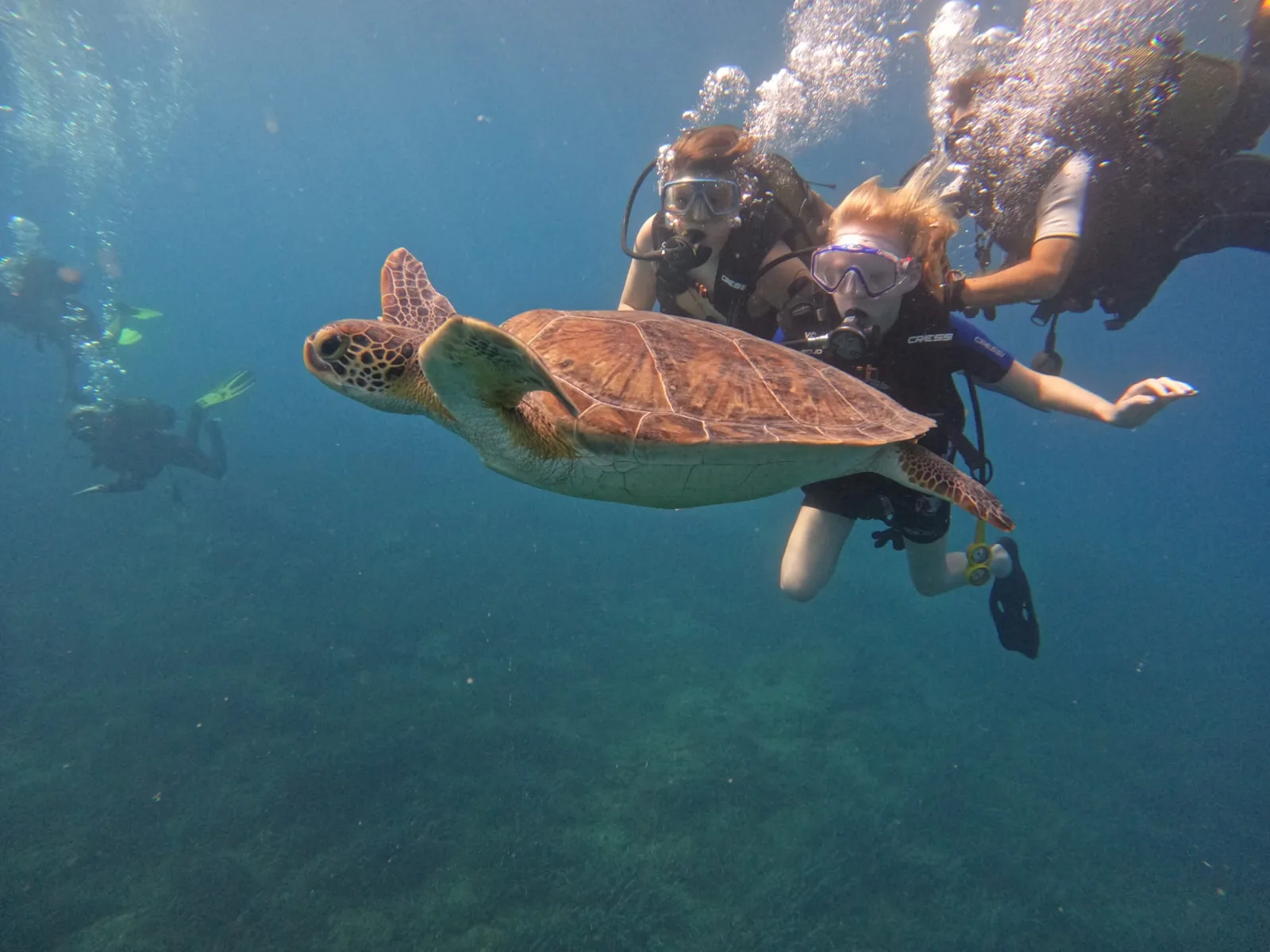
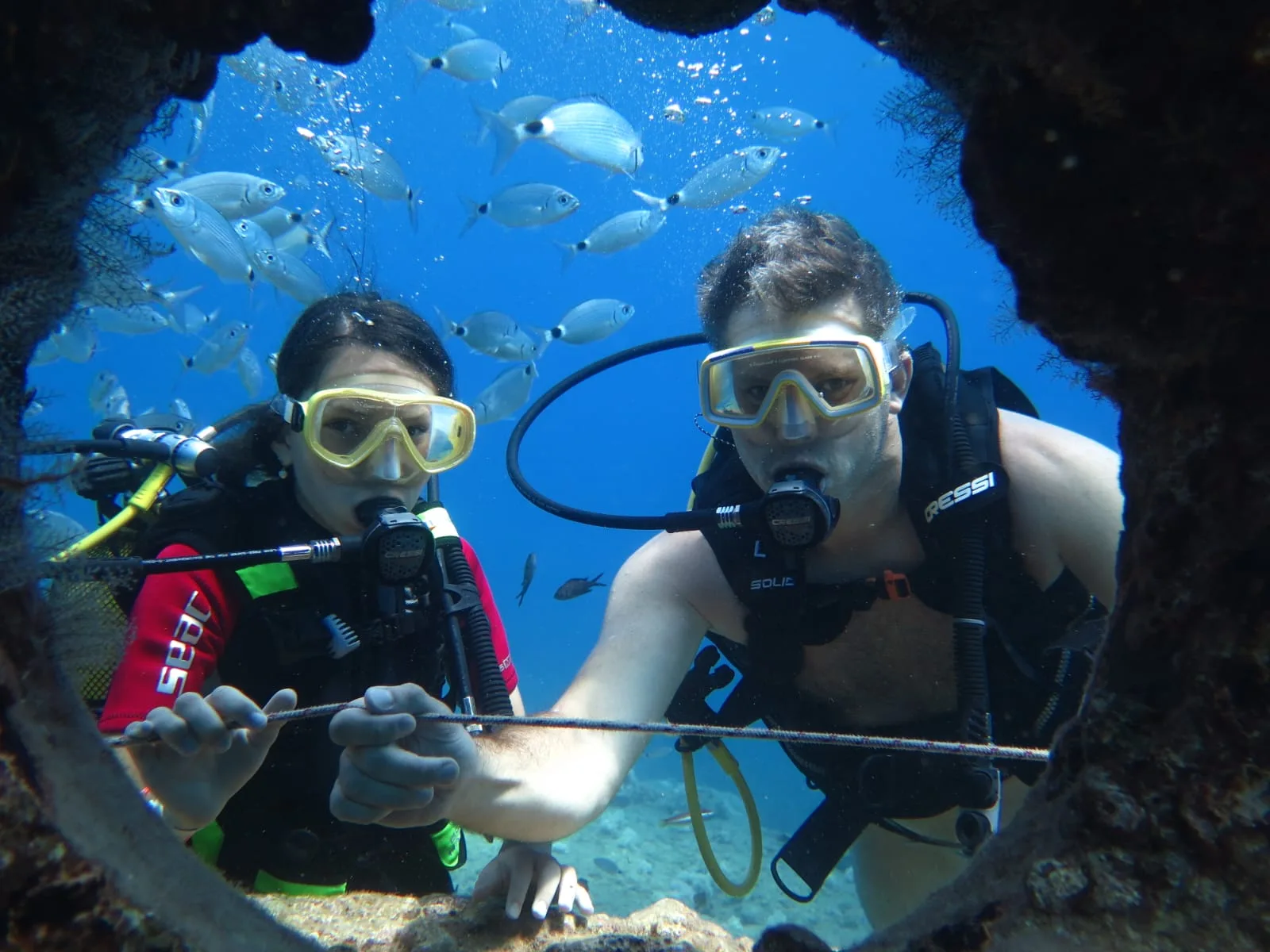
The month you choose can also shape which boat suits you best. The flagship Underwater Museum trip — around 110 sculptures at roughly 12 metres, with fish you can hand-feed and small groups of 3–4 divers per instructor — rewards clear, settled water, so shoulder-season guests see it at its most atmospheric, while its high-summer version trades a little clarity for the warmest sea and the brightest light. The Kemer trip heads for the coast's clearest-water cluster with PADI-certified instructors, which makes it the natural pick in the high-visibility months. And if you are travelling as a family, remember that try-dives run from around age 10, younger children of about 8–10 can ask us about a Bubblemaker-style option, and non-diving companions join as visitors or snorkelers at a reduced rate — in every season.
Honest Picks by Priority
- Best all-round months: June and September — warm sea, visibility at or near its peak, manageable crowds.
- Warmest water: August, at around 28–29°C.
- Best visibility: generally late spring to early summer, and again in autumn.
- Quietest good diving: May and October.
- Winter: sometimes possible, never guaranteed — message us with your dates.
What Never Changes, Whatever the Month
Every trip, in every month it runs, includes the same core: two guided dives (5–8 metres in the morning for 15–25 minutes, about 13 metres in the afternoon), all equipment including a wetsuit matched to the water, free two-way hotel transfer with the exact pickup time confirmed the evening before, a fresh lunch on board, passenger and diving insurance, and a full briefing. Beginners never need a licence; certified divers get logbooks signed. Prices stay the same across the season too — from €43 for Kumkoy, Kemer and Alanya to €45 for the flagship Underwater Museum and €50 for Antalya. You can compare every option on our tours page.
Whatever month your holiday lands in, the process is the same and the risk is zero: reserve for free, pay on the day, cancel free up to 24 hours before. Tell us your dates and we will tell you honestly what the sea will be doing — and which trip will make the most of it.