Why a Little Water in Your Mask Is Completely Normal
Here is a secret experienced divers rarely mention: their masks let water in too. A few drops seeping in over a dive is not a failure of your mask or your technique — it is simply what happens when a soft silicone skirt meets a moving human face. Smile at a fish and your cheeks lift the seal. A strand of hair under the skirt creates a tiny channel. Look up sharply and the seal shifts for a moment. None of this matters once you know the one small skill this article teaches: clearing your mask with a single relaxed breath.
The Real Problem Is the Reflex, Not the Water
Water touching the inside of a mask is harmless. What unsettles beginners is the reflex attached to it: on land, water near your nose means trouble, so your body sounds an alarm. The fix is understanding one fact deeply: your breathing does not depend on your mask. Air comes from the regulator in your mouth, and it keeps coming whether your mask is dry, damp or even completely flooded. Divers with fogged or flooded masks can breathe indefinitely. Once your brain accepts this — and it accepts it fastest through calm practice — the reflex quietens and mask water becomes what it really is: a minor housekeeping task.
The Exhale-Through-Nose Technique, Step by Step
Mask clearing uses the air you are already breathing. Here is the whole skill:
- Keep breathing normally. Nothing about clearing requires rushing. Take a comfortable breath in through your regulator.
- Press the top of the frame. Place one or two fingers on the upper edge of your mask and press it gently against your forehead. This anchors the top seal.
- Tilt your head back slightly. Looking a little upward moves the lowest point of the mask to the bottom of the skirt — exactly where you want the water to exit.
- Exhale steadily through your nose. The air fills the mask from the top, and because air is lighter than water, it pushes the water down and out under the bottom skirt. One long, steady nose exhale is usually enough.
- Look forward and carry on. Mask clear, dive continues. The whole process takes three or four seconds.
Partial clear versus full clear
Most of the time you will do a partial clear — removing the small puddle that collects below your nose. The technique is identical for a fully flooded mask; it just takes one bigger exhale, and sometimes a second one. Instructors demonstrate both, because knowing you can empty a completely flooded mask is precisely what makes a few drops feel like nothing.
Getting the Fit Right in the First Place
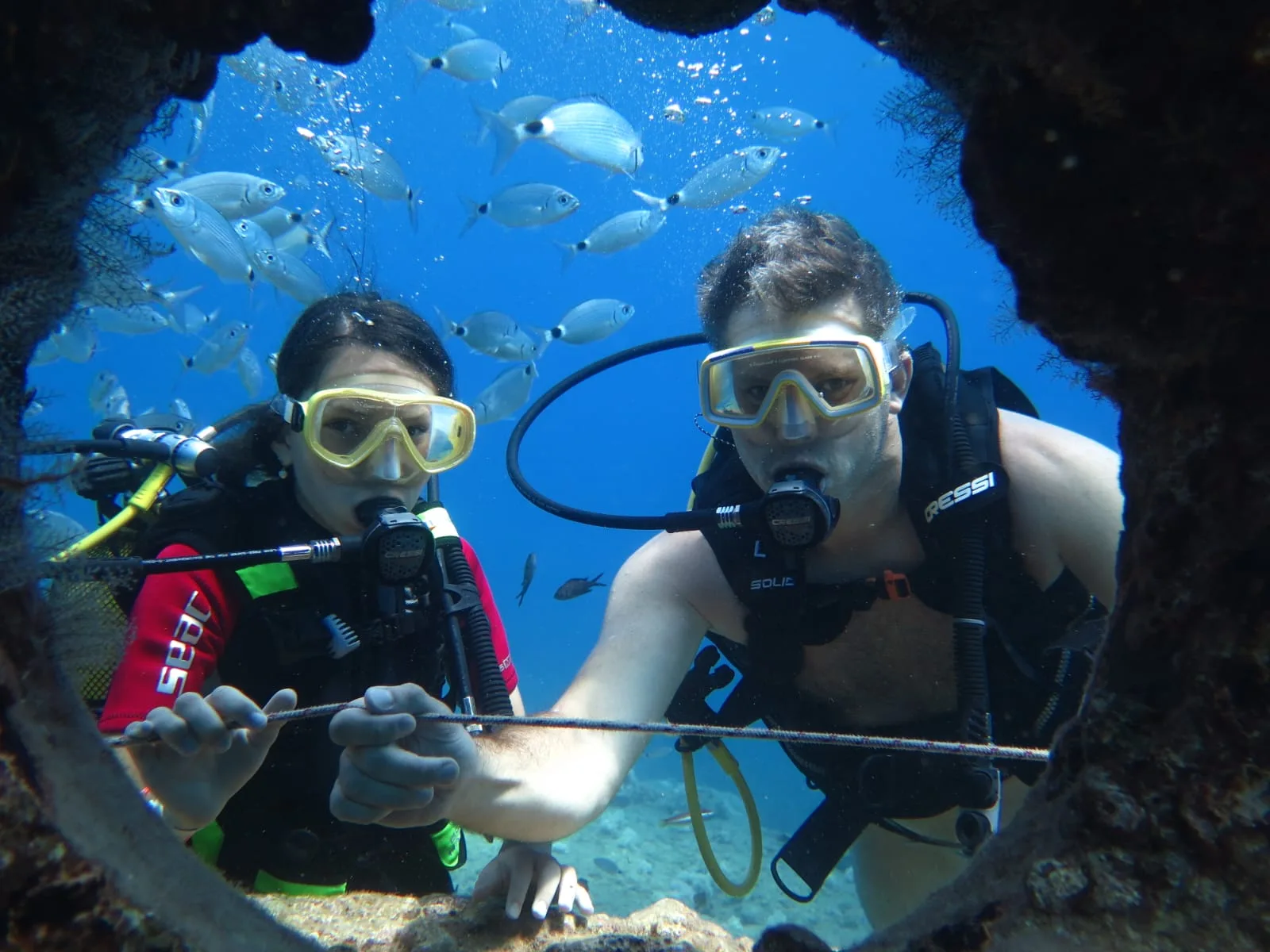
Less water in means less clearing. On every trip, masks are part of the included equipment — along with tank, regulator, wetsuit and fins — and your instructor helps you find one that seals well on your face before you enter the water. Three fit rules do most of the work: keep every strand of hair out from under the skirt, leave the strap snug but not tight — an over-tightened strap actually buckles the silicone and creates leaks — and place the strap high on the back of your head, not on your ears. If a mask keeps letting water in during the dive, tell your instructor afterwards; swapping to a different size for the second dive is routine.
Where You Actually Learn It: The Shallow First Dive
Skills read well, but they are learned in the water — and this is exactly what the structure of our trips is built around. Your first guided dive takes place at five to eight metres for fifteen to twenty-five minutes: shallow, bright and unhurried, with your instructor at arm's reach. This is where you try the nose-exhale clear for real, in calm conditions, before the deeper afternoon dive to about thirteen metres. Every trip begins with a full safety briefing where the technique is demonstrated on deck first, and on our Kumköy diving trip — like on all our boats — beginners practise it with the instructor watching, correcting and reassuring.
Three Small Habits That Make Masks Easy
- Defog before every dive. A quick rinse and the standard defogging routine your instructor shows you keeps the glass clear, so you never confuse fog with flood.
- Clear early, not late. A teaspoon of water is easier and calmer to clear than half a mask. Make small clears part of your normal rhythm.
- Practise the nose exhale on land. Sitting at home, breathe in through your mouth and out through your nose a few times. That is the entire motor skill — the water only adds scenery.
Try It Somewhere Worth Looking At
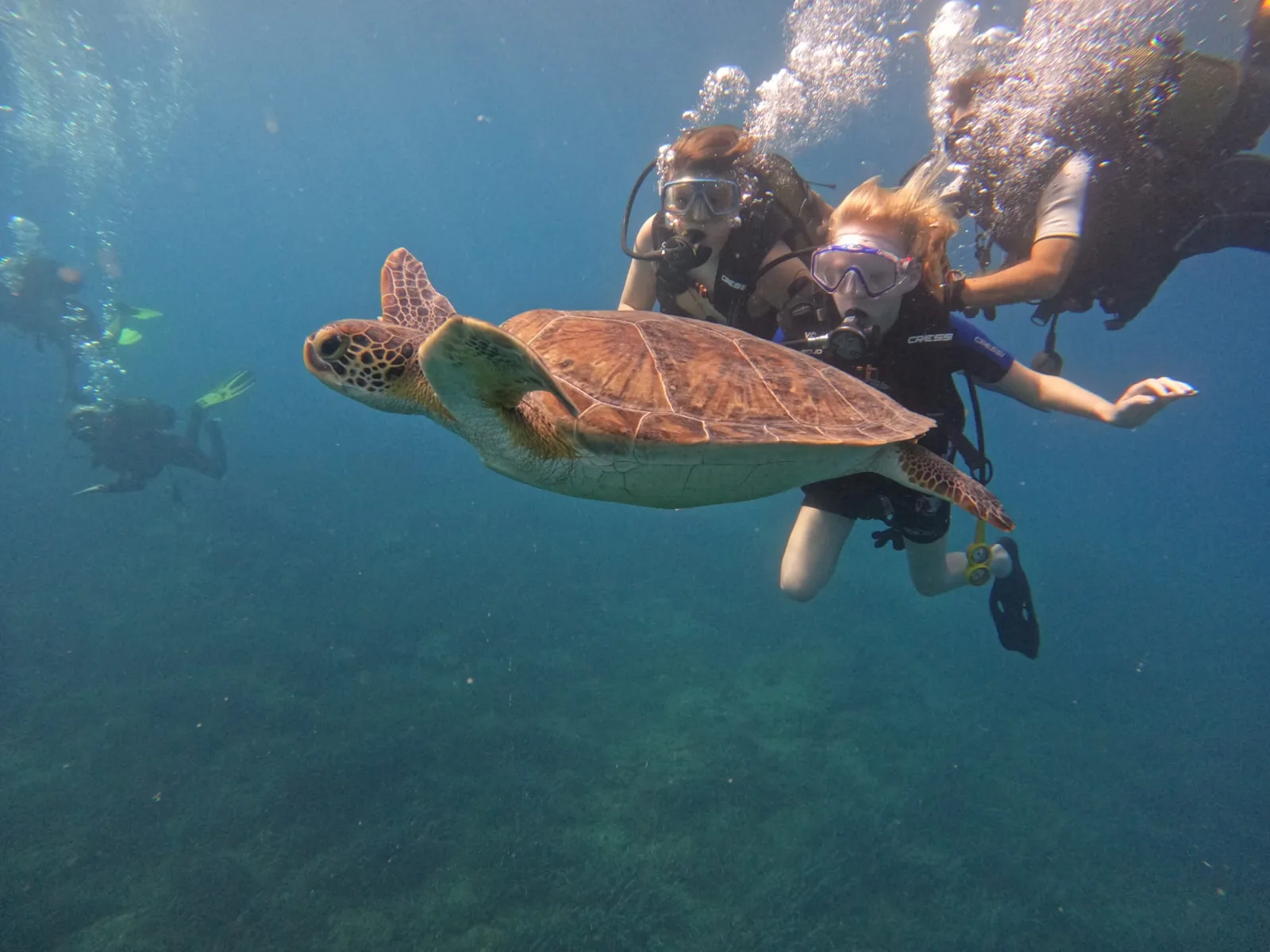
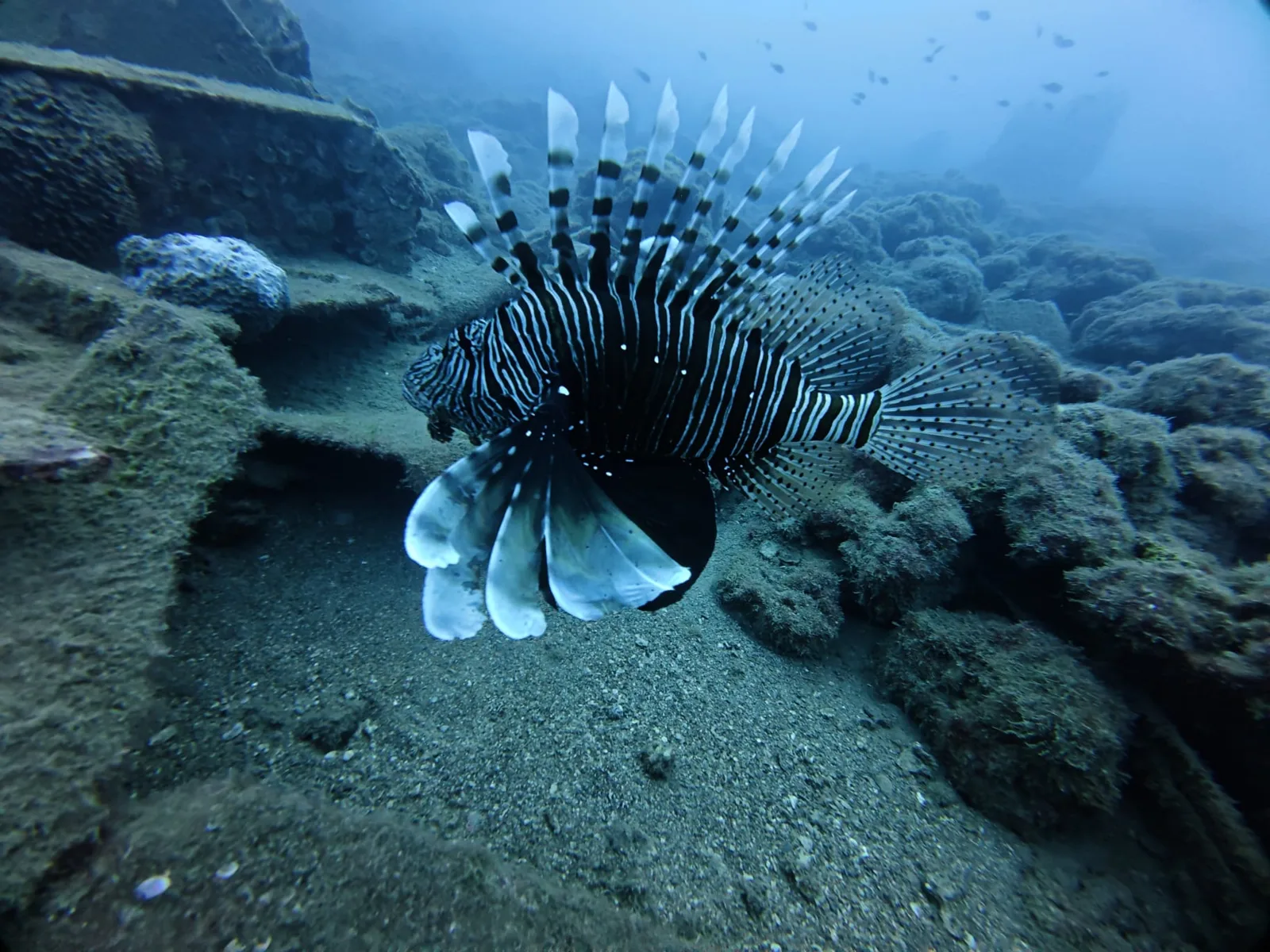
A clear mask matters most when there is something beautiful behind the glass — reef fish, rock formations, sunlight on sand. All our full-day boat trips include equipment, hotel transfer with morning pickup, fresh lunch on board and insurance, with two guided dives and no licence required. Reserve online for free, pay on the day, cancel free up to twenty-four hours before. Browse all our diving trips and put your new skill to work.