Can You Dive With Ear Problems?
It depends entirely on which problem. A blocked ear from a current cold, sinus congestion or an ear infection means postponing the dive - no exceptions, no arguments. A history of ear trouble, grommets, past surgery or recurring infections is a question for your doctor, whose written sign-off we will ask for. And simply finding equalisation awkward the first time is not a problem at all: almost everyone does, and it improves within minutes.
Ears are the most common reason a dive is cut short or postponed anywhere in the world. They are also the easiest thing to get right, because the technique is simple and the rule is simple: if it hurts, you stop. Nothing underwater is worth an injured ear.
Why Ears Feel Pressure Underwater
Your eardrum has air on both sides: the ear canal outside, and the middle ear inside, connected to your throat by a narrow tube. As you descend, the water pressure pushes inwards on the eardrum. Unless you actively add air to the middle ear through that tube, the drum stretches and starts to hurt.
Equalising means opening the tube and letting a little air through. The most common method is to pinch your nose and blow gently against it until you feel a small click or pop. Others swallow, yawn or wiggle the jaw - all of which work. The rules that matter more than the method:
- Start early. Equalise at the surface, then every metre or so on the way down. The first few metres are where pressure changes fastest.
- Be gentle. Soft, frequent attempts beat one hard forced blow. Forcing can injure the very structures you are trying to protect.
- Descend feet first, slowly. Head-down descents make equalising harder.
- If it will not clear, go up a metre and try again. Ascending slightly releases the pressure instantly and usually solves it.
- If it still hurts, the dive ends. Signal the instructor. Nobody will pressure you to continue.
We cover this in the safety briefing before anyone enters the water, and our step-by-step article on how to equalise your ears is worth reading the night before your trip.
When You Should Postpone
Do not dive with any of the following, even if you feel fine otherwise: an active cold or flu, blocked sinuses, a stuffy nose you cannot clear, an ear infection, ear pain, discharge, or a perforated eardrum that has not been confirmed healed. Diving with congestion is how people end up with a reverse block on the way up - air trapped in the middle ear that cannot escape - which hurts more than the descent ever did.
Decongestant sprays are a tempting shortcut and a genuinely bad idea: they can wear off at depth and leave you with exactly that trapped-air problem when you ascend. If you are congested, the sensible move is to move the dive to another day. Reservations are free and cancellation is free up to 24 hours before, so postponing costs you nothing but a change of plan.
Ear History, Surgery and the Doctor's Sign-Off
Grommets or ventilation tubes, previous ear surgery, a perforated drum, chronic infections, recurring vertigo or any inner-ear condition all go on the standard diving medical questionnaire that every diver completes before the briefing. If something is flagged, we ask for a doctor's written sign-off before you dive.
We say this plainly: we never diagnose anyone, and we never give medical guarantees. Your ENT doctor knows your ears; we know the boat. Get the assessment at home before your holiday - arranging it on the morning of a trip rarely works. Our overview of diving with medical conditions explains what tends to be flagged, and you can always write to us beforehand with the details.
Depth, Speed and Why Beginners Have It Easier
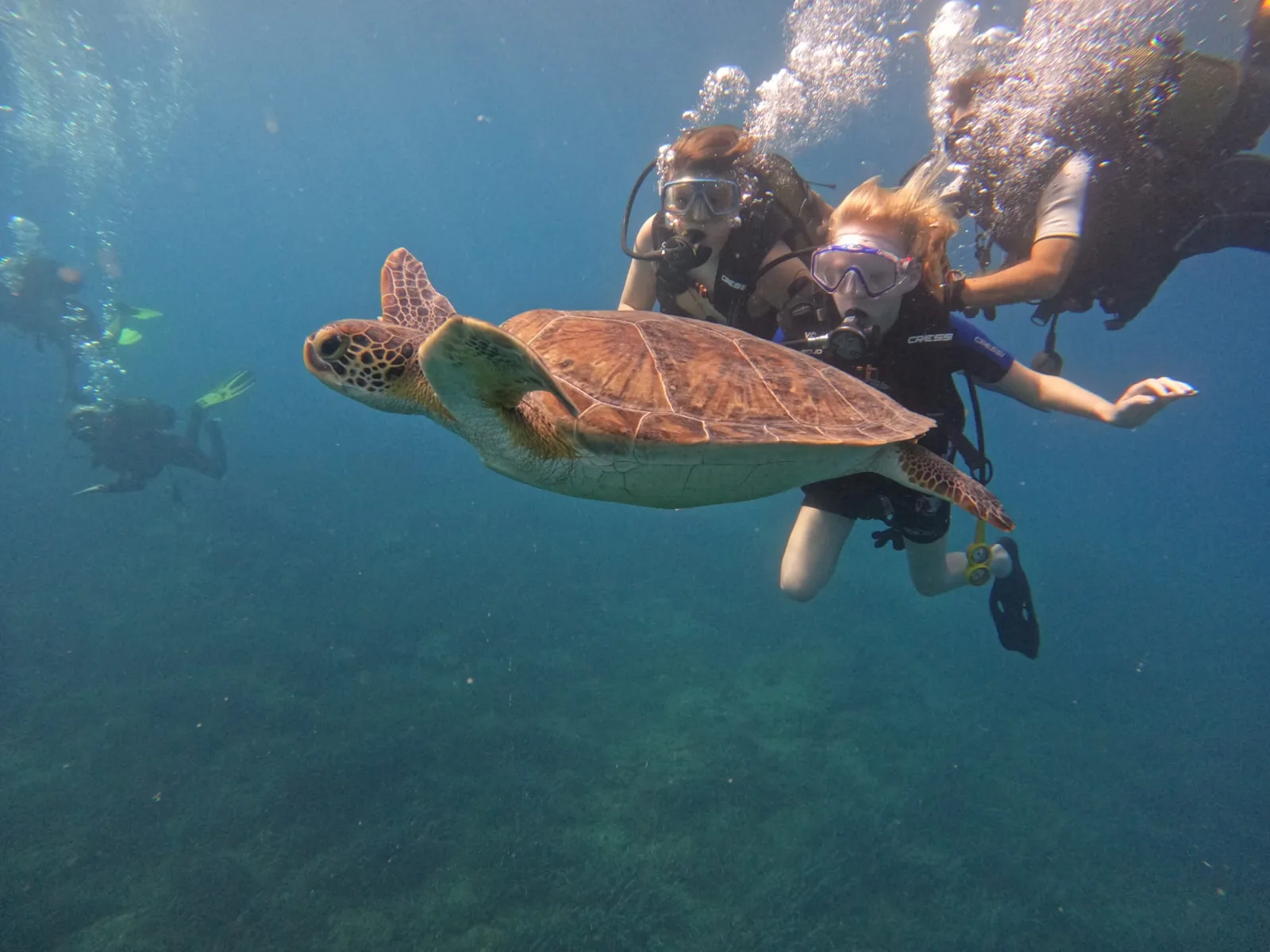
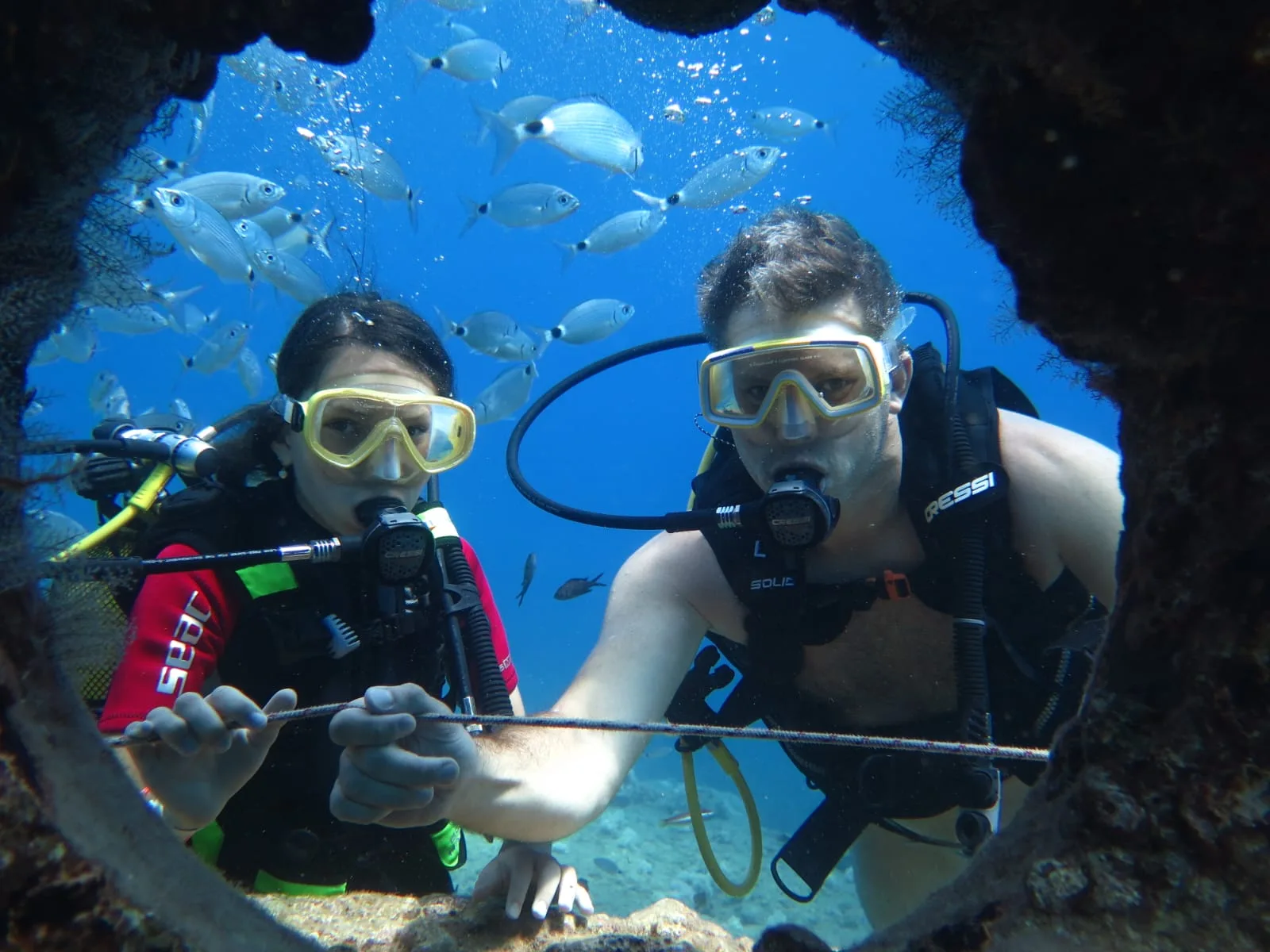
Beginners have an advantage here. On a guided discovery dive you stay at 5-8 metres on the morning dive and go to about 13 metres maximum on the second, with an instructor within arm's reach and only three or four divers per group. That means slow, controlled descents with as many pauses as you need - and a hand on the line if you want one.
Certified divers descending to around 30 metres on standard dives, or up to 60 metres on the deep sites when suitably qualified, face far bigger pressure changes and need their equalisation to be reliable. If you are diving deeper on our certified diver trips, be honest with yourself about how your ears behaved on your last dives.
A Practical Plan for Your Dive Day
Sleep well, stay hydrated, and skip the dive if you wake up congested. Tell the instructor at the briefing if your ears are historically slow to clear - that single sentence changes how your descent is run. Warm water helps: the sea here runs from around 17°C in winter to about 28-29°C in late summer, and a relaxed diver in warm water clears more easily than a cold, tense one.
One more rule that applies to everyone, ears or not: no flying within 24 hours after diving. Plan your dive day at least a full day before your flight home.
Book Free and Decide Later
Reserve online at no cost, pay on the day in cash or by card, and cancel free up to 24 hours before - which is exactly what makes it easy to postpone if you wake up blocked. Compare our five boat trips, look at the Kemer dive day with its clear water and PADI-certified instructors, and tell us about your ears when you book. We would far rather plan around them than have you discover the problem at five metres.