Short answer: on a guided dive you do not simply run out of air. Your tank is filled and pressure-checked before it reaches the boat, the contents are shown on a gauge you can read at any second, and an instructor who is never more than an arm's length away is watching that gauge as well as your breathing. If a supply problem ever did develop, the instructor passes you a second, fully independent mouthpiece from their own regulator and the two of you make a slow, controlled ascent together. It is a rehearsed procedure, not a film scene.
Why an Empty Tank Is a Movie Idea, Not a Dive Day Reality
Air underwater behaves in a boringly predictable way. A tank does not fail suddenly or drain without warning: the pressure falls in a straight line as you breathe, and that line is printed on a gauge clipped where you can see it, exactly like the fuel gauge in a car. Divers do not surface with an empty cylinder — they surface with a reserve still inside, because the dive is planned to end while there is plenty left.
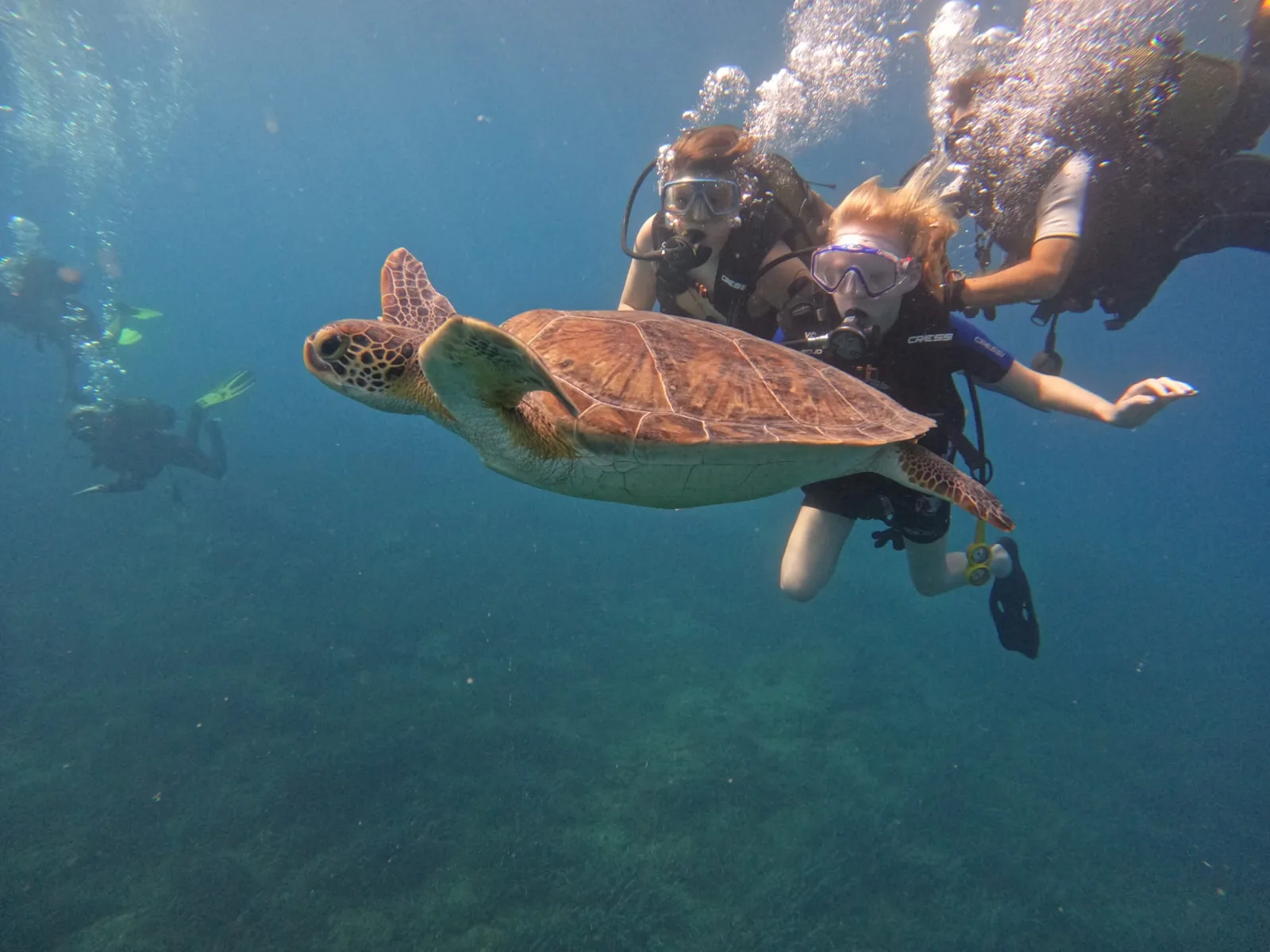
Depth is the other half of the arithmetic. The deeper you go, the denser the air you breathe and the faster the gauge moves. On our guided programme for beginners the morning dive stays at 5–8 metres and the second dive goes to around 13 metres at most, always with the instructor within reach. At those depths a standard cylinder holds far more air than the dive will ever use. The maths is on your side before you even get wet.
The Four Layers Between You and an Empty Cylinder
1. The check before you get in
Every set is assembled and tested on deck. The instructor opens the valve, reads the pressure, breathes from both mouthpieces and checks yours with you. Nobody enters the water with an unchecked cylinder, and nobody enters with a partly filled one.
2. Your own gauge
You will be shown how to read your gauge in the briefing and asked for your pressure at intervals during the dive. You do not need to interpret anything clever — you show the number, or you use the agreed hand signal for low on air, and the instructor takes it from there.
3. An instructor with three or four divers
On the Side Underwater Museum trip we keep groups to a maximum of 3–4 divers per instructor. That ratio exists precisely so that air, depth and comfort can be monitored individually rather than in a crowd. Beginners also breathe more heavily than they expect at first, and an instructor who can see all of you notices that long before it matters.
4. The alternate air source
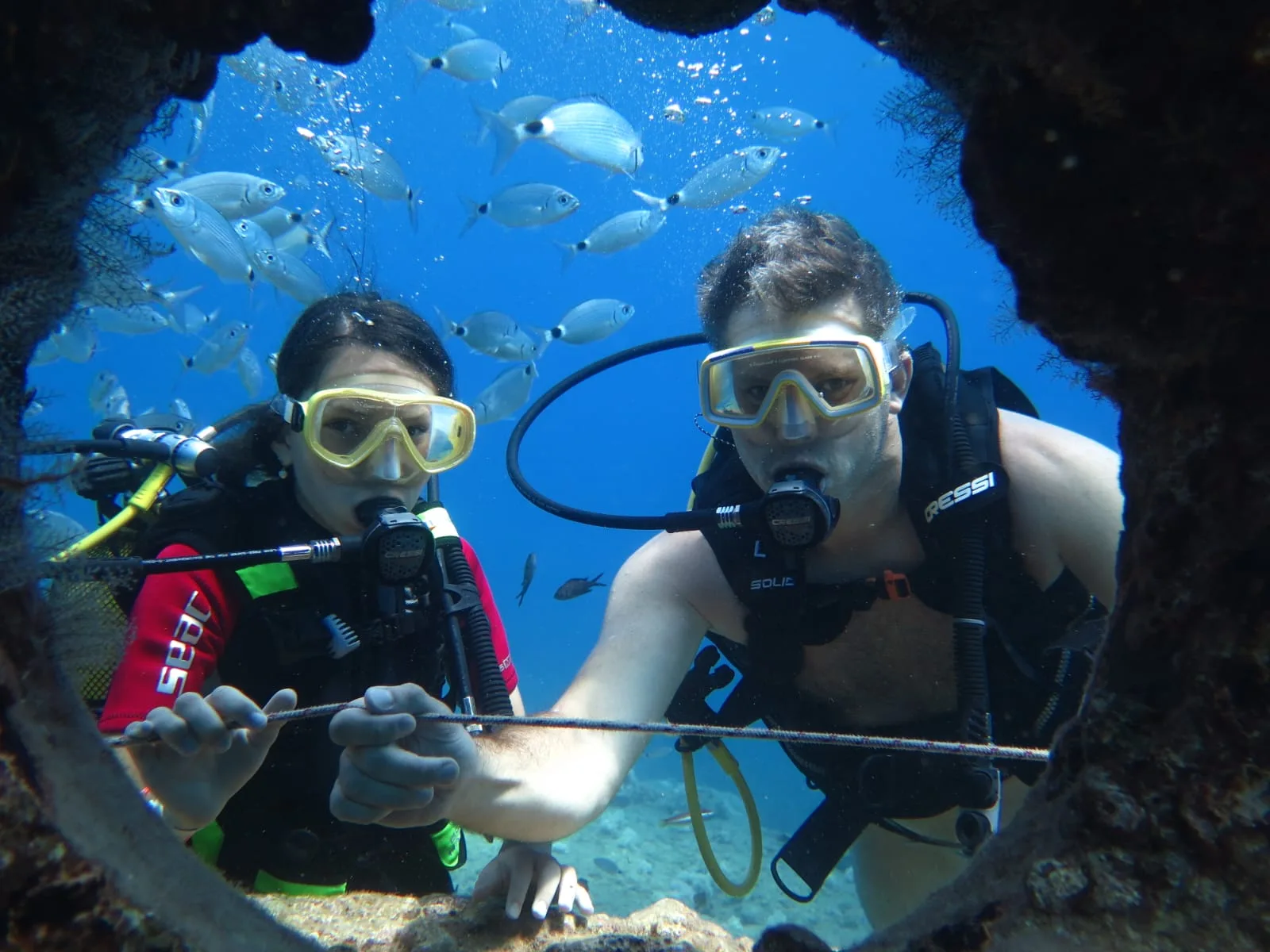
Every regulator on the boat carries a second mouthpiece, usually bright yellow, hanging where a buddy can grab it. It draws from the same tank, so one cylinder comfortably supplies two divers for the short time needed to ascend. Sharing air is a normal skill, not a last resort — and on the rare occasion it is used, it is used calmly.
What a Controlled Ascent Actually Looks Like
If air ever needed to be shared, the dive simply ends early. You take the alternate mouthpiece, hold on to your instructor, and go up slowly and steadily — no rushing, no kicking for the surface. The single rule that matters throughout is that you keep breathing and never hold your breath, so the expanding air can leave your lungs freely as the pressure drops.
Everything about the day is set up to make that scenario undramatic: the full safety briefing before the first dive, passenger and diving insurance included in the price, and a boat waiting directly above with the crew watching the water.
What We Ask You to Do
- Breathe slowly and continuously. Rushed, shallow breathing burns air quickly and does not calm you down.
- Answer the pressure check honestly. Showing a low number early is exactly what the system is designed for.
- Stay close. Within arm's reach means the instructor can help instantly, without swimming across a dive site.
- Signal, do not solve. If something feels wrong, signal it. Every issue is smaller when it is shared in the first ten seconds.
Certified Divers: The Same Rules, Bigger Numbers
On certified diver trips you dive around 30 metres, and up to 60 metres on the deep sites when you hold the right qualification — the Paris II wreck at 21–31 metres, the DO-28 aircraft at 19.5–23.3 metres. Air lasts a shorter time down there, so gas planning, buddy checks and turn pressures matter more, not less. Certified divers agree the plan before the dive and log it afterwards; your logbook can be signed on board.
Come and See How Ordinary It Is
The fastest cure for this particular worry is one supervised dive. Our full-day boat trips run from €43 to €50, and every one of them includes two guided dives, all standard equipment, free two-way hotel transfer, lunch on board and insurance. Browse the dive trips, read more about how we run a day on the diving safety page, or message us with any question at all. Reserve free online, pay on the day, cancel free up to 24 hours before. A thermal inner suit (diving undergarment) or any extra neoprene layer is not included in the price and is available as an optional extra on request.