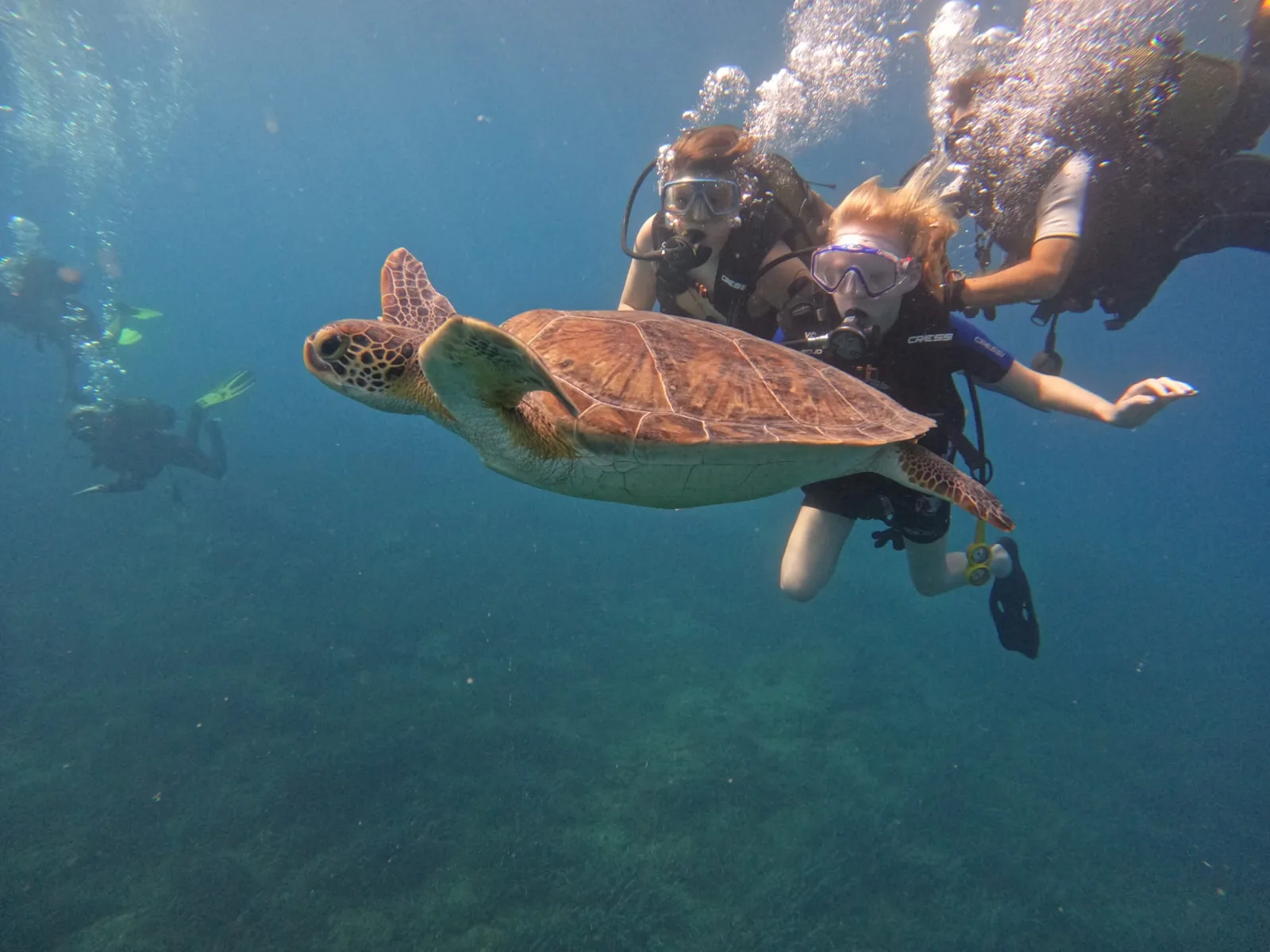
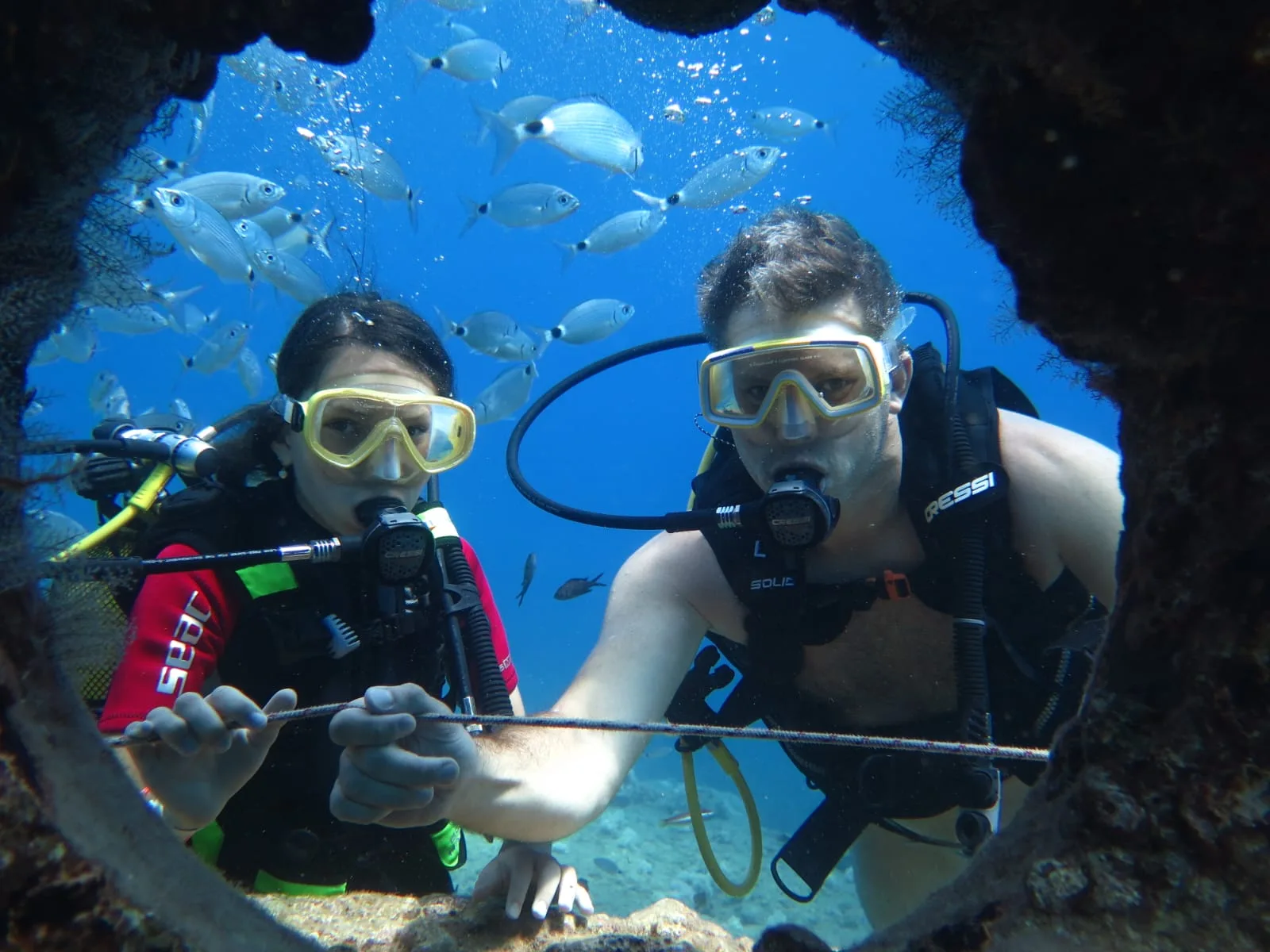
Roughly a third of our guests wear glasses or contact lenses on land, and almost all of them ask the same question before their first dive: will I actually be able to see anything down there? The short answer is reassuring. Soft contact lenses work fine under a dive mask; glasses do not. With a few practical habits, imperfect eyesight is no obstacle to a brilliant day of diving.
Why glasses and dive masks do not mix
A dive mask keeps water out by pressing its soft silicone skirt directly against the skin of your face. The arms of a pair of glasses run straight through that seal — water finds the gap immediately, and the mask floods no matter how tightly you pull the strap. Glasses also fog badly in the humid air pocket of a mask, and a dropped pair is very hard to recover from a boat. So the glasses stay safely in your bag on deck.
Contact lenses: the practical solution
Soft contact lenses sit snugly on the eye and are widely regarded as compatible with recreational diving — millions of divers wear them every day. Only two habits are required. First, keep your eyes closed for the moment your mask is flooded or being cleared, so no direct stream of water washes across the lens. Second, blink a few times once the mask is dry again. Your instructor practises mask clearing with you calmly and gradually, so there is no surprise moment.
What about hard, gas-permeable lenses?
Rigid lenses are less ideal for diving. During pressure changes, tiny bubbles can form between a hard lens and the eye, which some wearers feel as discomfort or temporary blurring after the dive. If you normally wear hard lenses, speak to your optician — many holiday divers simply switch to soft daily disposables for their trip.
The underwater bonus: water magnifies
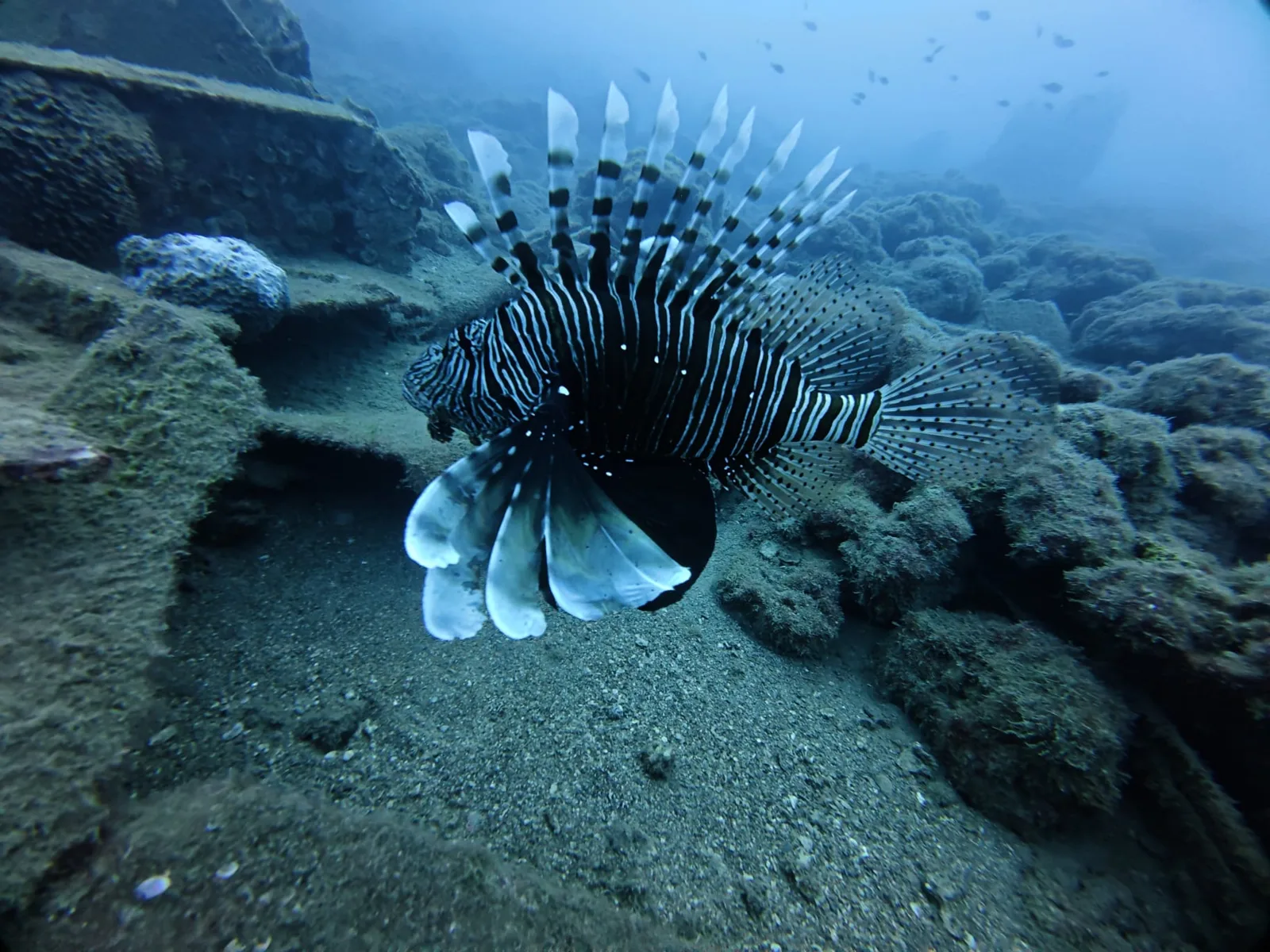
Here is a pleasant surprise: because light bends as it passes from water through your mask into air, everything underwater appears roughly a third larger and closer than it really is. Divers with a mild prescription often find they see remarkably well with no correction at all. It is not a substitute for a strong prescription, but it does mean that slightly short-sighted guests rarely miss a thing — including the sculptures on our Underwater Museum trip, which you view from arm's-length distance anyway.
Strong prescription? There are options
Masks with corrective optical lenses exist in the diving world and are a well-established solution for people who cannot wear contacts. If you depend on strong correction, contact us before your trip, tell us your prescription, and we will advise you honestly on the most practical option for your diving day.
Practical tips for lens wearers
- Choose daily disposables for your diving day: hygienic, no cleaning products needed, and cheap to replace if one is lost.
- Pack a spare pair (and a small mirror) in your bag on the boat.
- Tell your instructor that you wear lenses — it takes two seconds during the dive briefing and lets them keep an extra eye on you during mask exercises.
- Keep your eyes closed while clearing the mask, then blink gently once it is dry.
- Bring lubricating drops for after the dive; salt water, sun and wind can leave eyes feeling dry.
- Skip the eye makeup — it smears inside a mask and can irritate your eyes underwater.
Everything else is provided
You do not need to buy or bring any diving gear. On every one of our trips the mask, fins, wetsuit, tank and regulator are included in the price — see what is in the package on our equipment page. Masks come in different sizes and shapes, and the crew helps you test the seal on your face before you get anywhere near the water: place the mask on without the strap, breathe in gently through the nose, and a well-fitting mask stays put on its own.
See for yourself — literally
If you can read this page with your usual correction, you can enjoy the Mediterranean with it too. Browse our full-day boat trips from Side, Kumköy, Kemer, Antalya and Alanya — every one includes two guided dives, all equipment, hotel transfer, lunch on board and insurance. Reserve free online, pay on the day, and cancel free up to 24 hours before. Your eyes will thank you for the view.