Two Dives in One Day — By Design
Every full-day Side Diving trip includes two guided dives: a morning dive at five to eight metres lasting about 15 to 25 minutes, and an afternoon dive down to about 13 metres — the beginner ceiling. That structure is not padding to fill a boat schedule — it is deliberate design, and the second dive is the reason it works. Ask almost anyone who has done a try-dive day: the first dive is the one they were nervous about, and the second is the one they talk about at dinner.
The First Dive: Your Brain Is Fully Booked
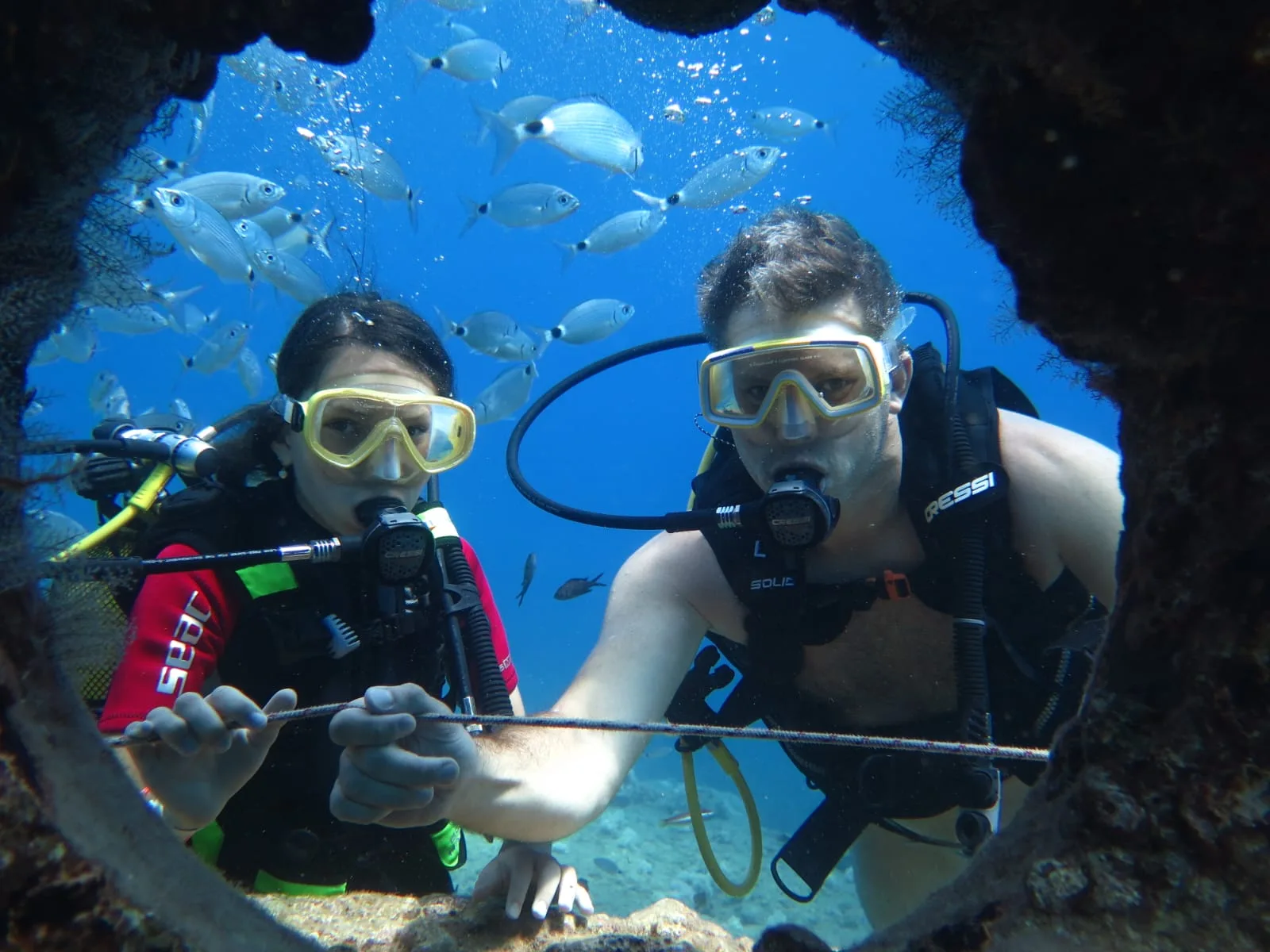
Nothing quite prepares you for the first breath underwater. It works — the briefing said it would — but your brain still spends the whole dive double-checking. Breathe slowly. Equalise. Where is the instructor? Am I floating up? What was the signal for okay again? This is completely normal, and it is exactly why the morning dive is shallow and short. At five to eight metres, with your instructor at arm's length, you have nothing to manage except getting used to an entirely new way of being. Most people surface from dive one exhilarated — and unable to name a single fish they saw.
The Comfort Curve: What Changes After Lunch
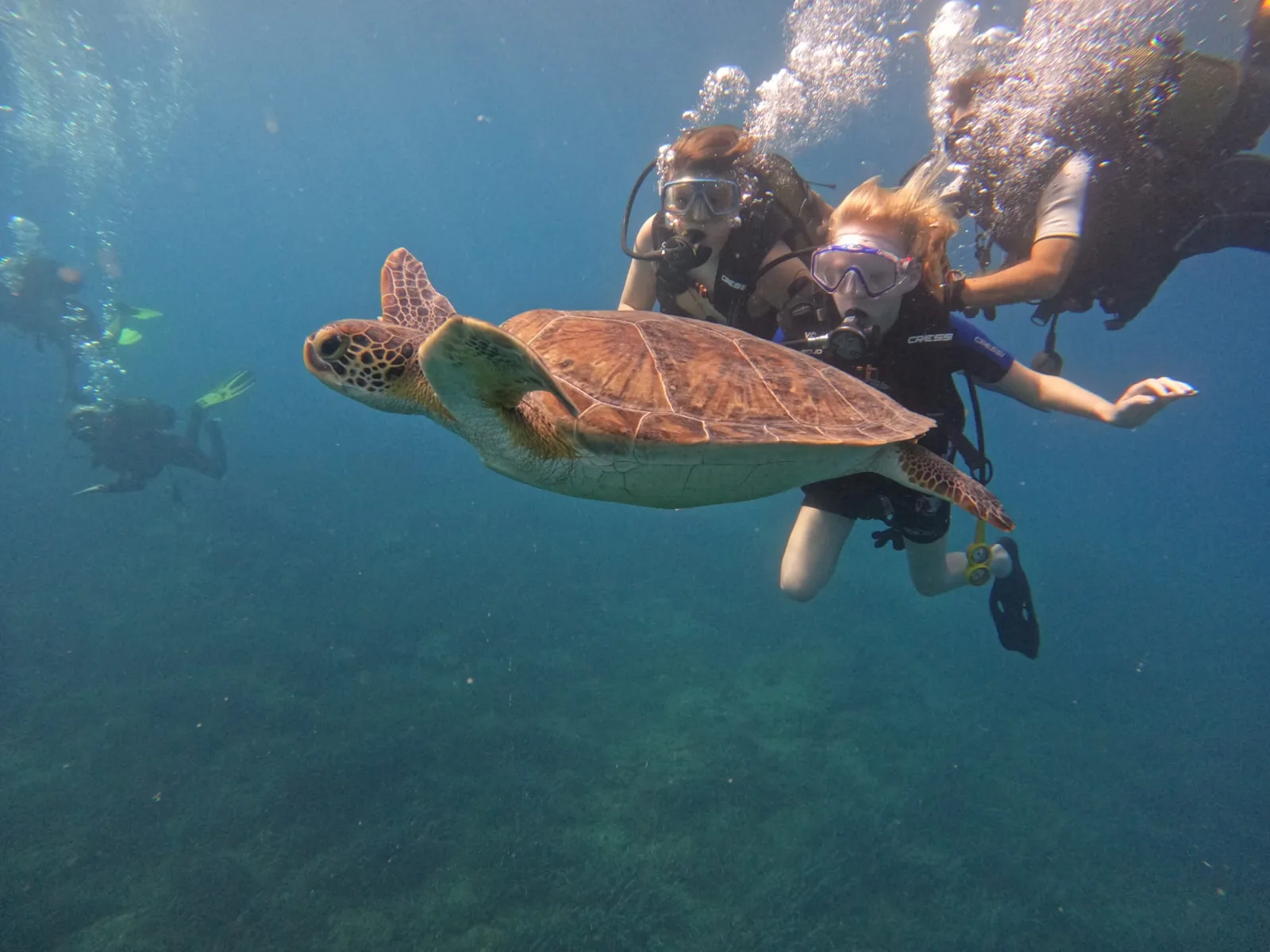
Then something quietly wonderful happens over lunch. Your body files the morning away under things we now know how to do. When you roll back in for the afternoon dive, breathing is no longer a project — it just happens. Your ears equalise almost out of habit. Your hands stop searching for something to hold. And with all that mental bandwidth suddenly free, you do the thing you actually came for: you look. The light shafts, the fish that were apparently there all morning, the strange blue silence of it — dive two is where diving stops being a skill you are surviving and becomes a place you are visiting.
Deeper Usually Feels Calmer
Here is the counterintuitive part: the afternoon dive is deeper, yet almost everyone finds it easier. At about 13 metres you are further from the surface chop, the water is stiller, and the slow rhythm of your own breathing becomes the loudest thing around. Depth sounds like it should mean more fear; in practice, on a guided dive, it mostly means more peace.
Where the Second Dive Shines
- The Side Underwater Museum — the sculpture park, around 110 figures, sits at roughly 12 metres. The afternoon dive is where you drift over it with eyes that are finally ready to see it, and hand-feeding the fish is far more fun with relaxed hands. See the Underwater Museum trip.
- Kemer — some of the clearest water we dive rewards a calm, observant diver. See Kemer scuba diving.
- Small groups everywhere — at the museum, three to four divers per instructor means your second dive gets real attention, not crowd management.
When It Hooks You — and What Comes Next
There is a particular look people have on the boat after the second dive — already asking whether tomorrow is too soon to do it again. If that is you, the path forward is simple. Your dives are signed into a logbook at the end of the day, which is the small paper beginning of a diving life. From there, CMAS courses are available on request, and certification opens the doors that guided try-dives cannot: certified divers dive from the same boats to around 30 metres on standard dives, and down to 60 metres on the deep sites when their qualification allows. That range covers the Paris II wreck at 21 to 31 metres, the DO-28 aircraft at around 19.5 to 23.3 metres and the 9-metre tunnel at Three Islands near Kemer — certified-diver sites you can grow into, with the exact dive depending on your qualification level, the conditions and the day's plan.
If You Are Unsure About Going Twice
Nobody is frog-marched into dive two. If anything feels off, tell your instructor — that is what they are there for, and a shorter or gentler second dive is always a conversation. In practice, though, the pattern is overwhelmingly the other way: the guest who was hesitant at breakfast is the one asking about courses by late afternoon. The usual health rules apply as ever — diving is not for pregnancy or serious heart or respiratory conditions, and when in doubt, consult your doctor and the standard diving medical form before your trip.
Ready to meet your second dive? Pick a trip on the tours page, reserve for free and pay on the day — and if the afternoon dive does what it usually does, ask us about courses on the ride back to harbour.