Can Anyone Fit the Diving Equipment?
In almost all cases, yes - and the only thing that ever causes a problem is silence. Wetsuits and buoyancy vests come in a wide range of sizes, and boats carry a spread of them precisely because divers are not one shape. What we cannot do is conjure a size on the morning of the trip that nobody told us about. Tell us your rough size when you book, and the day works.
This is a question a lot of people would rather not ask out loud, so let us answer it plainly and without any coy language. Being tall, short, broad, heavy or slight does not disqualify you from scuba diving. Sizing is logistics, not judgement.
How Wetsuits Are Actually Sized
A wetsuit is meant to be snug - it works by trapping a thin layer of water that your body warms - but snug does not mean squeezing. The measurements that matter are chest, waist, height and, surprisingly often, calf and shoulder width. Two people of identical weight can need different suits because one is broad in the shoulders and the other is long in the leg.
Warm water helps here more than people expect. The sea along this coast runs from around 17°C in winter to about 28-29°C in late summer, so in the warm months a thinner, stretchier suit is appropriate - and thinner suits are far more forgiving on fit than thick ones. If a full suit is uncomfortable, a shorty is a normal alternative, not a compromise anyone will comment on.
- Tell us your usual clothing size or your chest and height. That is enough for us to set aside the right suits.
- Bring a swimsuit you like. You wear it under the wetsuit; nothing else is needed.
- Changing happens on the boat, and everyone is doing the same awkward hopping dance. Nobody is watching.
The BCD, Straps and Tank
The buoyancy vest is the more adjustable item of the two. A BCD is built around webbing and straps: shoulders, chest, waist and cummerbund all pull in or let out substantially, so one shell covers a wide span of body shapes. Larger sizes exist, and our instructors set the fit for you rather than handing you a pile of gear at the ladder.
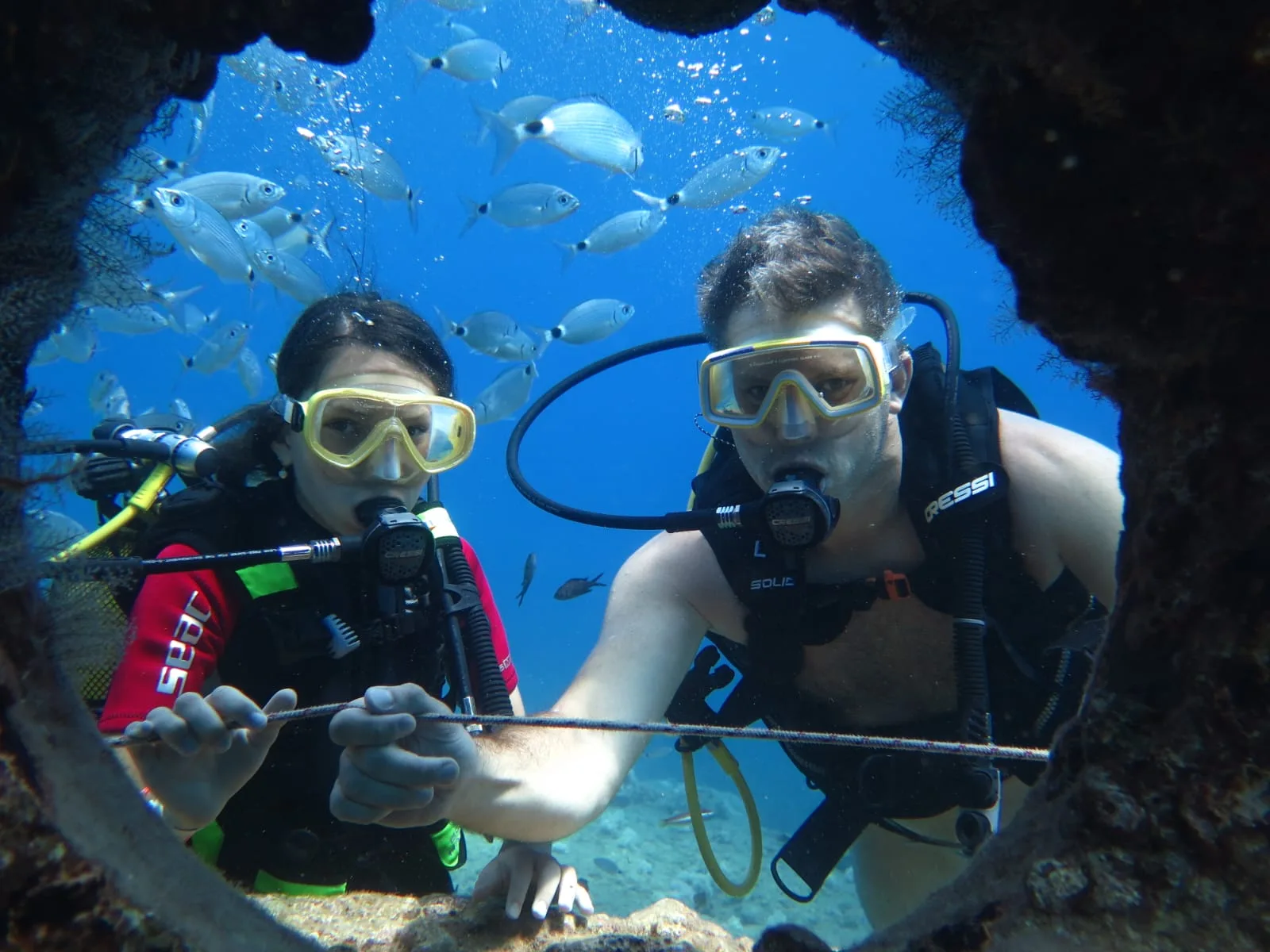
A well-fitted BCD sits without riding up when you are in the water. If yours does not feel right, say so on the boat before you get in - adjusting it takes seconds and makes the whole dive more comfortable. Our equipment page lists everything that comes as standard: tank, regulator, BCD, wetsuit, mask, fins and weights, all included in the price of every trip. A thermal inner suit (diving undergarment) or any extra neoprene layer is not included in the price and is available as an optional extra on request.
Weight, Buoyancy and Why It Is Not What You Think
Here is the physics that surprises everybody: how much weight you carry has more to do with your wetsuit than your body. Neoprene floats, so a thicker suit needs more lead. Body composition plays a part too - fat is more buoyant than muscle, so a leaner, muscular diver often needs less weight than they assume, and a larger diver is not automatically heavily weighted.
Weighting is set by trial in the water, not by a chart. Your instructor will check it at the surface at the start of the dive and adjust it. That is a normal part of every dive day, done for everyone. Nobody announces a number to the boat.
Once you are correctly weighted the sensation is the same for every body: you hover, effortless and weightless. That is the part guests remember, and it is a genuinely level playing field. Our beginner diving page explains how the first descent is run.
What Matters More Than Size: Comfort and Health
Body size is a fitting question. Fitness and health are the real ones, and they are handled the same way for everyone. Every diver completes the standard diving medical questionnaire before the briefing. Diving is not possible during pregnancy, or with severe asthma, heart or respiratory conditions, and if anything is flagged we ask for a doctor's sign-off. We never diagnose and we never make medical guarantees - that judgement belongs to your doctor.
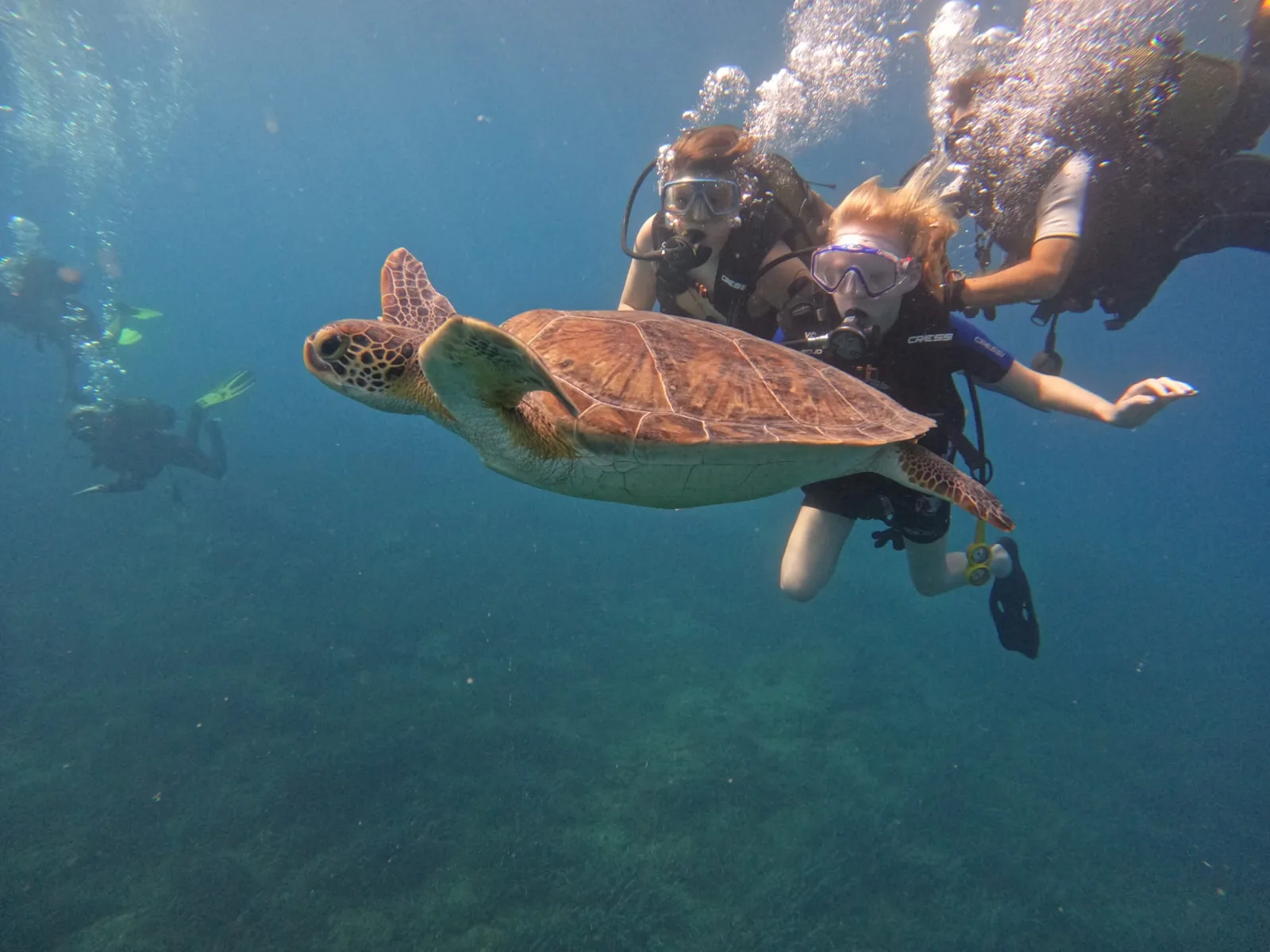
Beginners also have physics on their side. On a discovery dive you stay at 5-8 metres on the morning dive and go to about 13 metres maximum on the second, with an instructor within arm's reach and only three or four divers per instructor. It is slow, shallow and calm. Certified divers going to around 30 metres, or up to 60 metres on the deep sites when suitably qualified, are working harder than you will be.
Ladders, Boarding and Practical Dignity
Getting back onto a boat with a tank on your back is the one genuinely physical moment of the day, and the crew handles it for you: your fins are taken, the tank can be removed in the water, and there is always a hand on the ladder. Ask for that help. Experienced divers ask for it too.
And if you would rather enjoy the day on deck, that option is real and dignified: non-divers join as boat visitors at a reduced rate with the same free two-way hotel transfer, fresh lunch on board and passenger insurance.
One Sentence at Booking Solves It
Reserve free online, pay on the day in cash or by card, and cancel free up to 24 hours before. When you book, add one line about sizes - your own and anyone else in your group - and we will have the right kit waiting. Browse the five boat trips, check the prices, or just message us. We have heard every version of this question, we answer it the same practical way every time, and it has never once stopped somebody diving with us.