Our honest ranking, and why it is not close
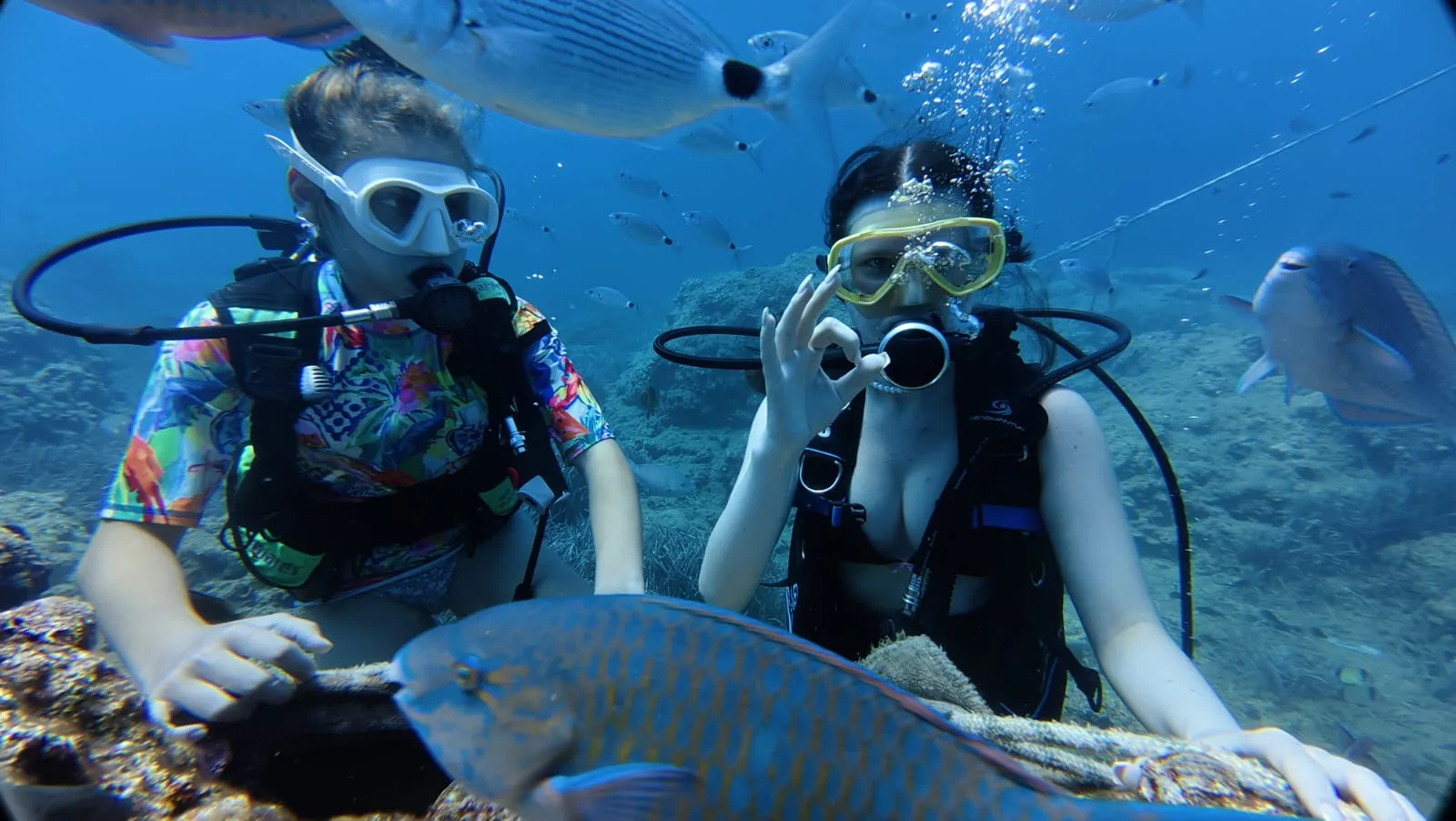
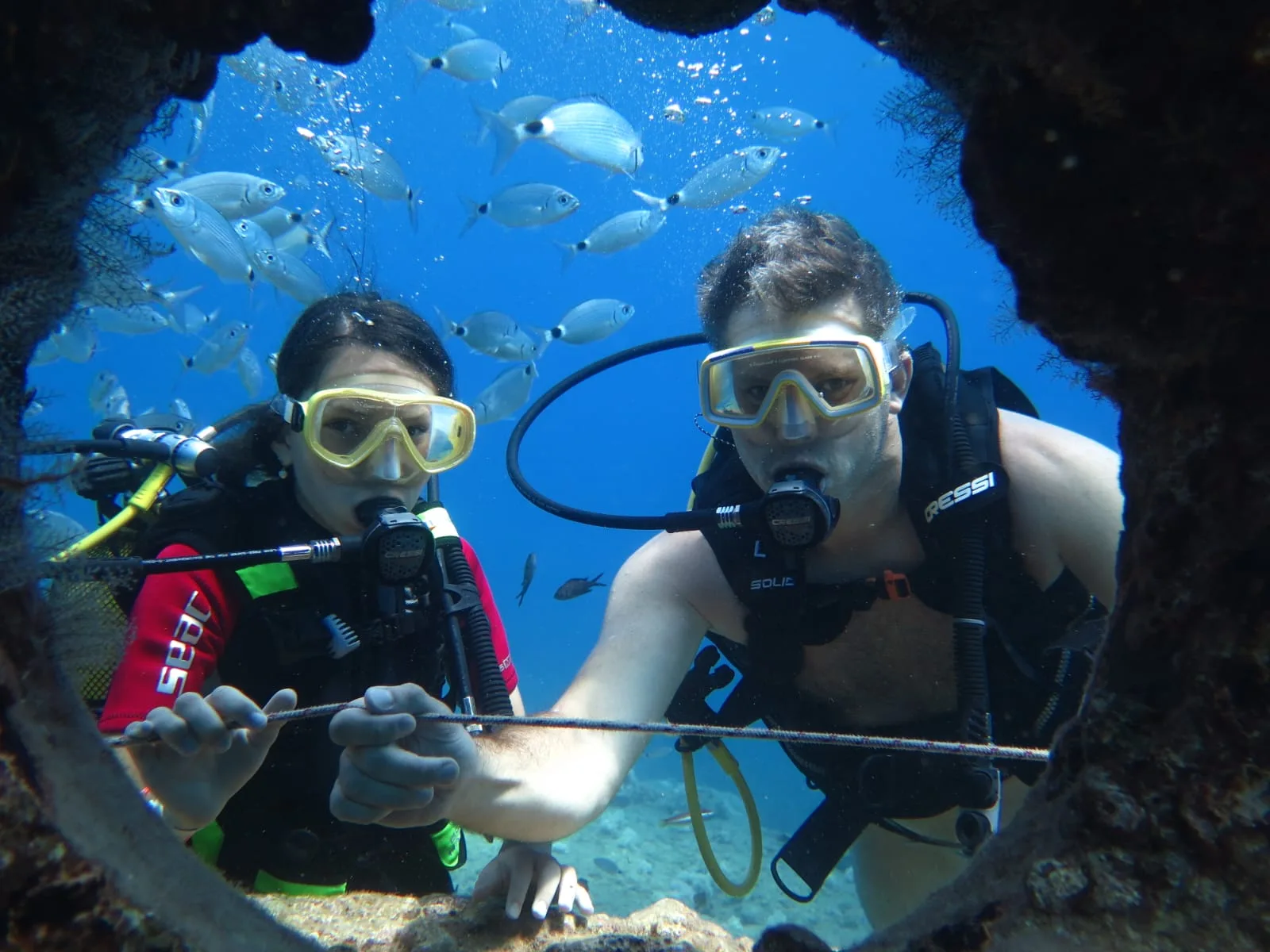
1. Kemer (€43). The Kemer diving day wins on structure, not luck: the seabed there is rock and boulder, so there is far less fine sediment available to be lifted into the water, and no major river outflow sits upstream of the sites. It is also where the reef fish, rock formations and octopus sightings are, which is a different reason to go but tends to arrive with the same water.
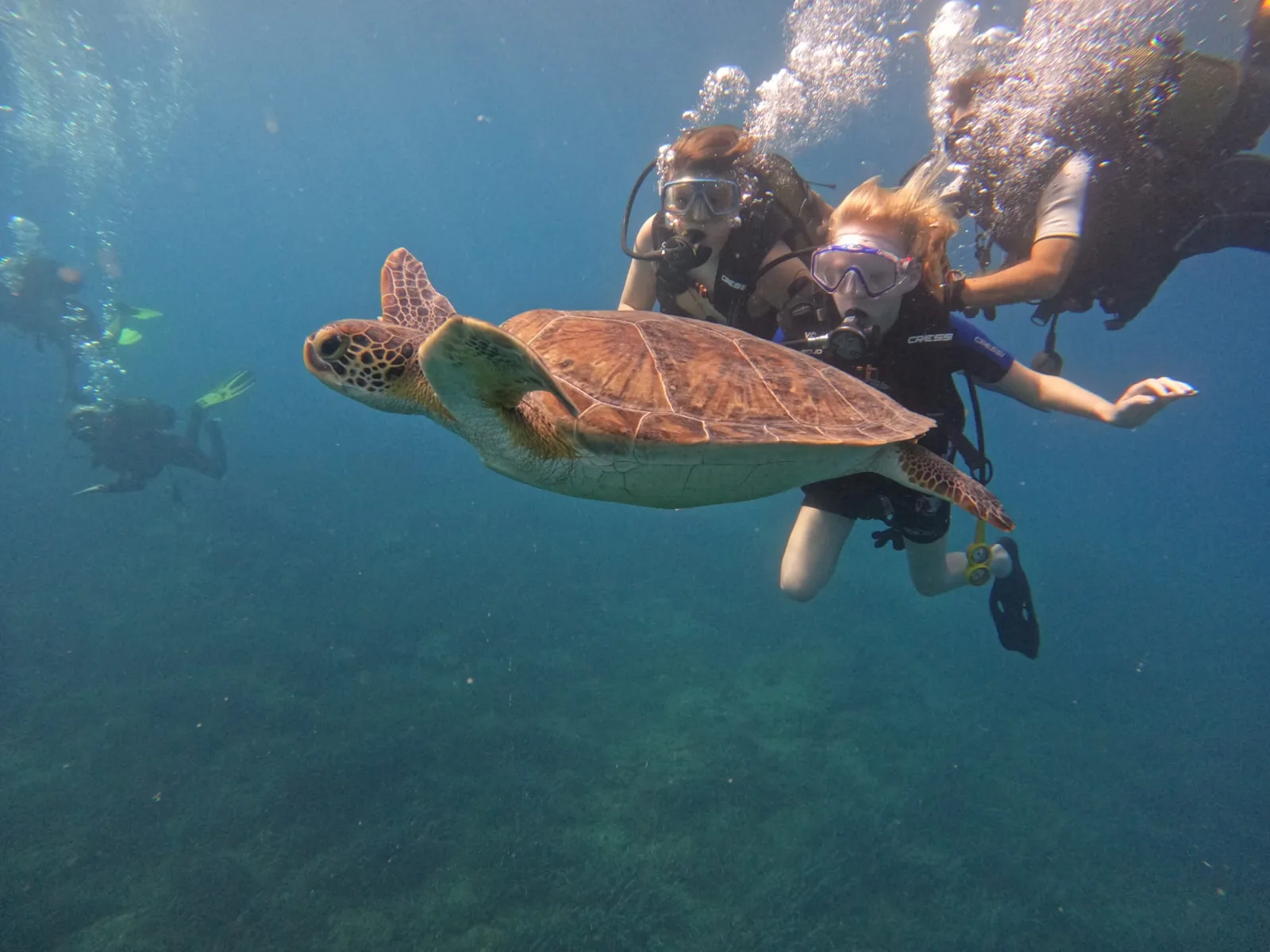
2 and 3. Antalya (€50) and Alanya (€43). Both dive good, varied ground — reefs, caves and shoals on the Antalya city coast, caves and rocky reefs in the Cleopatra Beach waters from Alanya. On a settled day either can be beautiful; they simply have more shallow, mobile bottom nearby than Kemer does.
4 and 5. Side Underwater Museum (€45) and Kumköy (€43). These are not visibility trips and we do not sell them as such. The museum earns its place on what is down there — roughly 110 sunken sculptures at about 12 metres — and Kumköy earns its place on being the shortest, gentlest day we run at 6 hours. Choosing them for the sight lines is choosing them for the wrong reason.
What wind and rain actually do
Wind is the main enemy, and its effect is delayed. A strong blow does not just chop the surface on the day; it lifts fine sand and silt from the shallows and holds it in suspension, and that cloud can take a day or two to settle after the wind drops. This is why a calm, bright morning can still deliver disappointing water — you are diving in yesterday's weather, not today's.
Rain works differently, through runoff. Heavy rain washes sediment off the land into streams and river mouths, and that plume spreads out into the sea near the outflow. The Kemer sites are less exposed to that kind of input, which is part of why they recover faster after a wet spell.
Two things that do not decide your visibility: the price of the trip and how deep you go. Every one of our five days includes the same core — two guided dives, all standard equipment, free two-way hotel transfer, fresh lunch on board, passenger and diving insurance and a full safety briefing — so a more expensive day is not a clearer day. And the depth tiers stay fixed whatever the water: beginners at 5–8 metres then around 13 metres maximum, certified divers around 30 metres and up to 60 metres on the deep sites when suitably qualified. A thermal inner suit (diving undergarment) or any extra neoprene layer is not included in the price and is available as an optional extra on request.
How to plan your holiday around it
You cannot book good visibility, but you can stack the odds. Dive early in your stay, not on your last day. If the water is poor on your first attempt you still have days left to go again; if you leave it to the end you get one roll of the dice, and the 24-hour no-flying rule after diving can rule out your final day anyway.
Watch the wind, not the forecast icons. A few settled days in a row before your dive matters more than sunshine on the morning itself. If it has been blowing hard and you have flexibility, moving your day back is often worth more than any other decision you can make.
Ask us the evening before. We confirm your exact pickup time then anyway, so it is the natural moment to ask how the water has been looking. Reservation is free online, you pay on the day in cash or by card, and cancellation is free up to 24 hours before — which is exactly what makes rescheduling around the wind painless. Compare the five days on the prices page, then message us with your dates and your hotel and we will tell you which one we would put you on.