Why the western stretch runs clearer
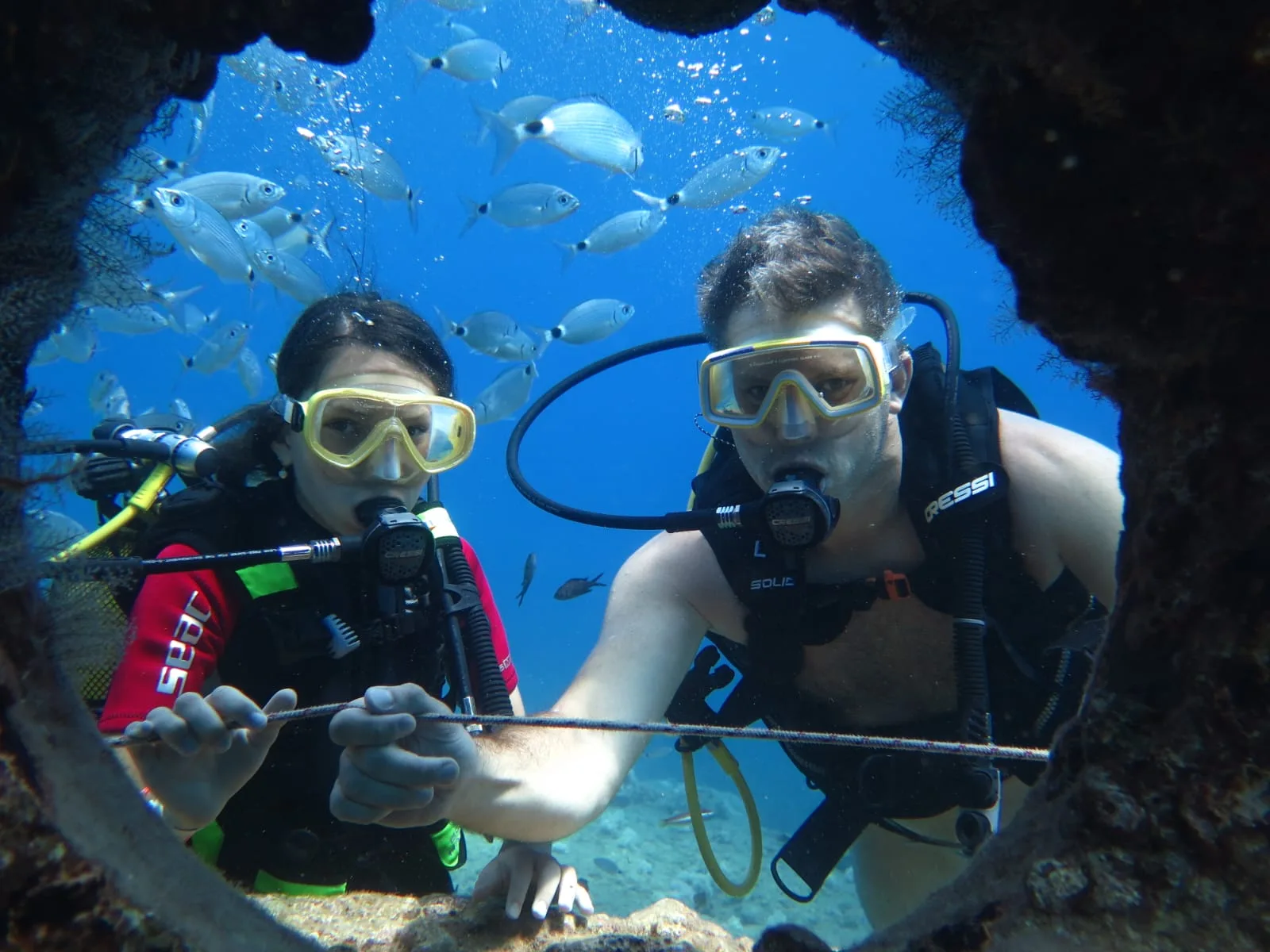
It is geography, not luck. West of Antalya the Taurus mountains come down to the sea almost vertically — pine slopes, then cliff, then deep water within a short swim of the shore. That shape matters underwater for one simple reason: there is very little shallow sand plain for the wind to work on. On flatter, sandier coastlines a stiff afternoon breeze lifts fine sediment off the bottom and holds it in the water column for hours; around the rock and boulder reefs of the Kemer diving day there is far less loose material to lift in the first place.
The second factor is fresh water. Silt in the sea usually arrives from rivers and from runoff after heavy rain, and it plumes out from the mouth wherever a river meets the coast. The dive sites we use on the Kemer stretch are not sitting downstream of that kind of outflow, so after a wet spell they tend to recover their clarity sooner than sites further east.
None of this makes clarity a promise. Wind, swell and season all still have a vote, and conditions vary from one day to the next. What we can say honestly is that when we want our best chance of clean, blue water and long sight lines, Kemer is the day we pick.
What "clear" actually means on your first look down
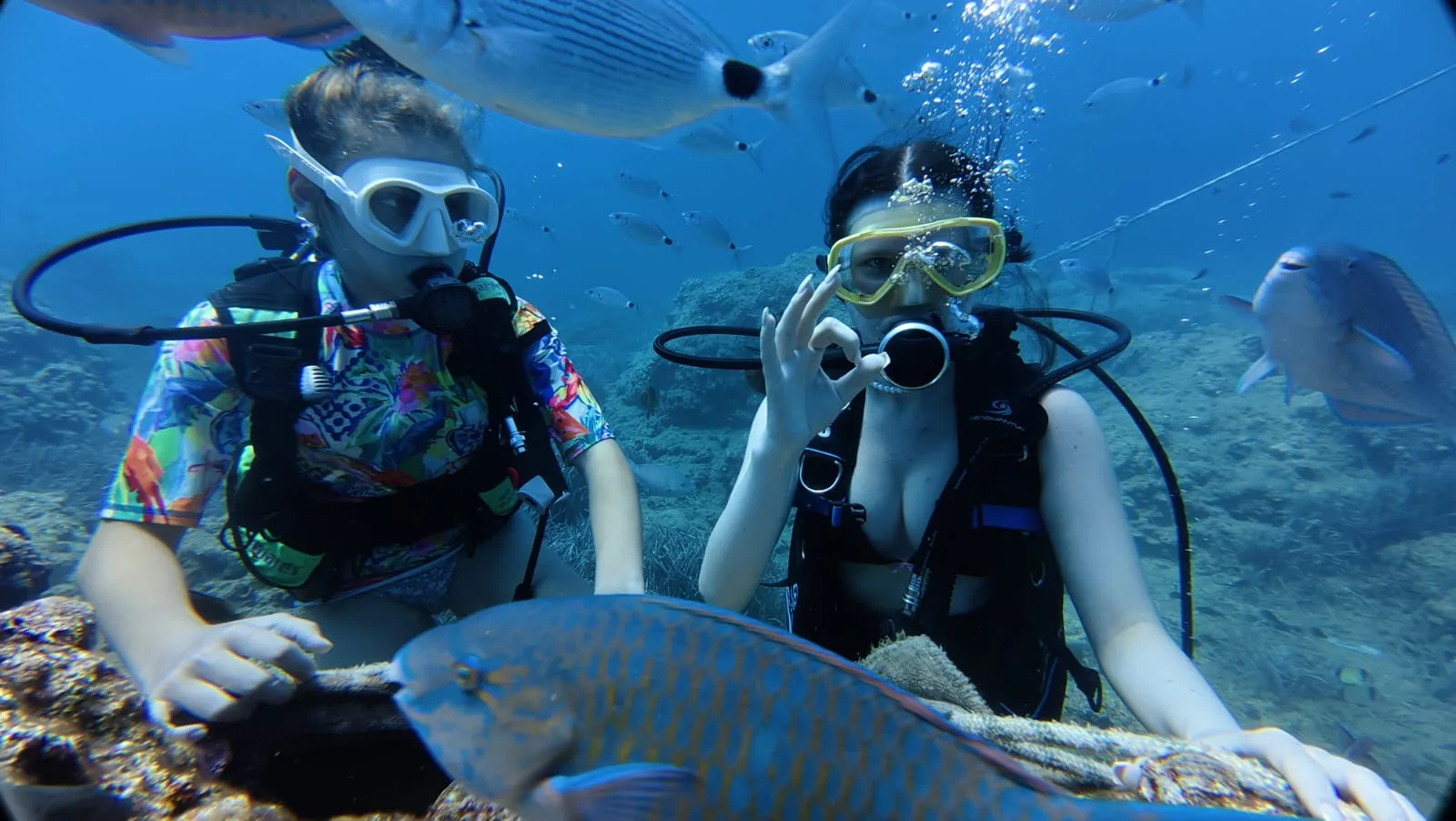
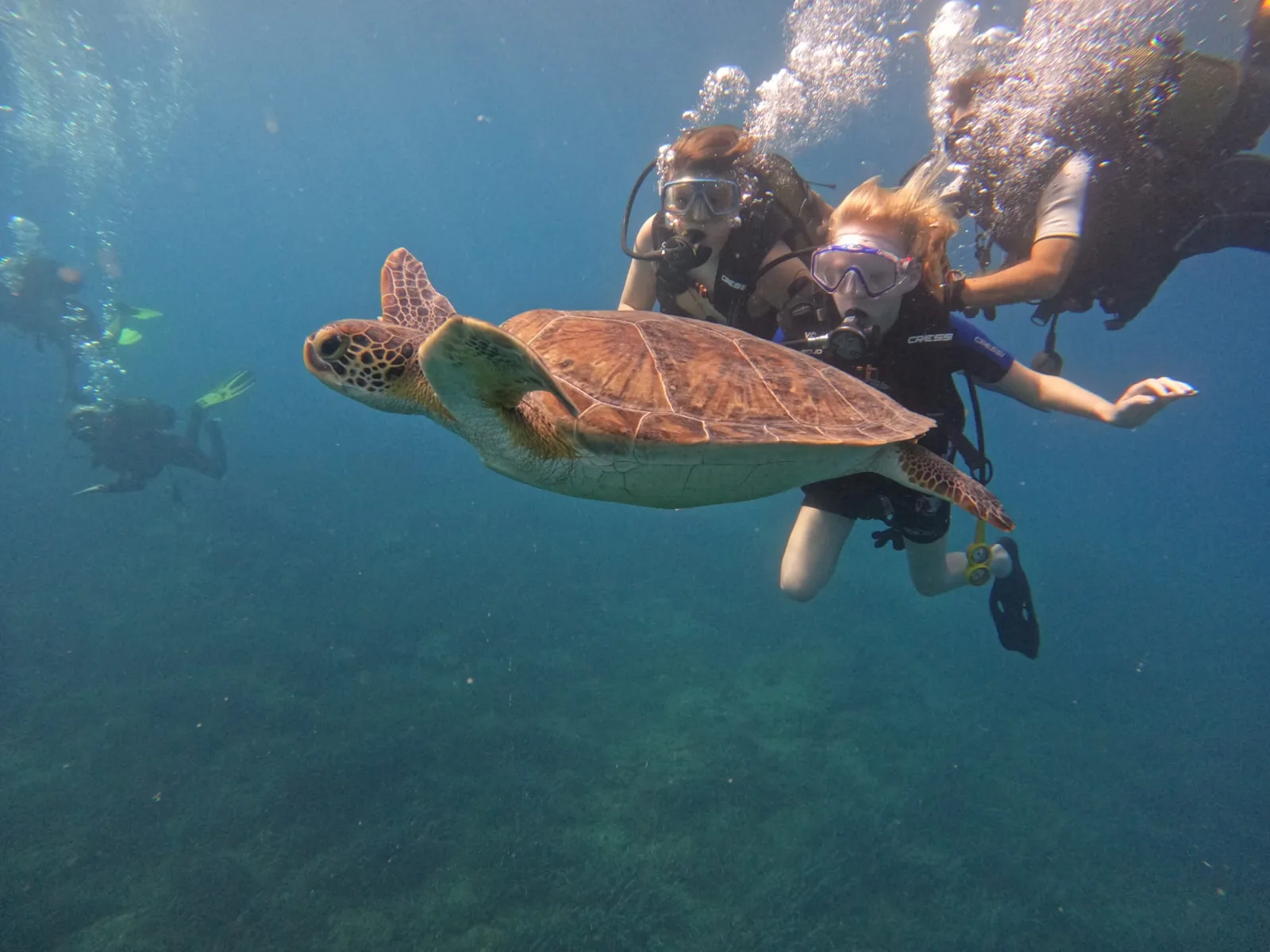
If you have never dived, visibility is not really about scenery — it is about nerve. The hardest moment of a first dive is the second you let go of the ladder and look down. In murky water you are descending into a grey nothing and your body reads that as risk. In clear water you can already see the rocks below you, the shape of the seabed, the fish moving over it and your instructor's face an arm's length away. People relax faster, breathe slower and get much more out of the dive.
Our depth model does not change with the visibility. As a beginner or discovery diver you do a gentle morning dive at 5–8 metres and a second dive to about 13 metres maximum, with an instructor within arm's reach the whole time and no licence required. On the Kemer day that shallow range is exactly where the rock formations and the reef fish are — so the clarity is spent on the part of the dive you are actually doing, not on some deep site you will read about afterwards.
Certified divers use the same clarity differently: around 30 metres on a standard certified dive, and up to 60 metres on the deep sites when they are suitably qualified.
The trade-off if you are staying in Side
Here is the part most websites leave out. Kemer is at the far western end of this coast, and the Kemer day runs 8 hours from a Kemer departure. Your free two-way hotel transfer is included and we pick you up in the morning with the exact time confirmed the evening before, but if your hotel is in the Side or Kumköy belt you are adding a real amount of road time to the day at both ends. For visibility-hunters, photographers and certified divers chasing the wreck ground out there, that is a fair price to pay. For a family with a nervous first-timer, it often is not.
The two honest alternatives are close to home. The Kumköy trip is €43 and, at 6 hours, the shortest and gentlest day we run — it leaves from the doorstep of the Side and Kumköy hotel belt. The Side Underwater Museum day is €45 and takes you over roughly 110 sunken sculptures at about 12 metres, which is a completely different kind of "worth it": you are going for what is down there, not for the sight lines. Compare all five on the prices page.