What you actually see down there
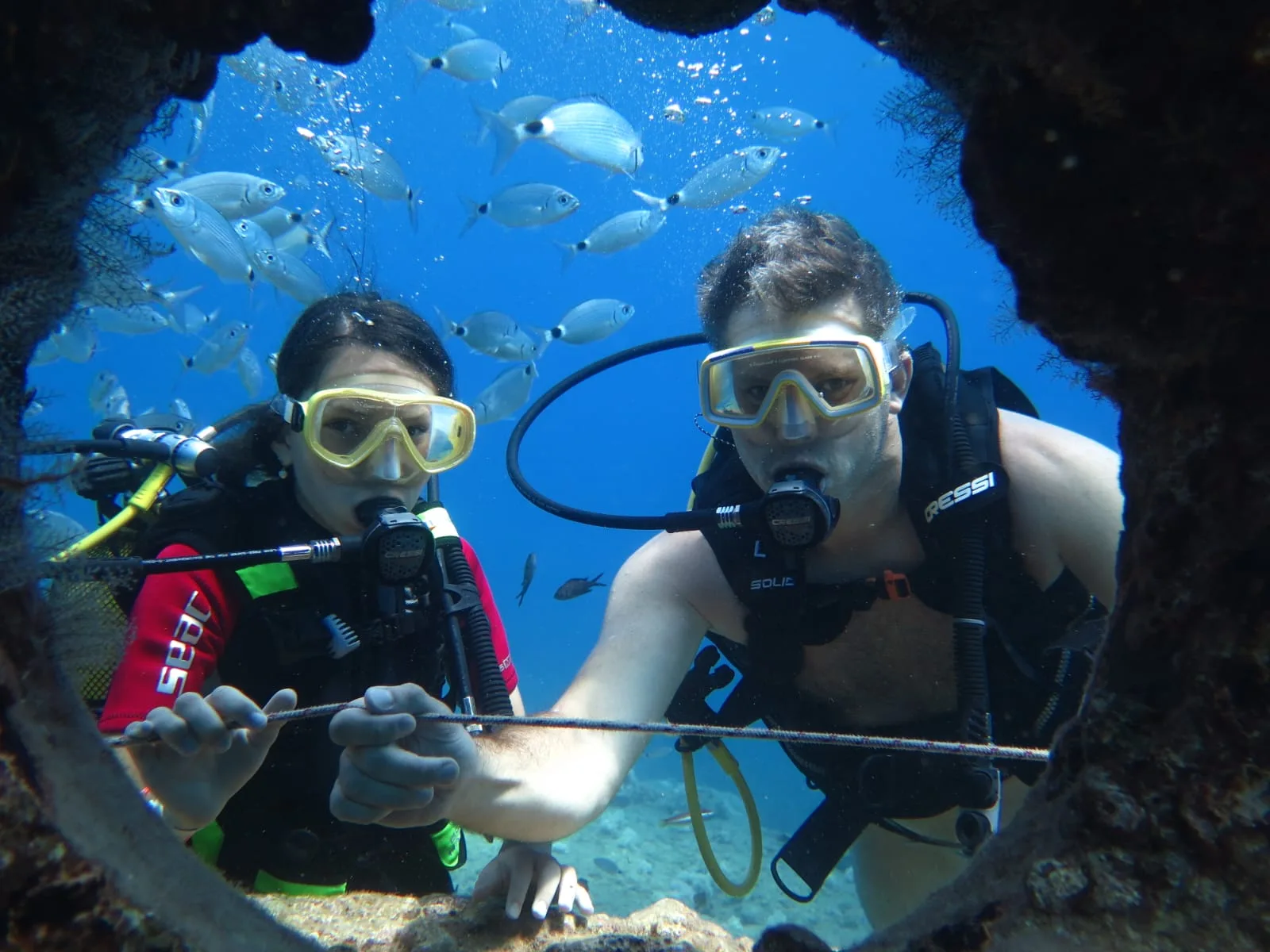
At about 12 metres the light is still generous, so the sculptures are not shadows looming out of the dark — you swim up to them and they are simply there, blue-lit and life-sized, with the surface visible above you. Roughly 110 pieces are spread across the site: standing human figures, seated forms, groups arranged so you drift from one to the next rather than circling a single object.
What makes it a dive rather than a photo stop is what has happened to them since they went down. The sea has been colonising the stone: films of algae, small growth on the shoulders and the folds, and the fish that come with any hard structure on a sandy bottom. A statue is an artificial reef, and after a few minutes you notice you are watching the fish around it as much as the sculpture itself.
Visibility on this stretch is good rather than glass-clear, and it changes with wind and swell — some days you can pick out a figure from ten metres away, some days you meet it at four. That variation is normal and we would rather say so up front. The Side Underwater Museum diving day gives you two guided dives here, so if the first one is hazy the second usually rewards you.
Who should honestly book a different day
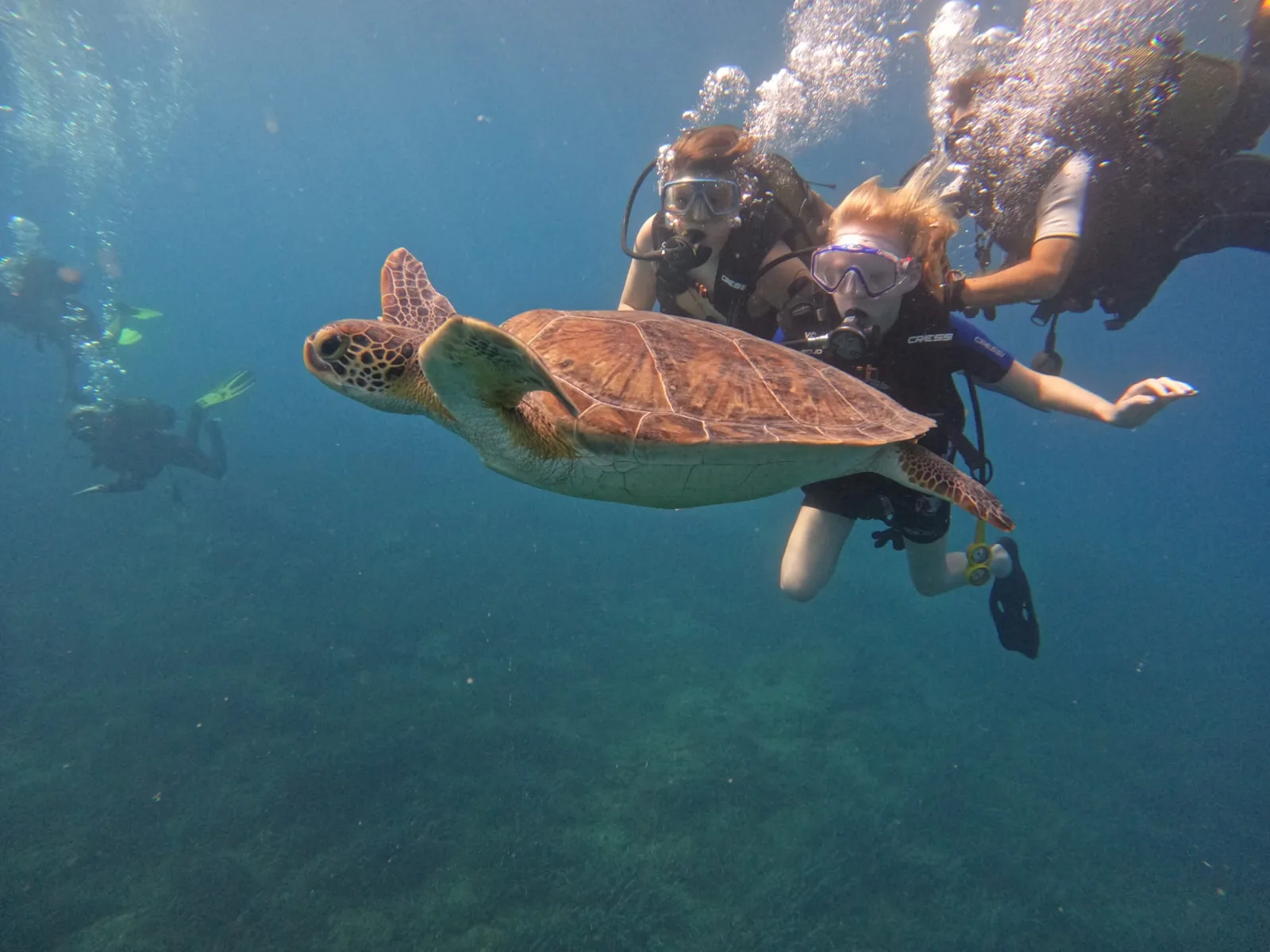
We would rather you spent your money on the right day than on our flagship. If water clarity is the thing that makes a dive for you — that feeling of hanging in empty blue and seeing the whole reef at once — the Kemer diving day is the clearest water on this coast, €43 for eight hours, with reef fish, rock formations and octopus often spotted. Sightings always vary with conditions, but the clarity is the reason people choose it.
If you are certified and what you actually want is metal on the seabed, the museum is not your day either. The wrecks sit on other stretches: the Paris II at 21–31 metres and the Three Islands and Lighthouse tunnel at 9 metres lie off Kemer, and the DO-28 aircraft — a 1967 Dornier at 19.5–23.3 metres — lies on the Antalya coast, our €50 day and the most expensive of the five.
And if seven hours is more day than your holiday can spare, say so: the Kumköy trip is six hours and leaves from the closest harbour to the Side hotel belt. Sculptures are a very particular pleasure. Natural rock, caves and shoals are a different one, and neither is objectively better.
What €45 and seven hours actually buys
The price is the whole day, not the dives alone. Included: two guided dives, all standard equipment — tank, regulator, BCD, wetsuit, mask, fins and weights — free two-way hotel transfer with a morning pickup, a fresh lunch cooked on board, passenger and diving insurance, and a full safety briefing before anyone gets wet. Two dives at €45 works out at roughly €22.50 a dive with everything else thrown in, which is why we think the day defends itself even before the sculptures. A thermal inner suit (diving undergarment) or any extra neoprene layer is not included in the price and is available as an optional extra on request.
The depth model is what makes the museum work for everyone on board. Beginners and discovery divers do the morning dive at 5–8 metres and the second dive to about 13 metres maximum, always with an instructor within arm's reach — and since the sculptures stand at around 12 metres, they sit inside that ceiling rather than beyond it. Certified divers on the same boat dive their normal profiles, around 30 metres on standard certified dives, and sign their logbooks afterwards.
You reserve free online and pay on the day in cash or card, with free cancellation up to 24 hours before. The full price list for all five trips is public, so you can compare before you commit.