The Paris II, and why depth decides everything
The wreck people mean when they ask this question is the Paris II, which sits on the Kemer stretch with its shallowest structure at about 21 metres and its deepest at around 31 metres. There is also the DO-28, a Dornier aircraft that went down in 1967 and now rests at 19.5 to 23.3 metres on the Antalya city coast, reachable from our Antalya diving day at €50.
Those numbers are the whole answer. Our depth model has two tiers and we never blur them. Beginners and discovery divers do a morning dive at 5–8 metres and a second dive to about 13 metres maximum, with an instructor within arm's reach. Certified divers dive around 30 metres on standard certified dives and up to 60 metres on the deep sites when suitably qualified. Both wrecks therefore sit inside the certified range and outside the beginner range — not as a policy we could bend for a keen guest, but as a fact of the depth they lie at.
If a website offers you a wreck at those depths on your very first day underwater, that is the moment to close the tab. We would rather lose the booking than put an untrained diver at 25 metres inside a steel hull.
What a beginner actually gets on the Kemer day
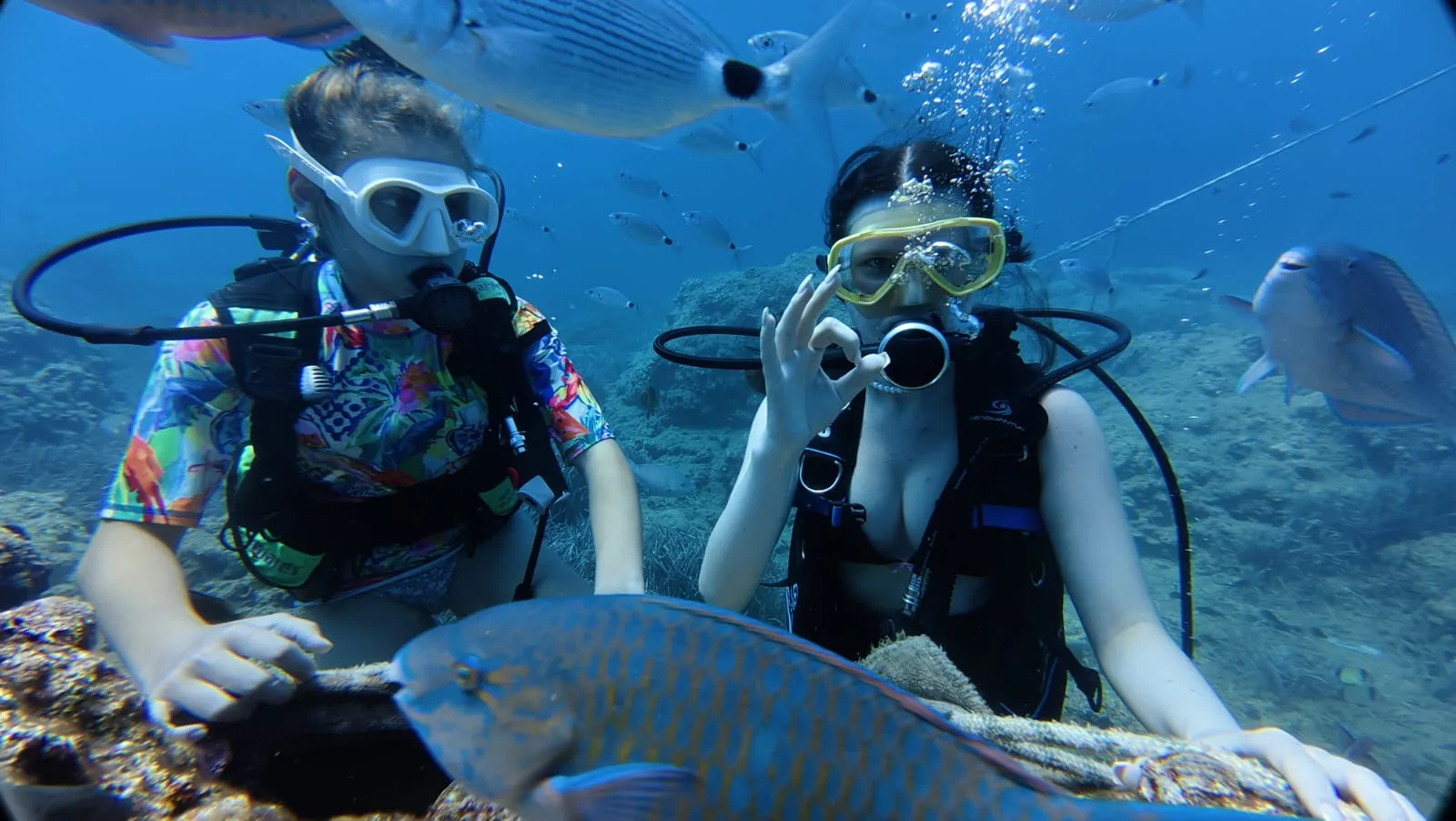
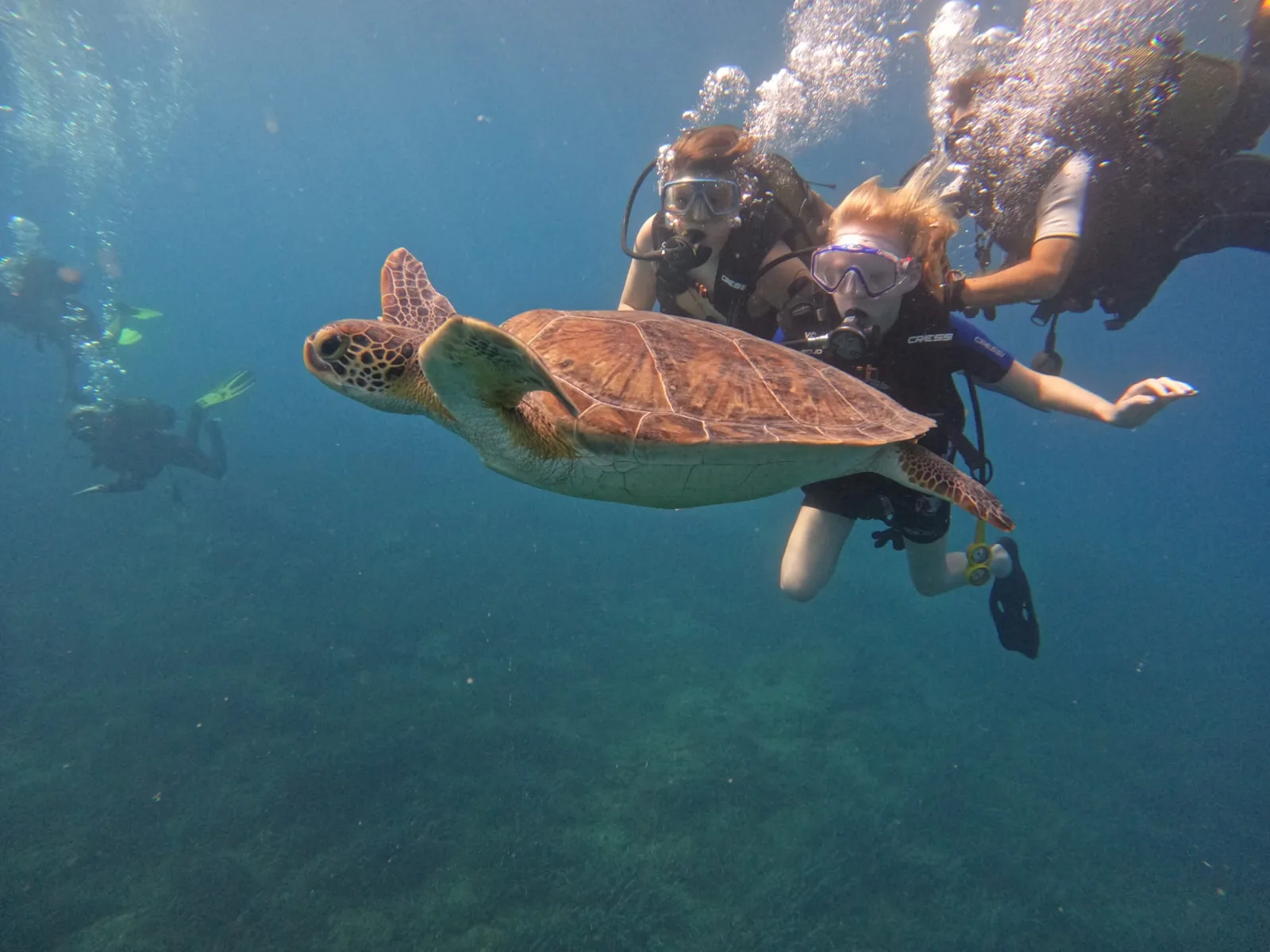
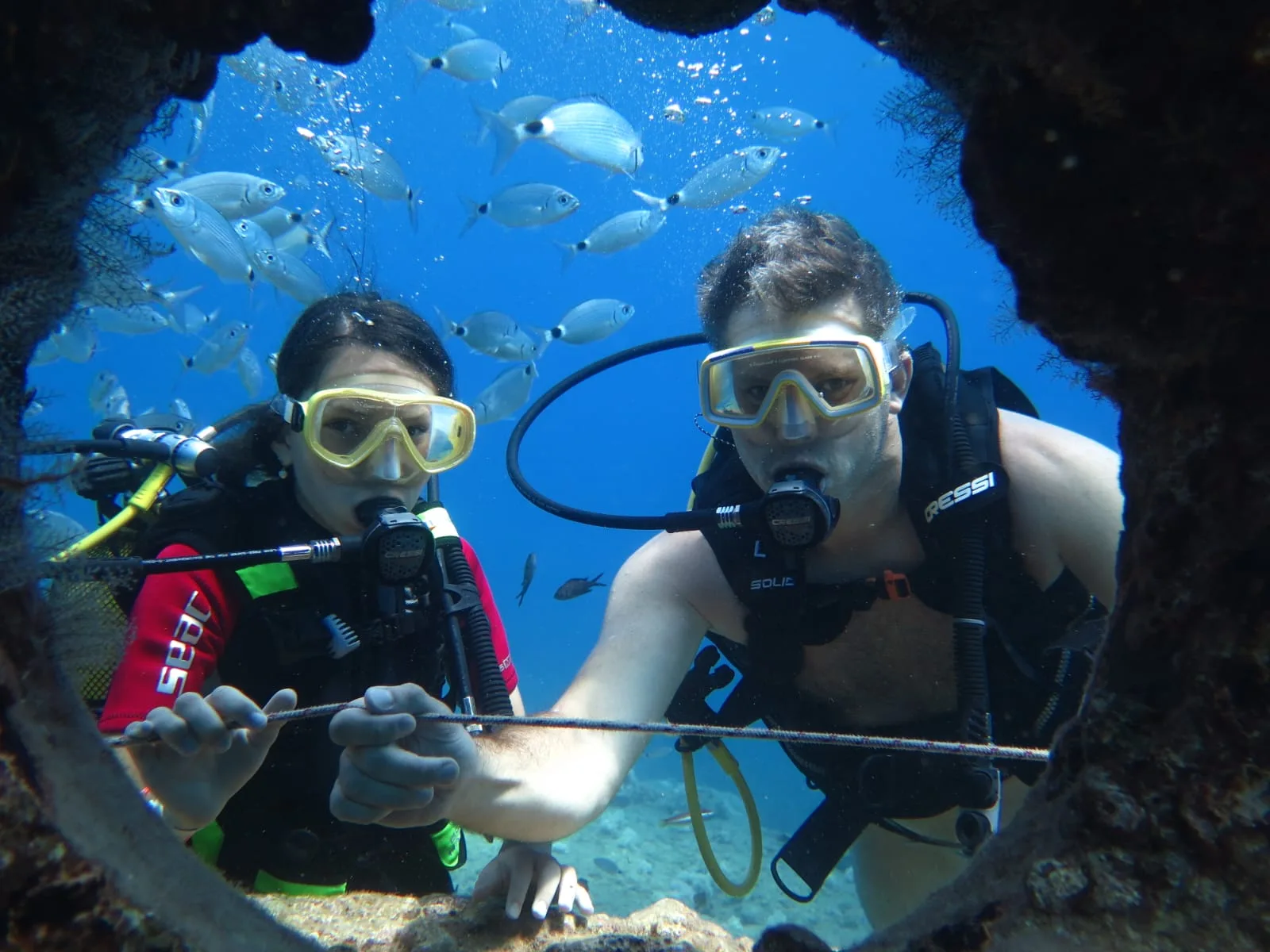
Being a beginner does not mean a lesser day out. The Kemer diving trip — €43, 8 hours, departing Kemer — is the one we send guests to for the clearest water on this coast, and the shallow ground there is genuinely good: rock formations, boulder fields, reef fish moving over them, and octopus often spotted by the guides, though nothing underwater is ever guaranteed. This same stretch holds Three Islands and the Lighthouse, whose swim-through tunnel sits at around 9 metres — shallow ground rather than deep wreck country, with the site chosen on the day by your instructor according to conditions and the group. A thermal inner suit (diving undergarment) or any extra neoprene layer is not included in the price and is available as an optional extra on request.
You need no licence, only the safety briefing and the standard diving medical questionnaire. Your €43 covers two guided dives, all standard equipment — tank, regulator, BCD, wetsuit, mask, fins and weights — free two-way hotel transfer, a fresh lunch cooked on board and passenger plus diving insurance. Try-dives run from about age 10. Non-divers in your group can come as boat visitors at a reduced rate and see the whole coastline from the deck. See how it compares on the prices page.
How certified divers arrange the wreck
If you already hold a certification, say so when you reserve rather than on the pontoon. Wreck ground is planned, not improvised: your instructor needs to know your certification level, your logged experience and how recently you last dived before deciding which profile is sensible for you on the day. Bring your certification card and your logbook — we sign and stamp logbooks for certified divers, and a recent, well-filled book makes the conversation about depth a short one.
The other half is conditions. Depth, current, surface state and visibility all get a vote on the morning, and a site that works on a still day may not be the right call after a windy night. Your instructor makes that decision, and sometimes the answer is a different site at a shallower depth — that is normal wreck diving, not a bait and switch.
If you are not certified yet but want to be, we run CMAS courses on request; we publish no price or schedule for them because both depend on your dates and progress, so message us and we will talk it through. And whatever you dive, remember the rule that outlasts the holiday: no flying within 24 hours of your last dive.