What the Antalya coast actually offers
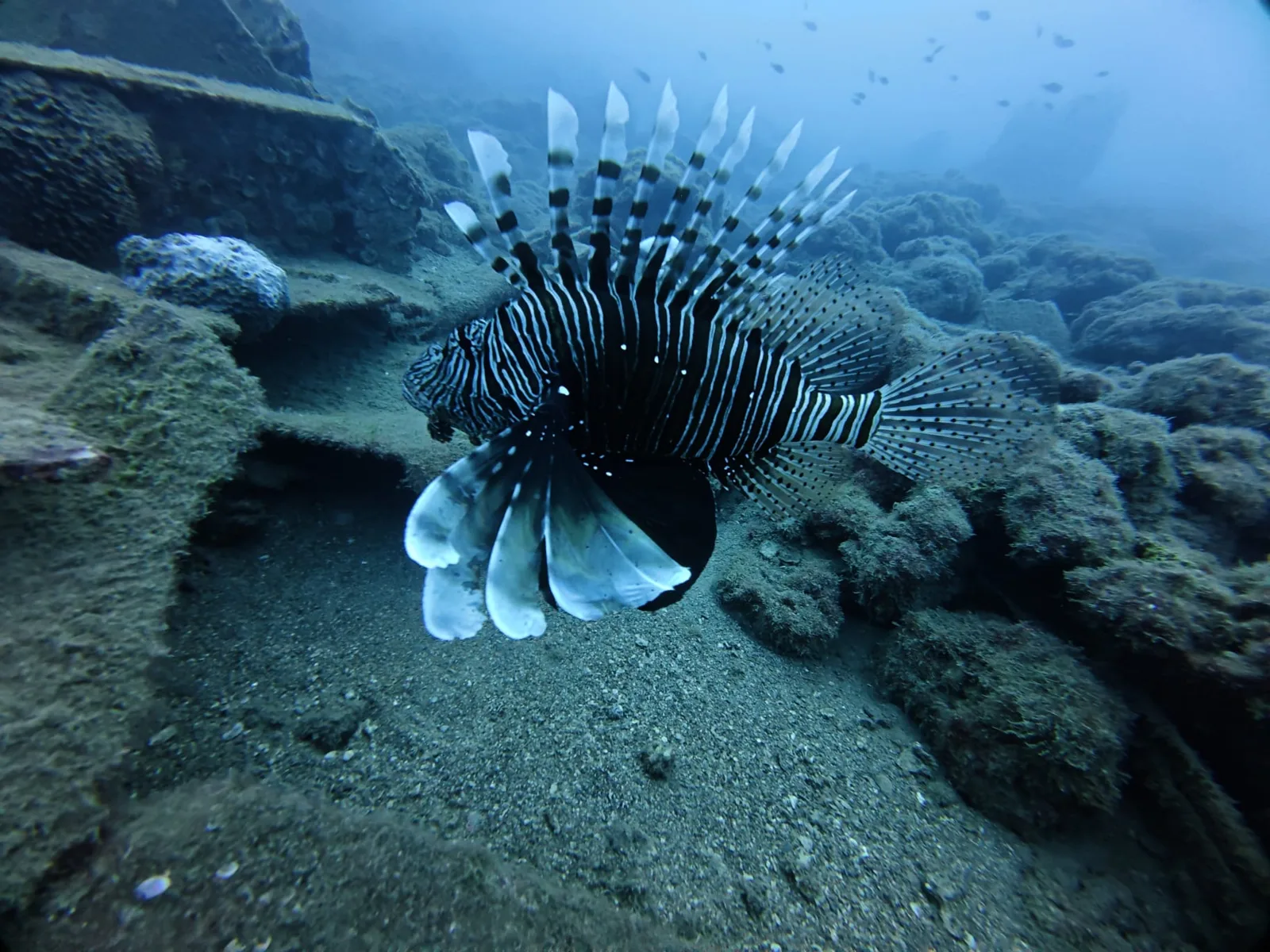
The stretch the Antalya day works is the most structurally varied of our five departures. Instead of one flat reef, the seabed here breaks up: rock formations, walls, overhangs, arches and cave mouths, with sand and rubble patches between them where different fish sit. Shoals gather where the structure interrupts the water movement, and the broken ground gives them somewhere to disappear to when a diver appears.
Practically, that means a dive here is a route rather than a lap. You follow the rock, drop along a wall, pass under an overhang, cross a gap and pick up the next feature. It suits divers who get bored on featureless bottoms and it photographs well, because the rock gives your pictures a foreground. The DO-28 aircraft wreck lies on the same stretch at 19.5–23.3 m for certified divers, so a day here can mix natural structure with something man-made.
Our cave diving on the Antalya coast page goes further into what the formations are like. What we will not do is promise a specific cave on a specific date — the plan is set by conditions on the morning, and we would rather tell you that now than sell you a fixed itinerary.
Open cave mouths vs cave penetration — the honest difference
The word "cave" carries two completely different dives, and holiday marketing tends to blur them. We would rather not.
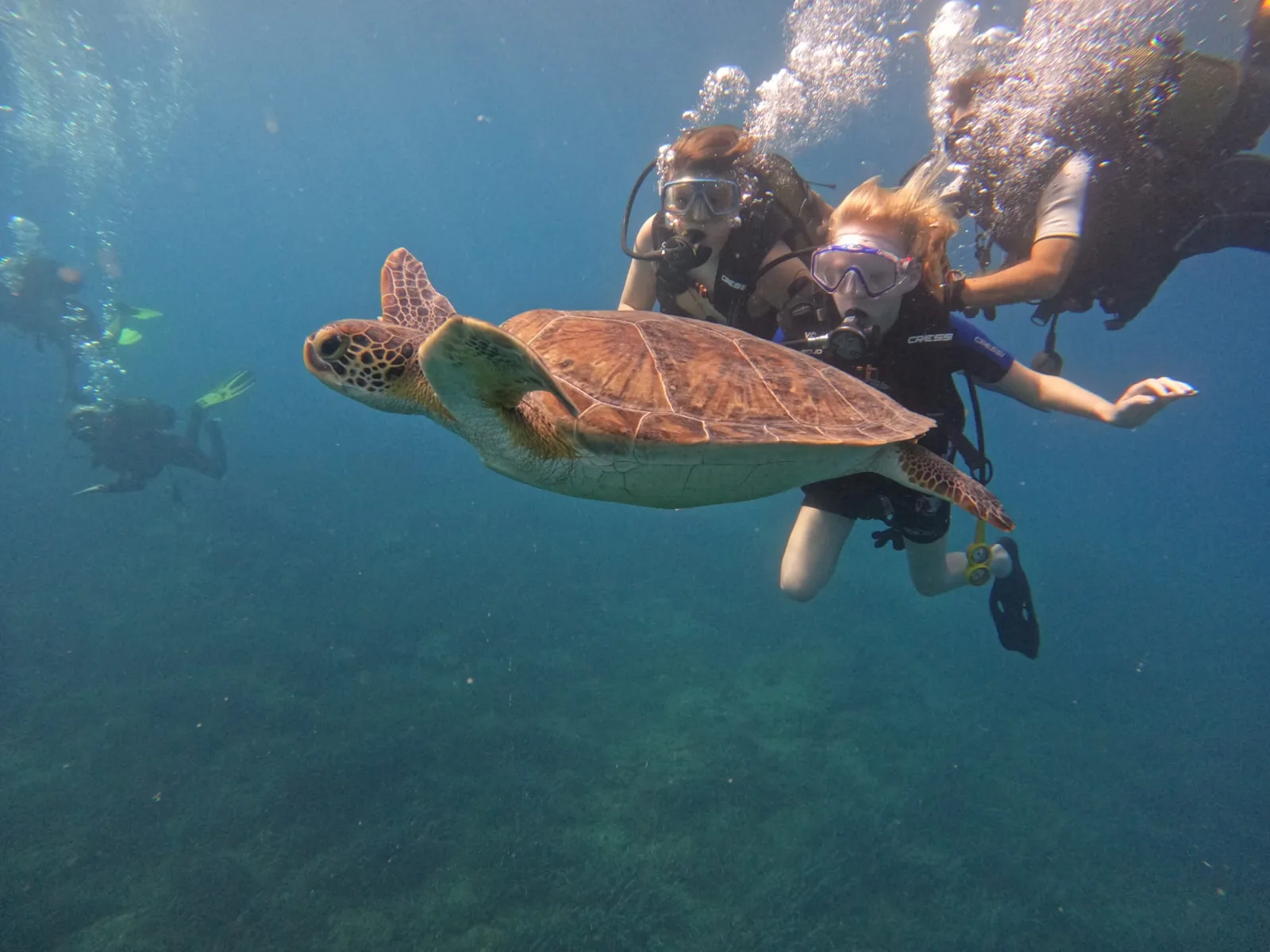
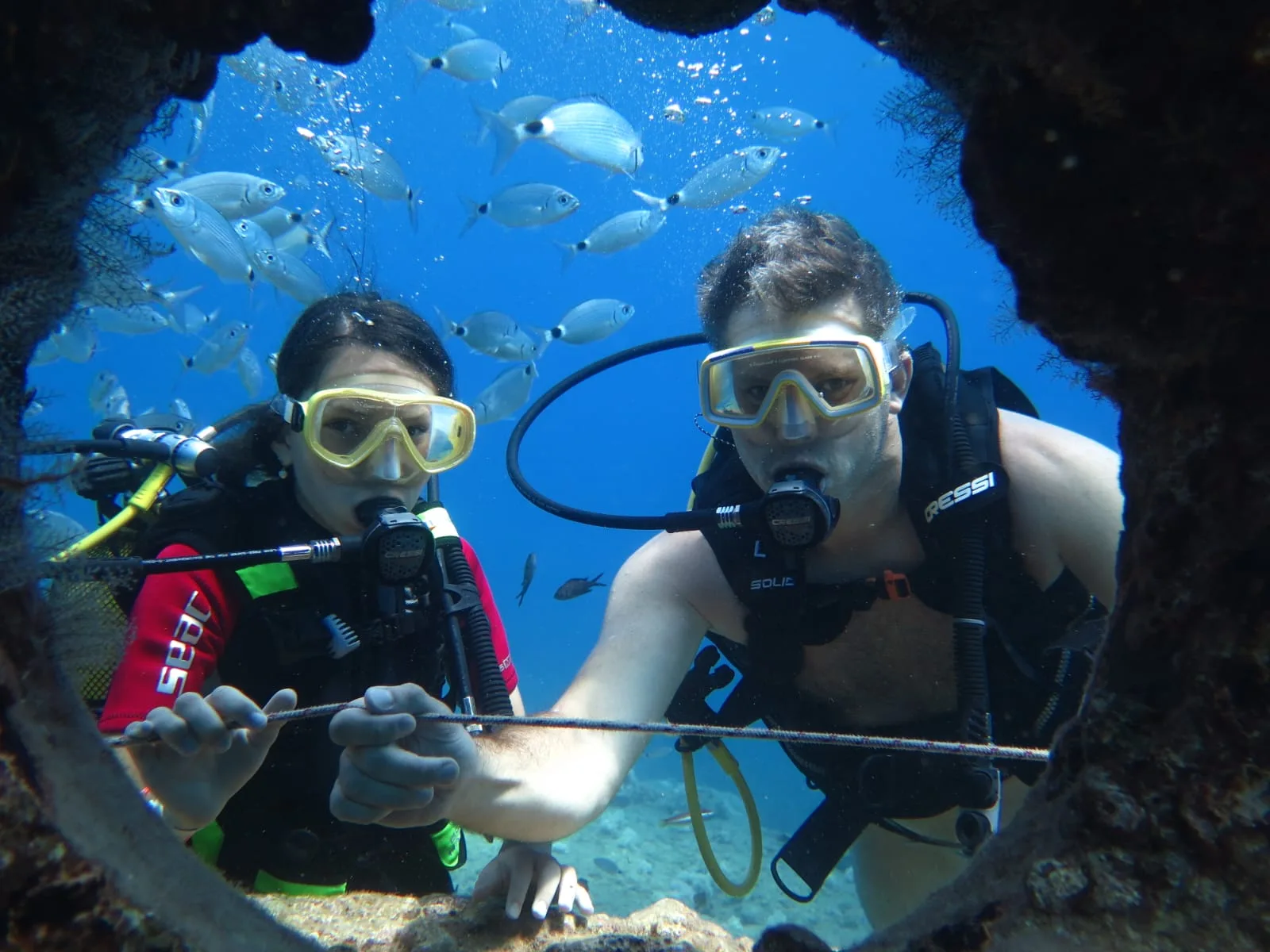
What we do: swim along and past cave mouths, under arches and through short openings where the surface is always directly above you and daylight is always in sight. There is no overhead you cannot swim straight out from, no line, no darkness you need a lamp to escape. A guided beginner can do this at 5–8 m on the first dive and at about 13 m on the second, with an instructor within arm's reach — it is atmospheric, and it is genuinely safe.
What we do not do: penetrate caves. Going into an overhead environment where you cannot ascend directly to the surface is a specialist discipline with its own training, guideline reels, redundant air and lights. It requires certification for exactly that, and a guide qualified to lead it. It is not something we bolt onto a day trip for a guest who feels confident, and no amount of previous open-water experience substitutes for the training. If that is the diving you want, be honest with us and we will tell you plainly that our standard day is not it.
Antalya, Alanya or Kemer — matching the day to your level
If broken topography is the reason you are booking, two days deserve a look. Antalya (€50, 8 h) gives you reefs, caves and shoals along the city coast plus wreck access for certified divers. Alanya (€43, 8 h) is caves and rocky reefs in the Cleopatra Beach waters, with Alanya Castle in view from the boat and the Amphora site with ancient jars minutes from the harbour — seven euros cheaper and, for cave-and-rock diving alone, no lesser a day.
Level decides the rest. Beginners see the shallow structure, which is the colourful part anyway; light falls off fast, so a cave mouth at 8 m looks better than one at 25 m. Certified divers can work the deeper walls and the wreck, around 30 m on standard dives and to 60 m on the deep sites when suitably qualified.
One more honest steer: if clear water matters more to you than complicated rock, Kemer has the clearest water on this coast and is also €43. Tell us what you actually want to look at when you reserve, and we will put you on the right boat rather than the nearest one.