Why the Kemer rocks are good octopus ground
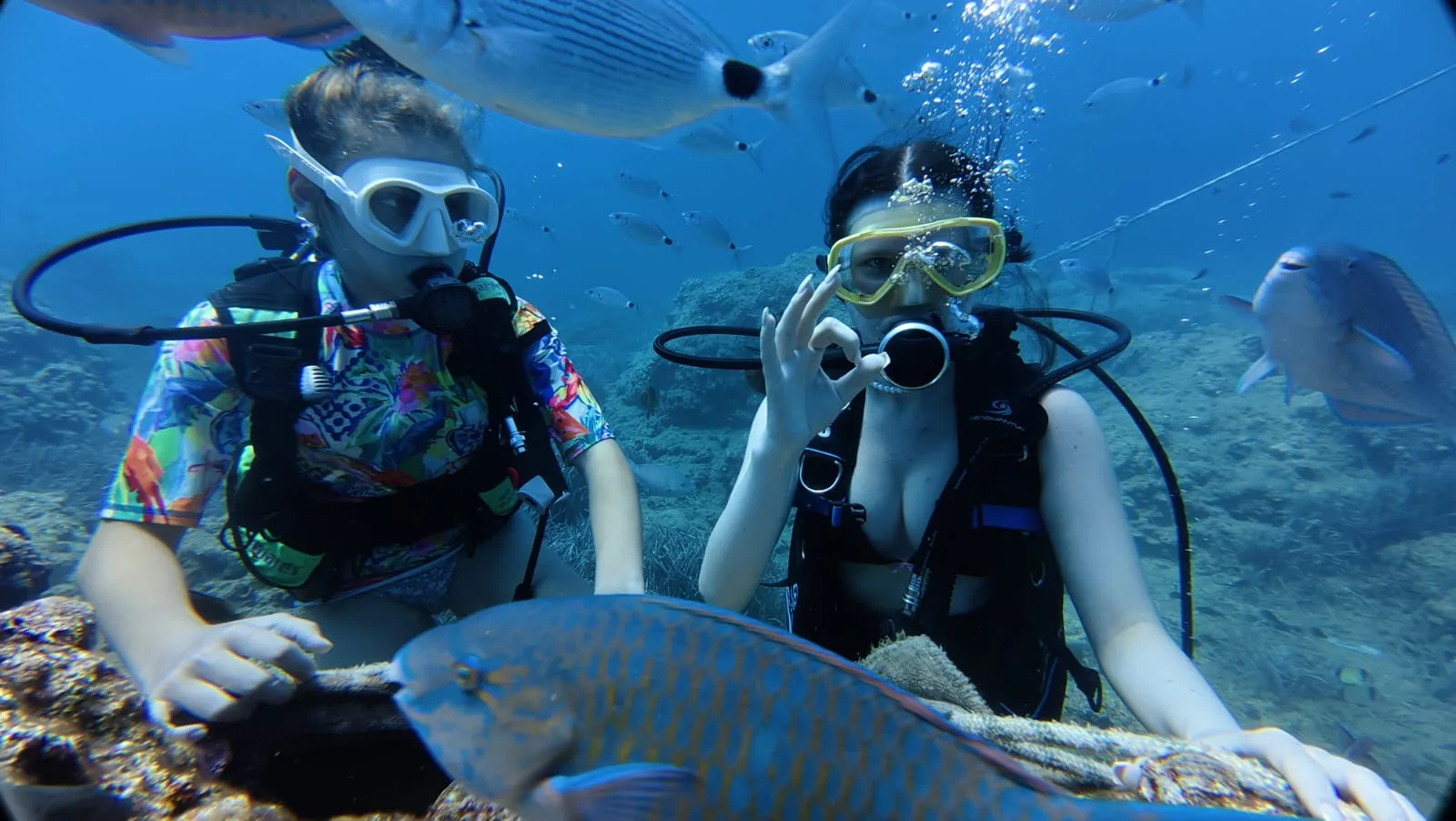
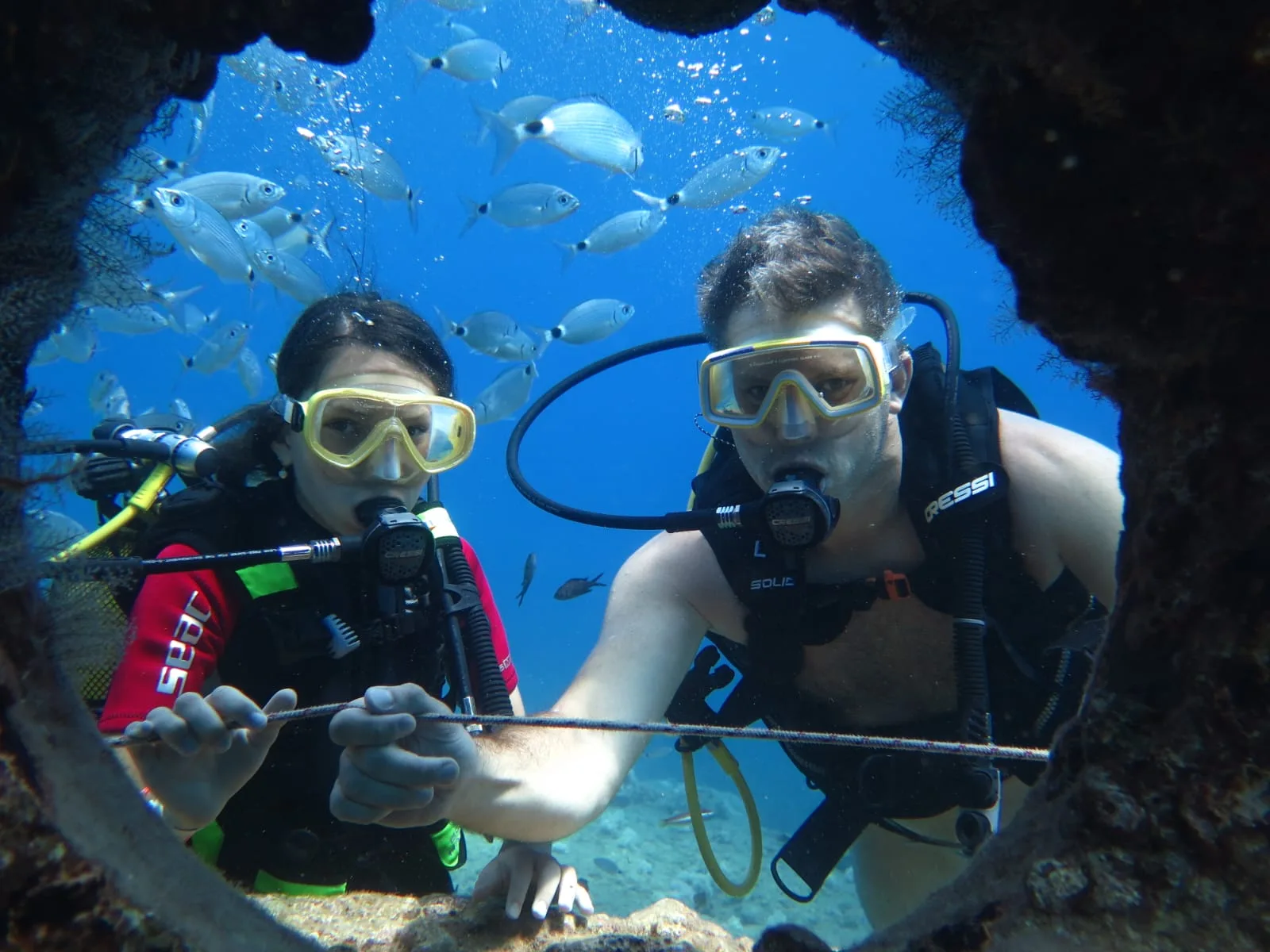
An octopus needs two things: a hole to live in and food it can carry home. That is exactly what the Kemer diving day dives — boulder fields and rock formations riddled with cracks, ledges and overhangs, with crabs and shellfish living in the same rubble. Sandy, featureless bottoms give an octopus nowhere to hide; broken rock gives it a thousand front doors.
The second advantage of that stretch is water clarity. Kemer runs the clearest water on this coast, and octopus are found by noticing small, subtle details — a colour that does not match, a texture that ripples once. In murky water those details vanish before you are close enough to read them. Our instructors there are PADI-certified and know which reefs have held dens in the past, which is why they can often put a group in the right neighbourhood.
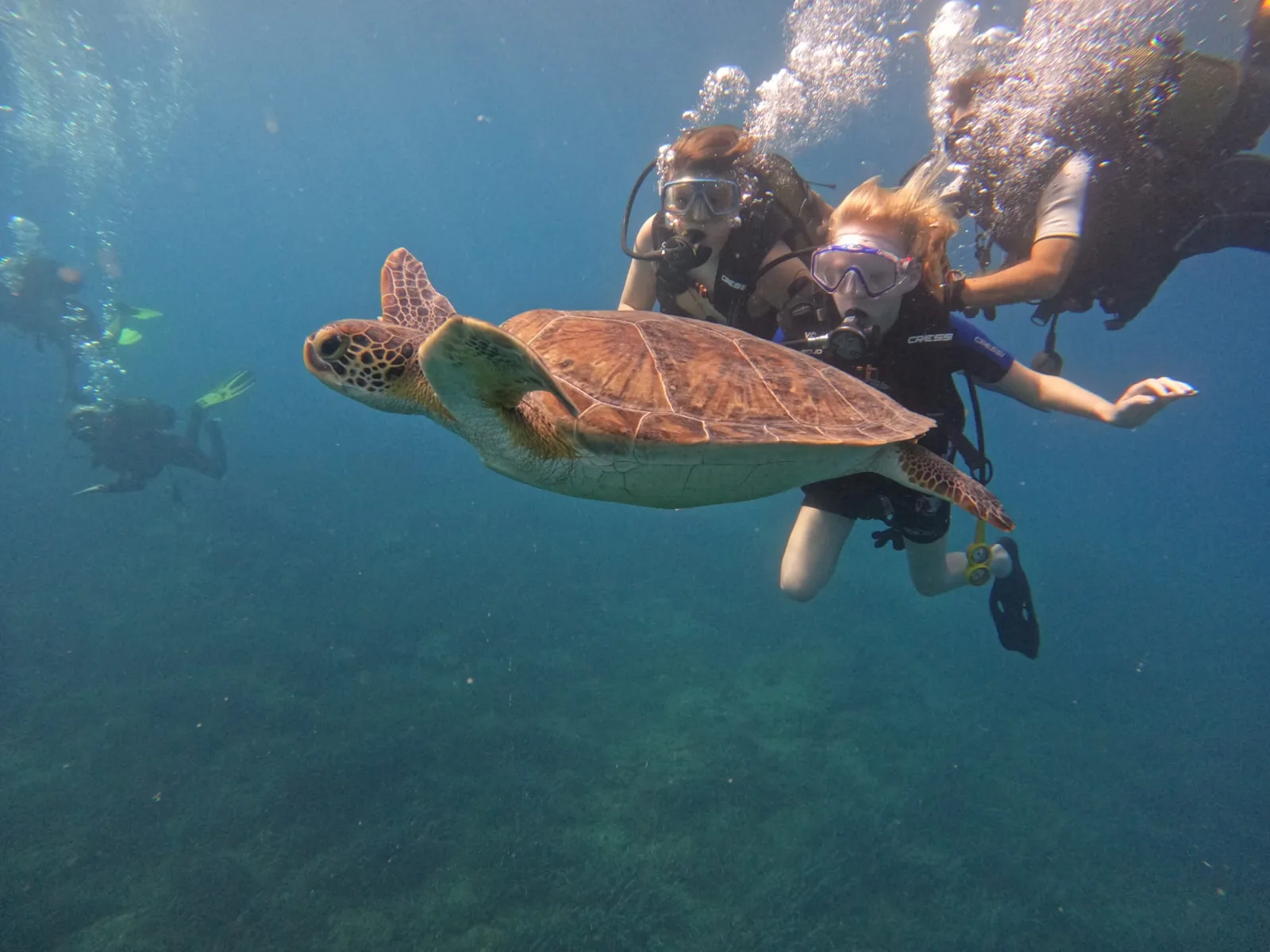
None of this is a promise. Some days you see two, some days none, and anyone who tells you otherwise is selling something. What we can say is that octopus sightings are a normal part of the Kemer day rather than a rare event — and that they happen well inside beginner depths of 5–8 metres on the first dive and around 13 metres on the second, so you do not need a certification to meet one.
How to actually spot one
Almost nobody finds an octopus by seeing an octopus. You find the midden: the tidy little pile of empty shells, crab claws and stone fragments an octopus stacks outside its den after eating. It looks too neat to be accidental, because it is not accidental. Once you notice a pile like that, stop and look at the hole behind it.
Then look for the eye. A hiding octopus is usually a slit of dark hole with one horizontal pupil in it, or a lump of "rock" with skin that is slightly too smooth. Watch for a moment: colour changes, a breath-like pulse of the mantle, a single arm tip curling. Movement is what breaks the camouflage, and camouflage is the whole reason you walked past three of them already.
Move slowly and stay off the bottom. Fast fins push a pressure wave ahead of you and the octopus is gone before your eyes arrive; kicked-up sand ruins the visibility for everyone behind you. Good buoyancy is the real octopus-finding tool. And use your guide: our instructors dive these sites constantly, so signal to them rather than chasing what you think you saw — a hand signal costs nothing and they will often lead you straight back to a den you swam over.
Look, don't touch — and why it matters
The rule is simple: hands off, always. Do not pull an octopus out of its den, do not poke it with a finger or a pointer, do not let it wrap onto your glove for a photograph, and do not let anyone in your group do it either. Handling stresses the animal, can damage its skin, and often means it abandons the den — so the next boat, and the next guest, finds nothing there. A reef that gets grabbed is a reef that goes empty.
Photography follows the same logic. Keep your distance, let it settle rather than crowding it, and do not fire flash after flash into its eyes. The best octopus footage is almost always of a relaxed animal doing octopus things, not a frightened one jetting away in a cloud of ink.
This is standard practice on all five of our trips, and it is part of the safety briefing you get before every dive. If octopus are the thing you most want to see, tell your instructor at the briefing — they will keep an eye out and pull you over when they find one. And if wildlife is your main motivation, compare the days on the prices page or message us and we will tell you honestly what has been showing up lately.