What each one actually is
Parasailing is a beach or harbour activity: you are clipped into a harness under a parachute, a speedboat pulls you up, and you hang above the water for a few minutes before being brought back down. It needs no skill and no preparation, and the whole thing — including the wait for your turn — fits into an hour or so. It is sold by beach and watersports operators along the coast. We do not run parasailing, so the operator you book it with sets its own rules on age, weight and weather; ask them.
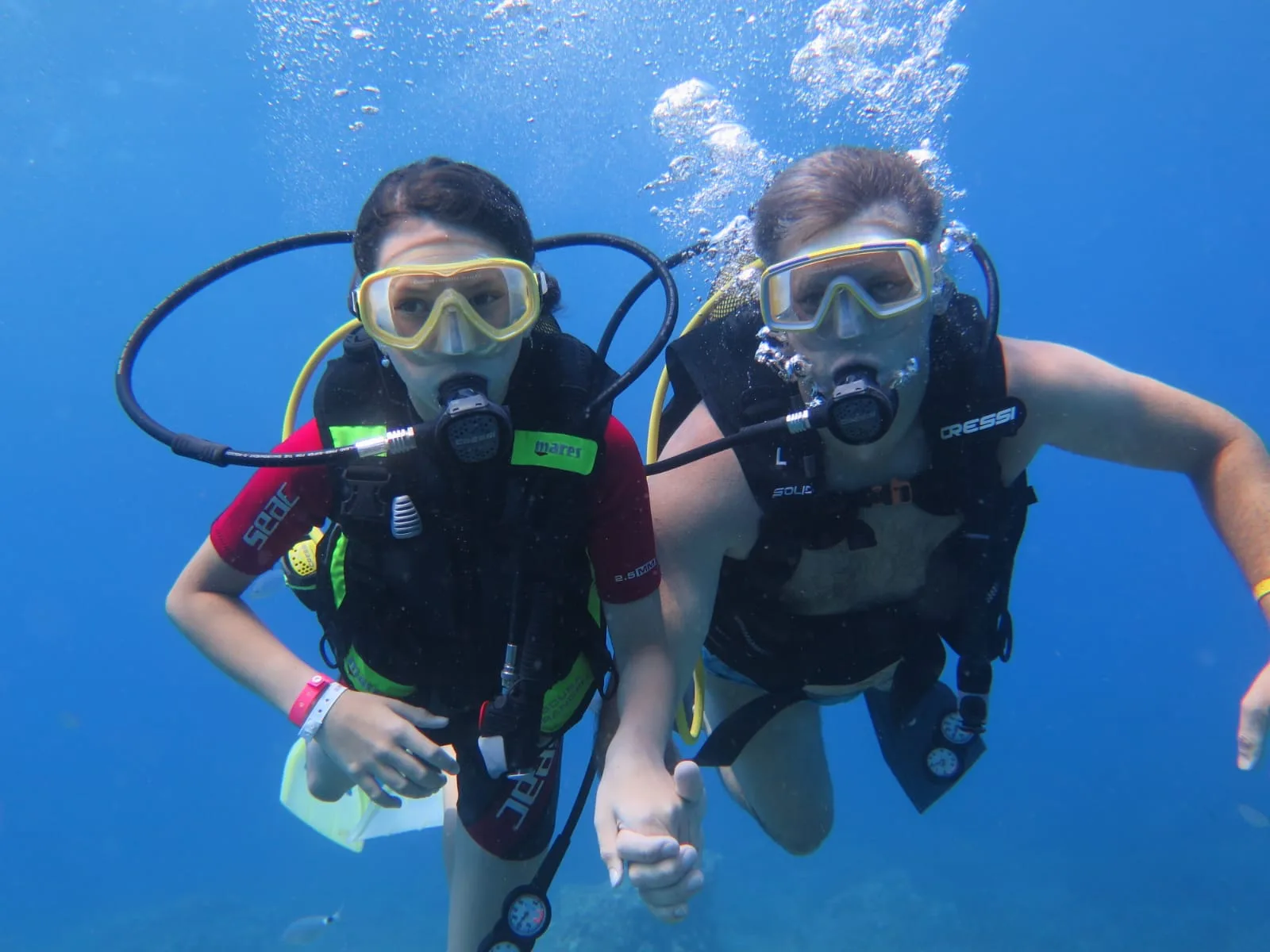
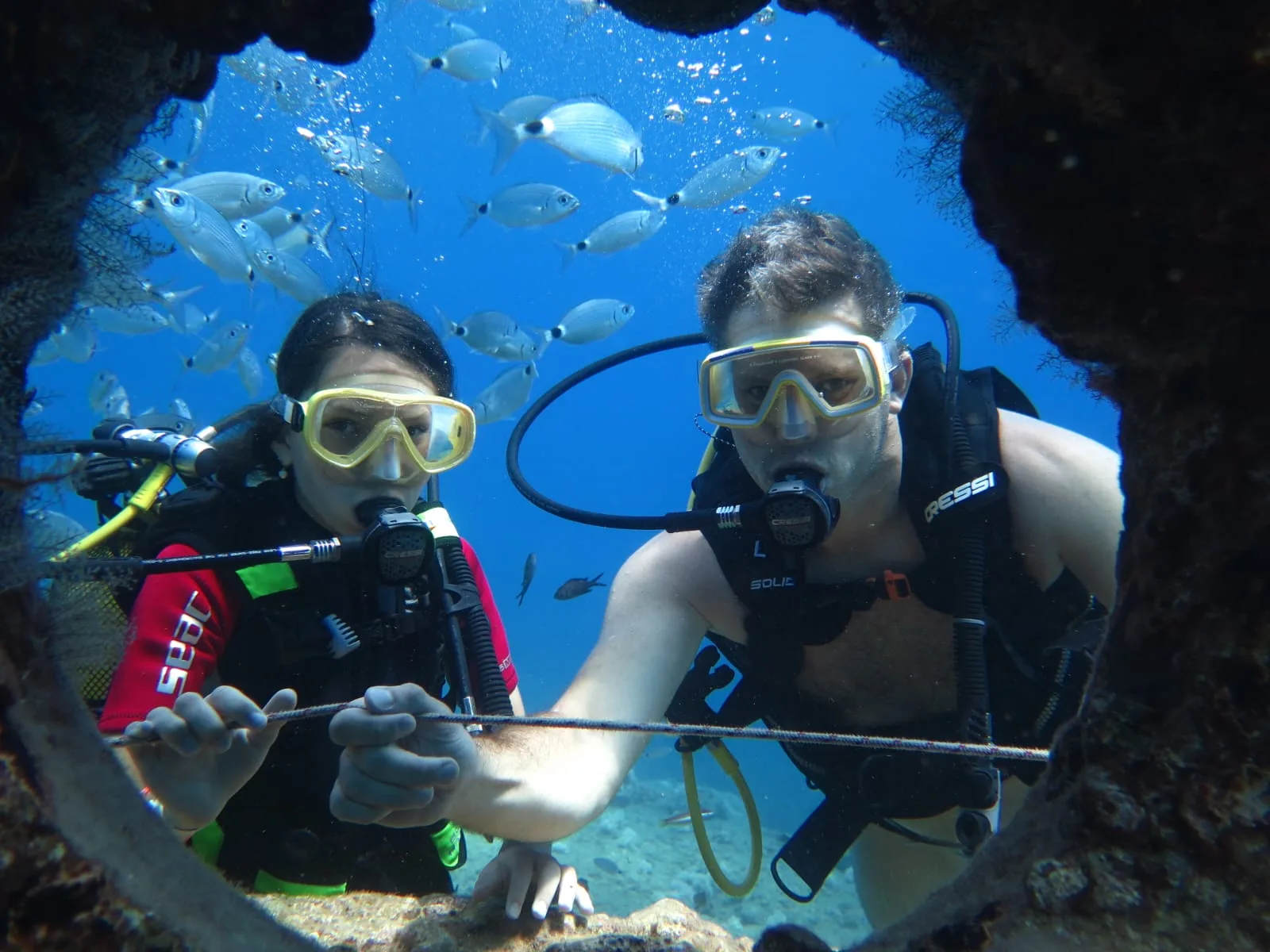
A dive day is a different kind of commitment. You are collected from your hotel in the morning, the boat takes you out, and after a full safety briefing you make two guided dives with all standard equipment provided. On your first dive you stay at 5–8 metres for 15–25 minutes; the second goes to about 13 metres, the ceiling for beginners. Lunch is cooked on board between the dives, and the minibus takes you back afterwards. No licence is needed — read how a beginner dive works if you have never tried it.
Effort, nerves and who each one suits
Parasailing asks almost nothing of your body; the only real question is whether you are comfortable with height. Diving asks little physically — you move slowly and breathe calmly — but it asks for your attention: a proper briefing, a few skills on the surface, and trust in equipment you have not used before. That is why our instructors take three to four divers at most and stay within arm's reach.
- Pick parasailing if you want a short thrill that fits between pool and dinner, if you love views, or if the idea of breathing underwater does not appeal at all.
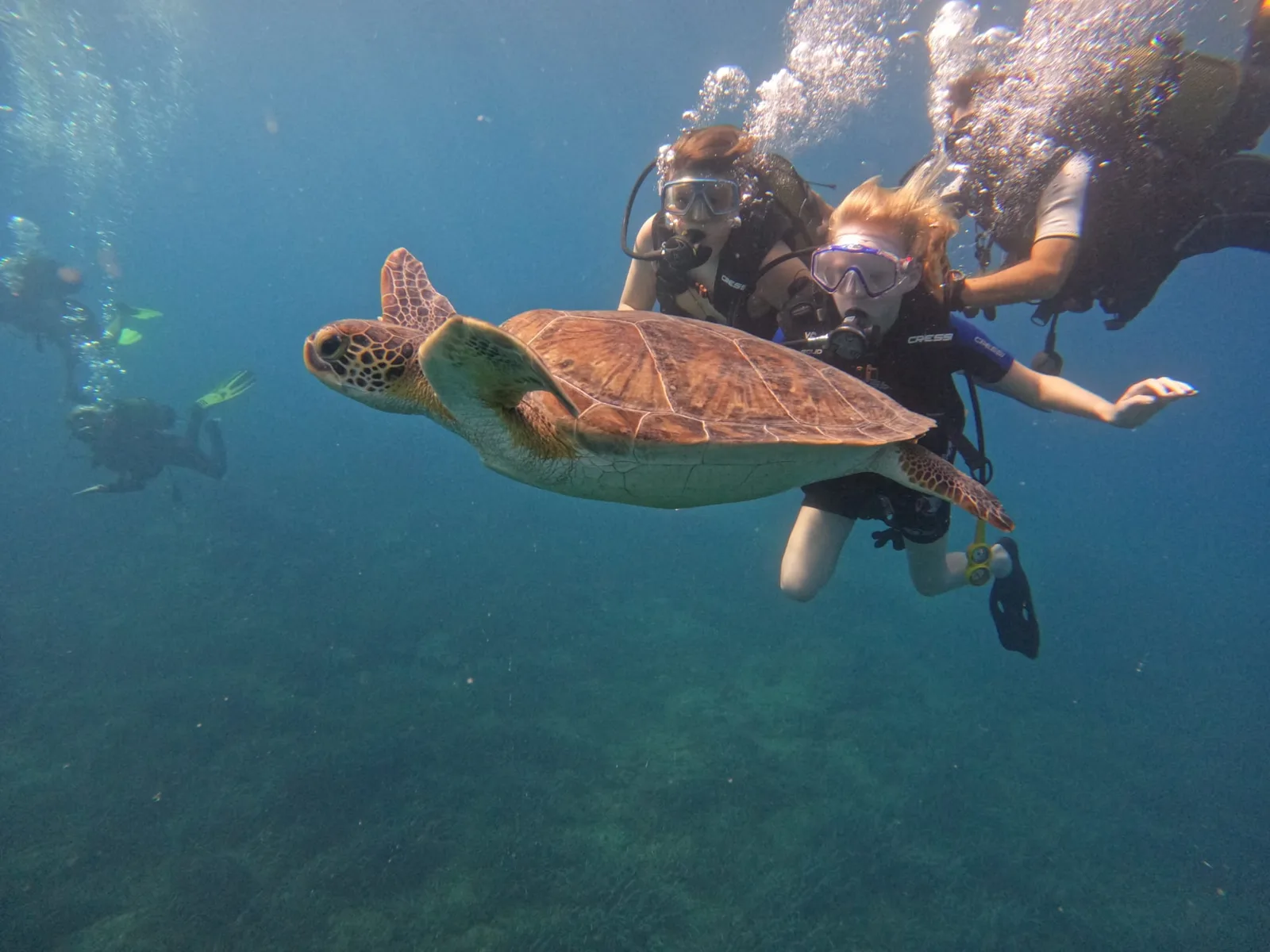
- Pick diving if you are curious about what is under the sea rather than above it, or if you have always meant to try it. The Side Underwater Museum, with its sculptures on the seabed, is something you cannot see from a parachute.
- Nervous about water? Being a strong swimmer is not required to dive — see do you need to swim to dive — but if open water genuinely frightens you, say so before booking and we will talk it through honestly.
Health and age: who decides
For diving, the decision is never a guess on our side. Every diver fills in the standard diving medical questionnaire before going in, and anything it flags needs a doctor's sign-off first. Pregnancy rules diving out completely. If you have a condition you are unsure about, ask your own doctor before the holiday rather than on the boat — our article on diving with medical conditions explains why. Try-dives are possible from age 12.
For parasailing, the operator who runs it is the one to ask about health, age and weight limits — we cannot speak for their rules.
Doing both on one holiday
The simplest plan is to keep them on separate days. Diving is a full day; parasailing fits into a spare hour almost anywhere. Two practical rules:
- Keep the 24-hour gap before your flight home. Do not fly within 24 hours of your last dive, so put the dive day early in the holiday — see why no flying after diving. Parasailing can happen on your last day; diving should not.
- Do not stack it straight after a dive. We do not give a medical ruling on going up on a parachute right after diving, and you do not need one: do the parasailing before your dive day or on another day, and ask your instructor on the boat if you are unsure.
If you want your afternoon free on the dive day itself, the six-hour Kumköy diving trip is the shortest we run — here is what the free afternoon is realistically good for.
Weighing diving against other day trips too? Our guides compare it with rafting, a jeep safari and a boat trip, with a plain boat trip and with snorkelling. Prices for every dive day are on the prices page, and you can message us with any question before you book.