What it actually feels like
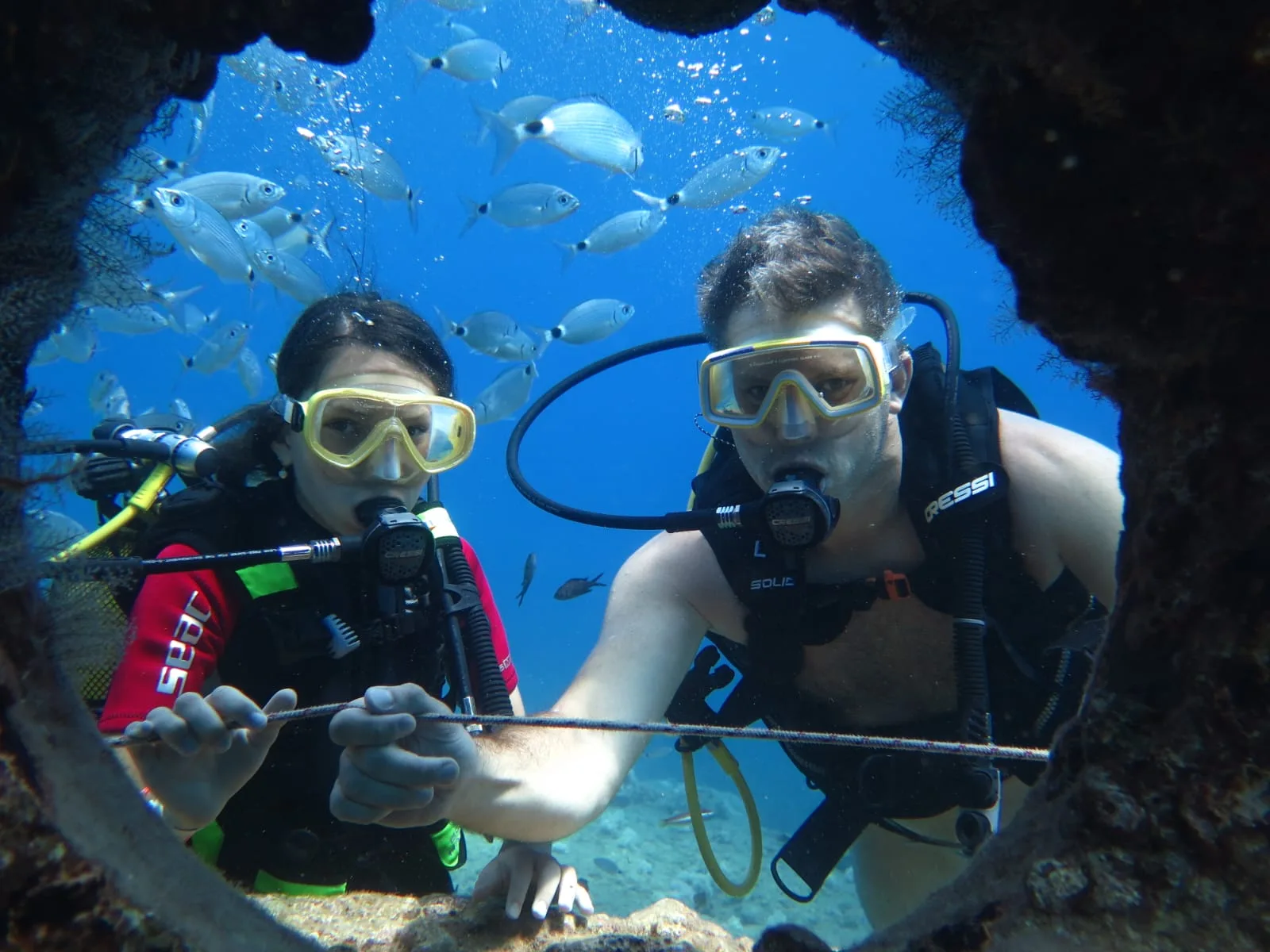
The first thing you notice is that the fish arrive before the food does. They know the sound of divers on this site, so by the time the instructor opens a hand there is already a loose crowd around the group. Then you put your hand out, they place food in it, and the loose crowd becomes a wall — small bodies pressing in from every angle, bumping your fingers, hanging in front of your mask, turning so fast that you feel them more than you see them.
It is not gentle and it is not frightening. It is closer to standing in a busy market with your palm open: a lot of contact, a lot of movement, over in a few seconds, and immediately you want to do it again. Most guests laugh into the regulator, which is a sound worth hearing at 12 metres.
Your instructor will usually keep some food back so everyone in the group gets a turn, and they will take the photo while your hands are busy — this is the single most photographed moment of the Side Underwater Museum day, far more than the sculptures themselves. Divers come up talking about the fish, not the statues. We stopped being surprised by that years ago.
Why we do it with the guide and not on your own
Three reasons, all practical. First, control of the amount. One instructor releasing small portions in one place keeps the feeding tidy; six divers all scattering food turns it into a cloud that drifts across the site, feeds nothing in particular and leaves the water hazy for the group behind you.
Second, your buoyancy. A wall of fish arriving is a genuine distraction, and a distracted beginner drifts — up towards the surface or down onto the sand. Having the guide right there means someone is watching your depth while you are watching the shoal. That is also why our small ratios matter; there is more on that in how many divers per instructor.
Third, judgement about what and where. The guide decides where on the site to do it and when to stop, so the same spot is not fed relentlessly every dive and nobody is chasing an animal that has clearly had enough. Feeding fish is not a natural act — it is a controlled one — and doing it under supervision is the difference between a memorable moment and a mess. If you turn up with bread in your BCD pocket, we will ask you to leave it on the boat.
What we will not promise you
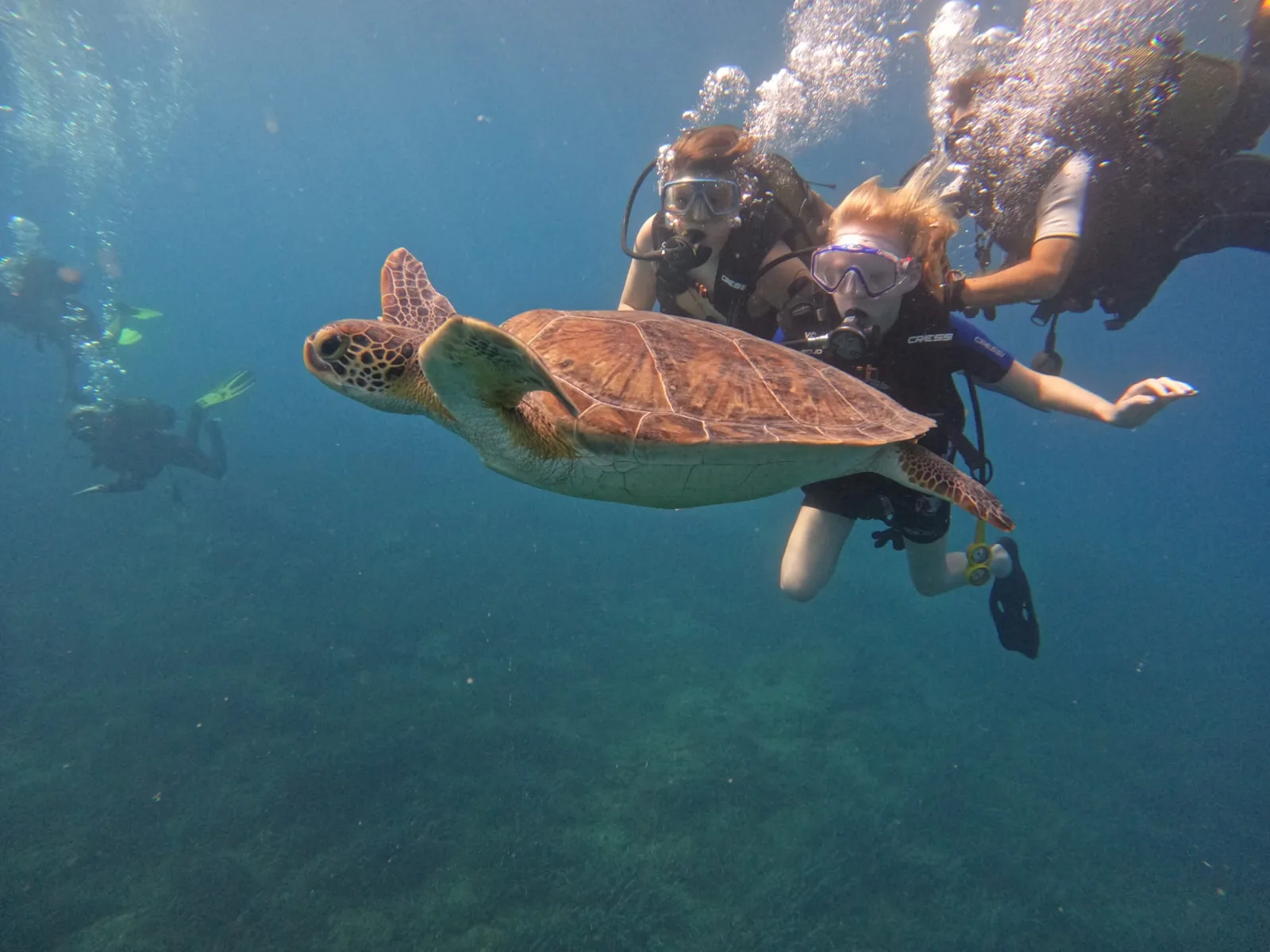
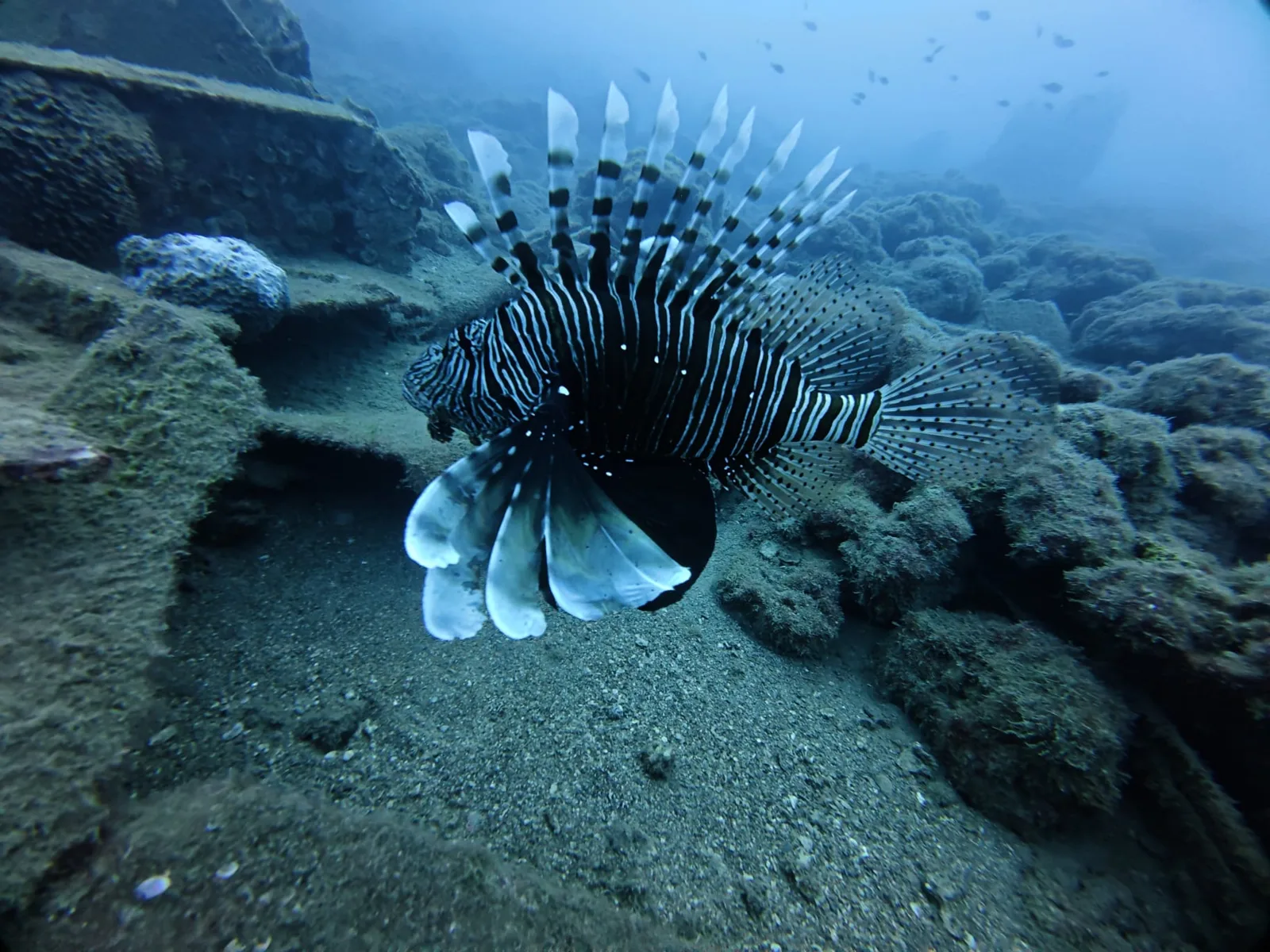
We will not tell you which species you will meet. The Mediterranean here is a fish coast, not an aquarium: on a good day you may be surrounded by dozens of small reef fish working around the sculptures, on a windier day with poorer visibility they are thinner on the ground and the feeding is a quieter affair. Sightings vary with conditions, and any operator who promises you a guaranteed species list is describing a marketing brochure, not the sea.
We also will not stage anything larger. There is no feeding of big animals here, no performance, nothing baited in from elsewhere — just the residents of an artificial reef doing what residents do when food appears.
If this is the part of diving that appeals most to you, the museum day is the right booking: shallow, bright, busy with life around the structures, €45 for about seven hours including two guided dives, all standard equipment, hotel transfer, lunch and insurance. If you would rather have the shortest possible day and the gentlest introduction, the Kumköy diving day at €43 runs six hours from the closest harbour to the Side hotel belt — you will still dive with an instructor within arm's reach, on a site of natural rock rather than sculpture. A thermal inner suit (diving undergarment) or any extra neoprene layer is not included in the price and is available as an optional extra on request.