What one day genuinely gives you
It is not a taster in the disappointing sense. A single day with us is a full day: hotel pickup in the morning, a proper safety briefing, kit fitted to you, two guided dives, a fresh lunch cooked on board between them, and insurance covering the whole thing.
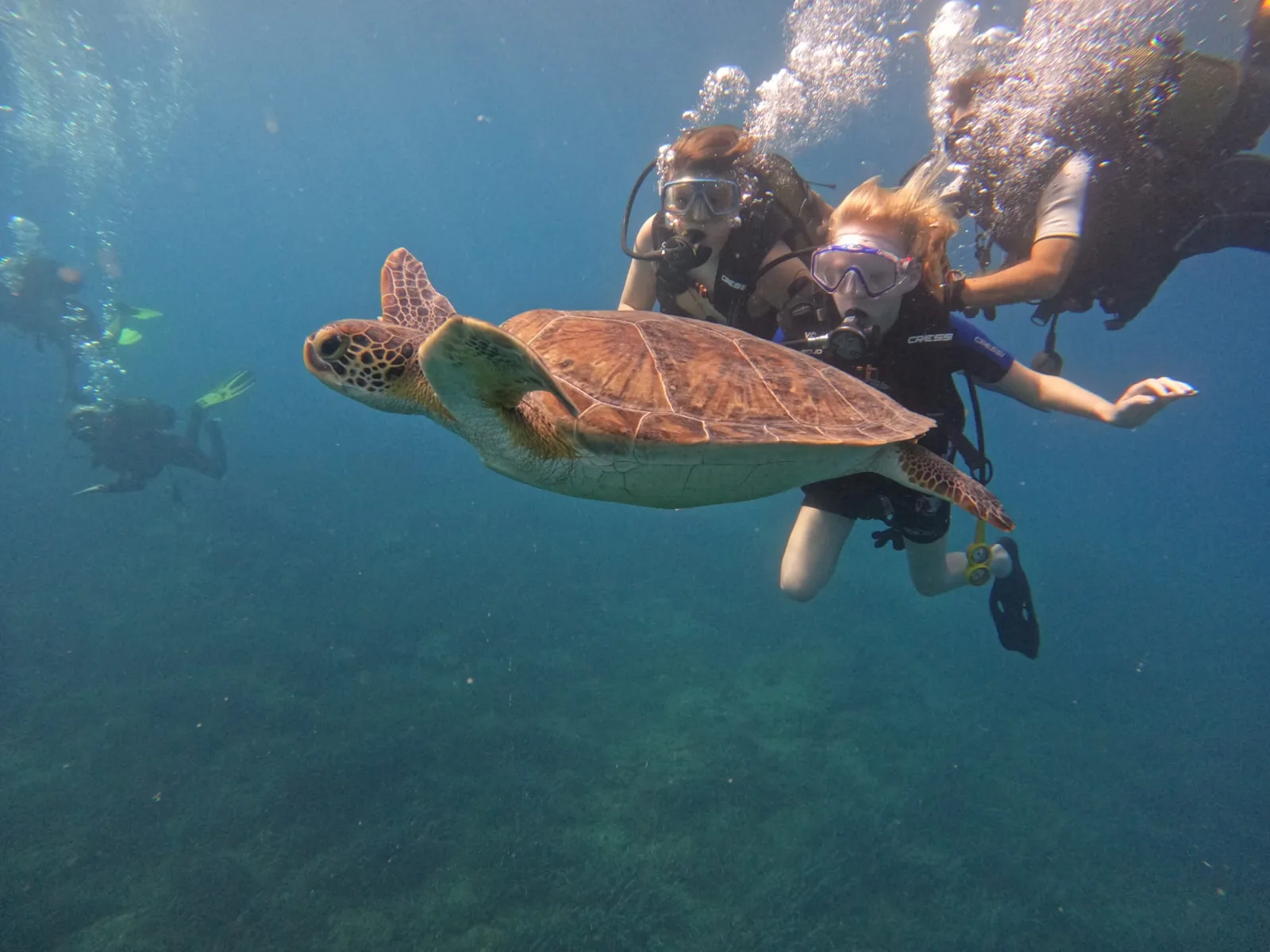
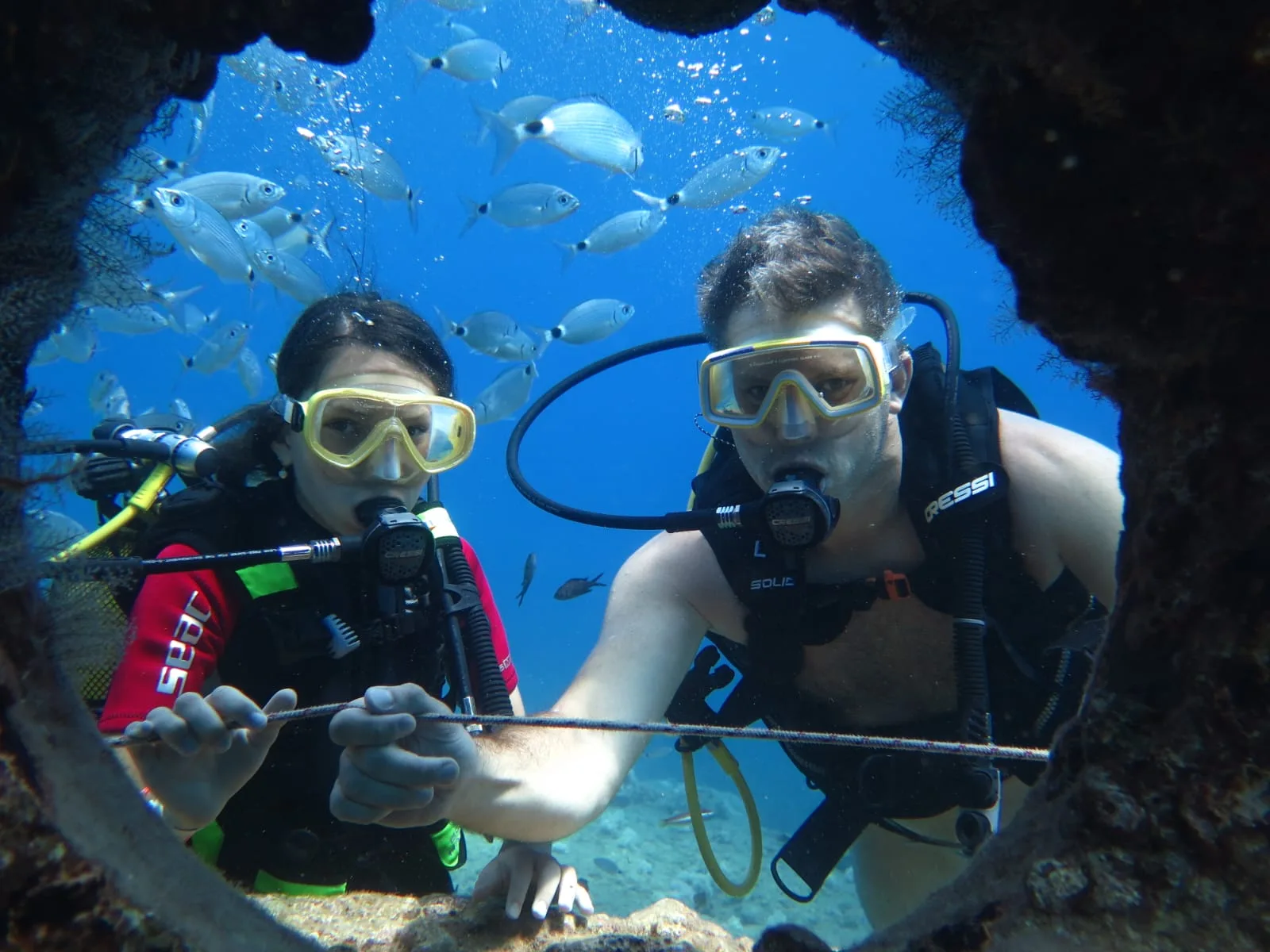
What that day teaches you is your own body underwater. The first dive, at 5 to 8 metres for beginners, is mostly admin: clearing your ears, keeping the mask from fogging, working out that you float when you breathe in and sink when you breathe out. Instructors expect this, which is why they stay within arm's reach the entire time and why groups on the museum trip are kept to three or four divers per instructor.
By the surface interval something has usually shifted. The second dive, deeper — to about 13 metres for a beginner — is where hands come off the console and eyes go outward. Many people describe their two dives as completely different experiences, which is why we do not sell single-dive days. One is not enough to know what diving is. Two is.
Why the second day is the one that hooks people
Here is the part nobody selling you a trip usually says out loud: the difference between your second dive and your third is bigger than the difference between your first and second.
On day two the kit is familiar, so you stop thinking about it. Your breathing settles, which means your air lasts noticeably longer, which means a longer dive for the same tank. You stop watching the instructor and start watching the reef. People who come back for a second day are the ones who go home saying they want to get certified.
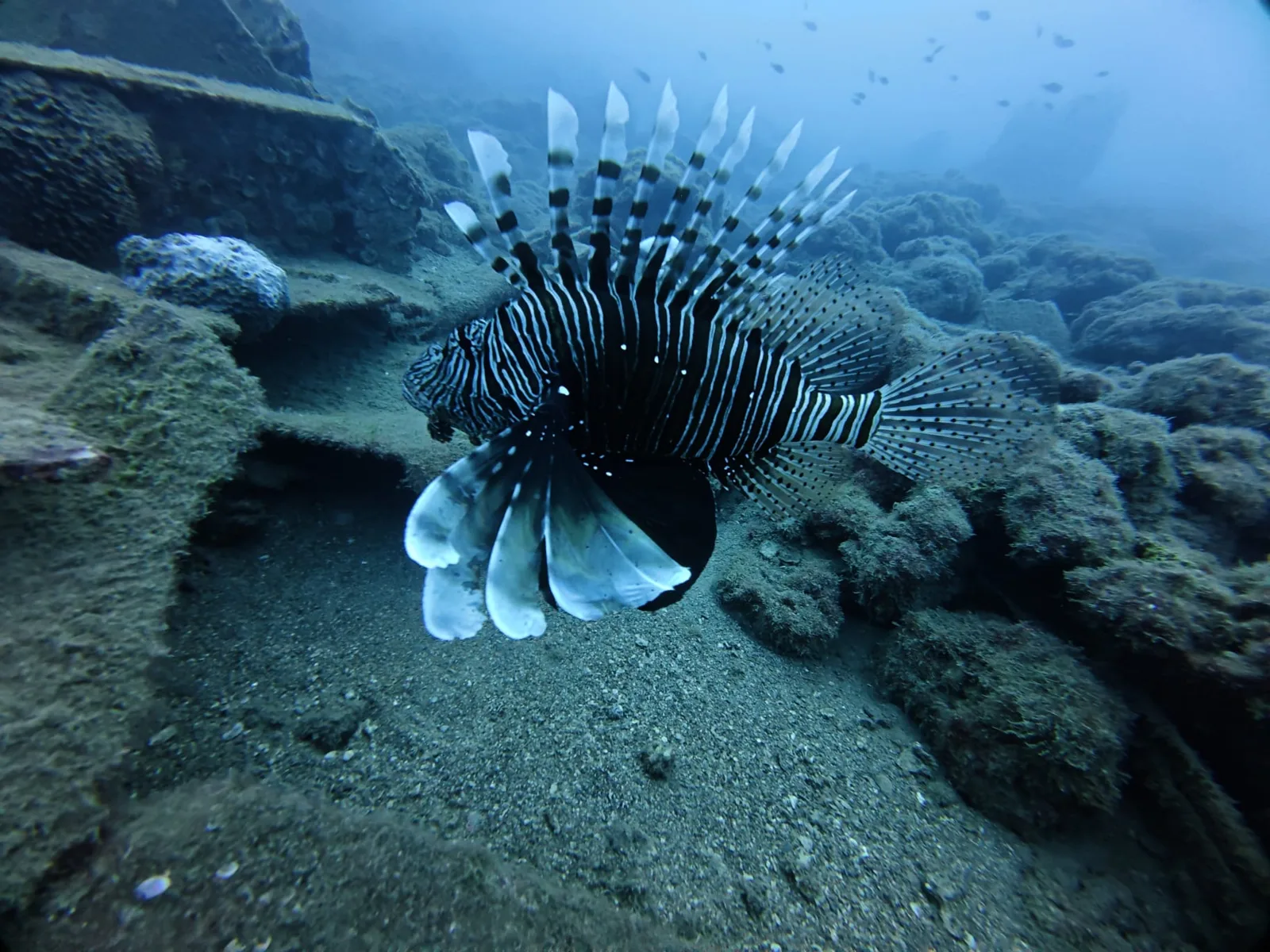
There is also a straightforward argument for variety. These five days are not versions of each other. Doing the Side Underwater Museum and then Kemer gives you around 110 sculptures at twelve metres on one day and the clearest water on this coast, reef fish, rock formations and wreck country on the other. If you are certified, the sites that reward composure — the Paris II at 21 to 31 metres, the DO-28 at 19.5 to 23.3 — are exactly the ones you dive better on a second day than on a first.
Fitting it into the week you actually have
One planning rule shapes everything else: no flying within 24 hours of your last dive. This is not our policy, it is standard diving practice, and it does not bend for a cheap flight.
So the last full day of a holiday is a poor choice for a dive day, and the day before departure is worse than poor. Book early in the week instead. You get three things for free by doing that: the 24-hour rule stops being a problem, a weather cancellation still has days left to move into, and — the real reason — you leave yourself the option of a second day once you have discovered you love it. Nothing is lost if you do not take it, since reserving costs nothing and cancels free up to 24 hours ahead.
If it does take hold, ask on the boat about CMAS courses. We run them on request; there is no published price or fixed schedule, so it is a conversation with an instructor rather than a booking button. Certified divers get their logbook signed on board. The practicalities are on the prices page and the FAQ, or just ask us through contact.