The terrain: architecture, not garden
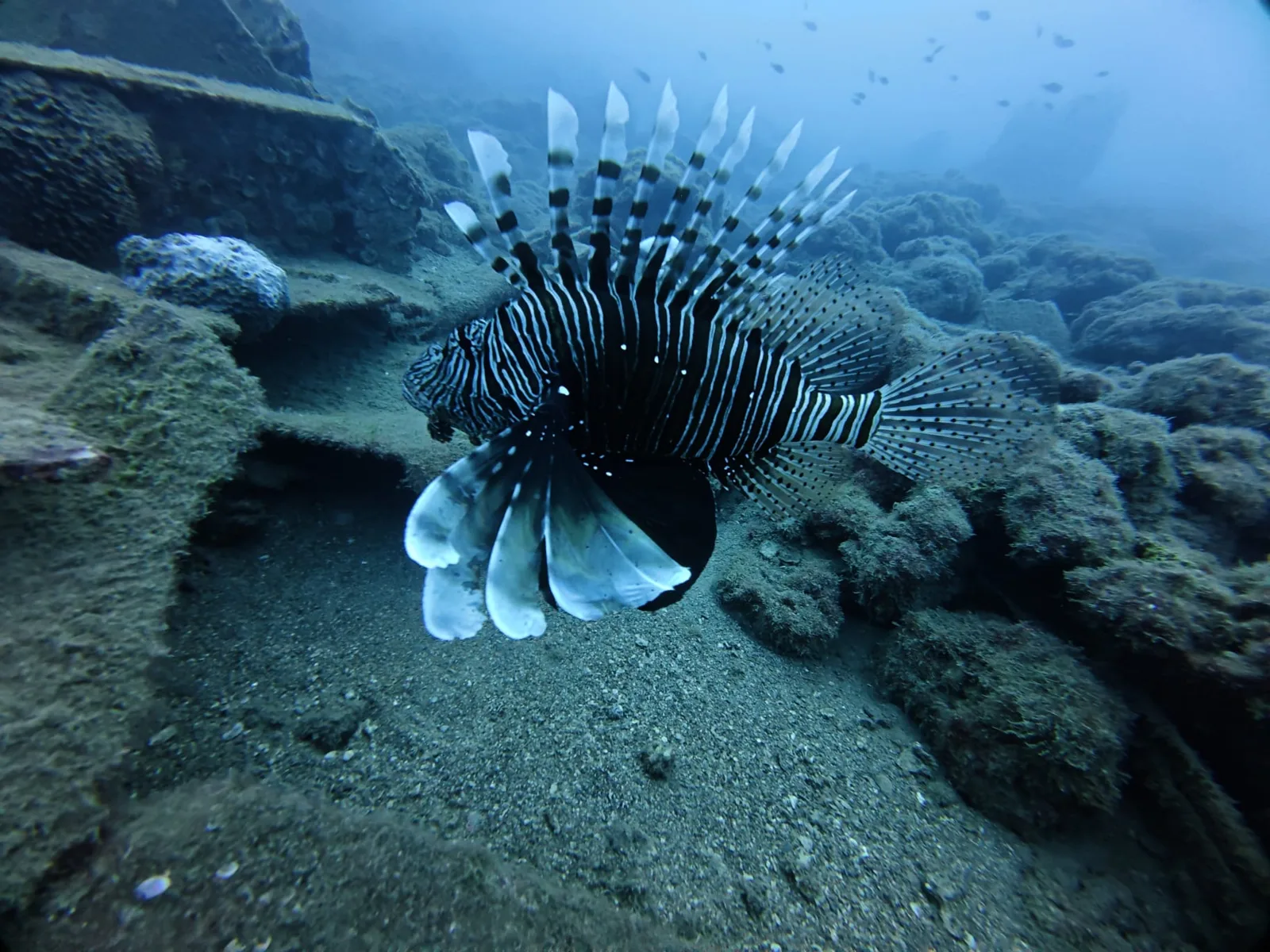
The first thing that strikes people is that this seabed has shape. The same limestone that builds the Alanya peninsula and the mountains behind it carries on underwater, so you are diving a landscape of hard edges: slabs stepping down like broken staircases, boulders the size of cars piled where they fell, undercut ledges you can hang under and look up from, and cave mouths in the rock wall where a shaft of light angles in and simply stops.
Between the rock there is soft ground — pale sand channels that reflect light back up and make everything brighter, and darker beds of seagrass where the small stuff hides. That alternation is what keeps a dive here interesting: the scenery changes character every few minutes rather than rolling out flat for the whole tank.
Depth-wise it is generous to beginners, because the good structure starts shallow. The first dive on the Alanya diving day runs at 5–8 metres and the second to about 13 metres maximum — which is exactly where the light is strongest and the rock most detailed. Certified divers work the same coast to around 30 metres, where the colour drains and the structure gets bigger.
What actually lives down there
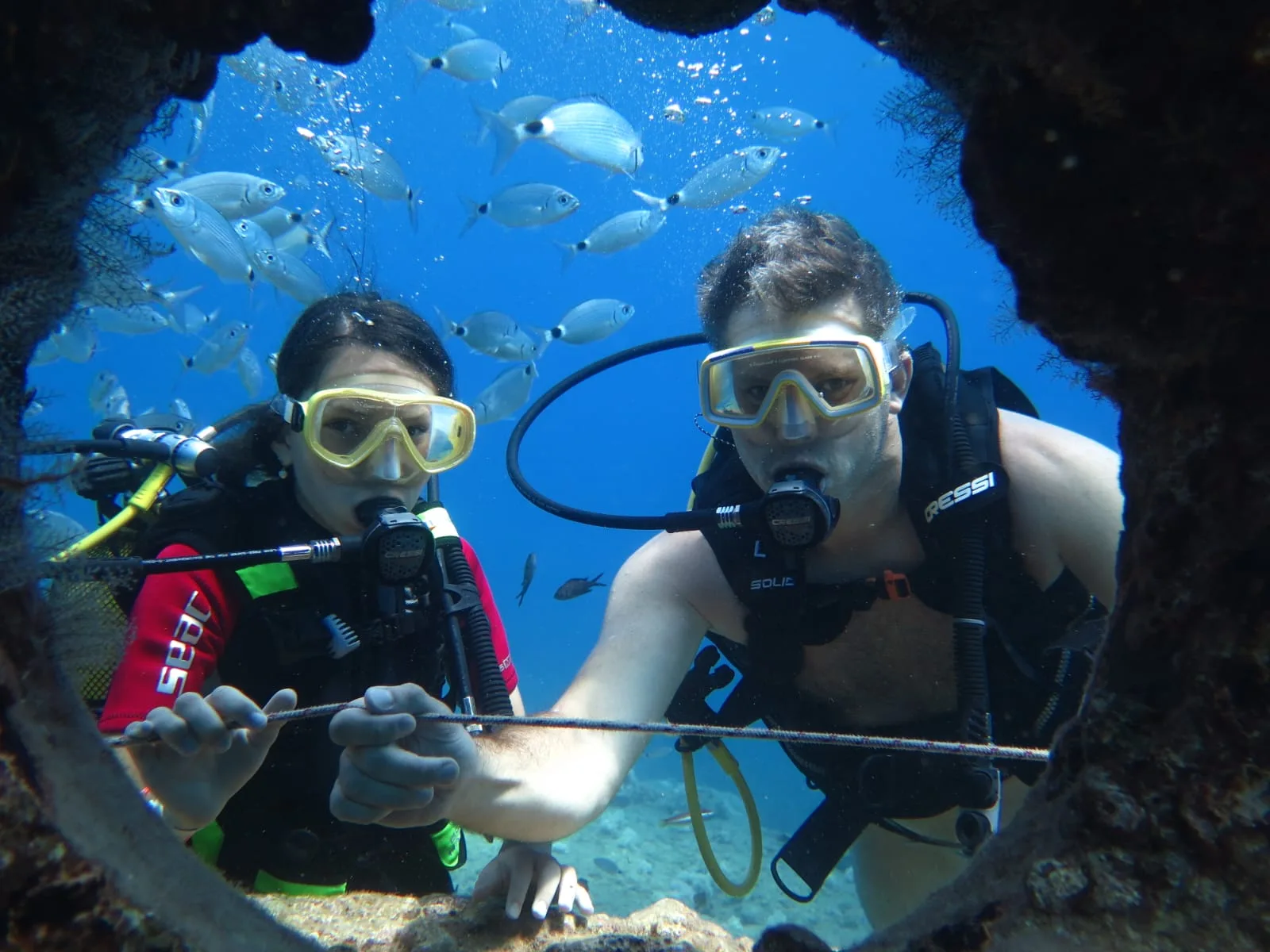
Set your expectations to Mediterranean and you will not be disappointed. What you see most is fish in numbers rather than fish in colours: shoals of bream drifting over the reef, wrasse picking at the rock in green and orange, damselfish hanging in clouds above a boulder. It is busy, and beginners are usually surprised by how busy.
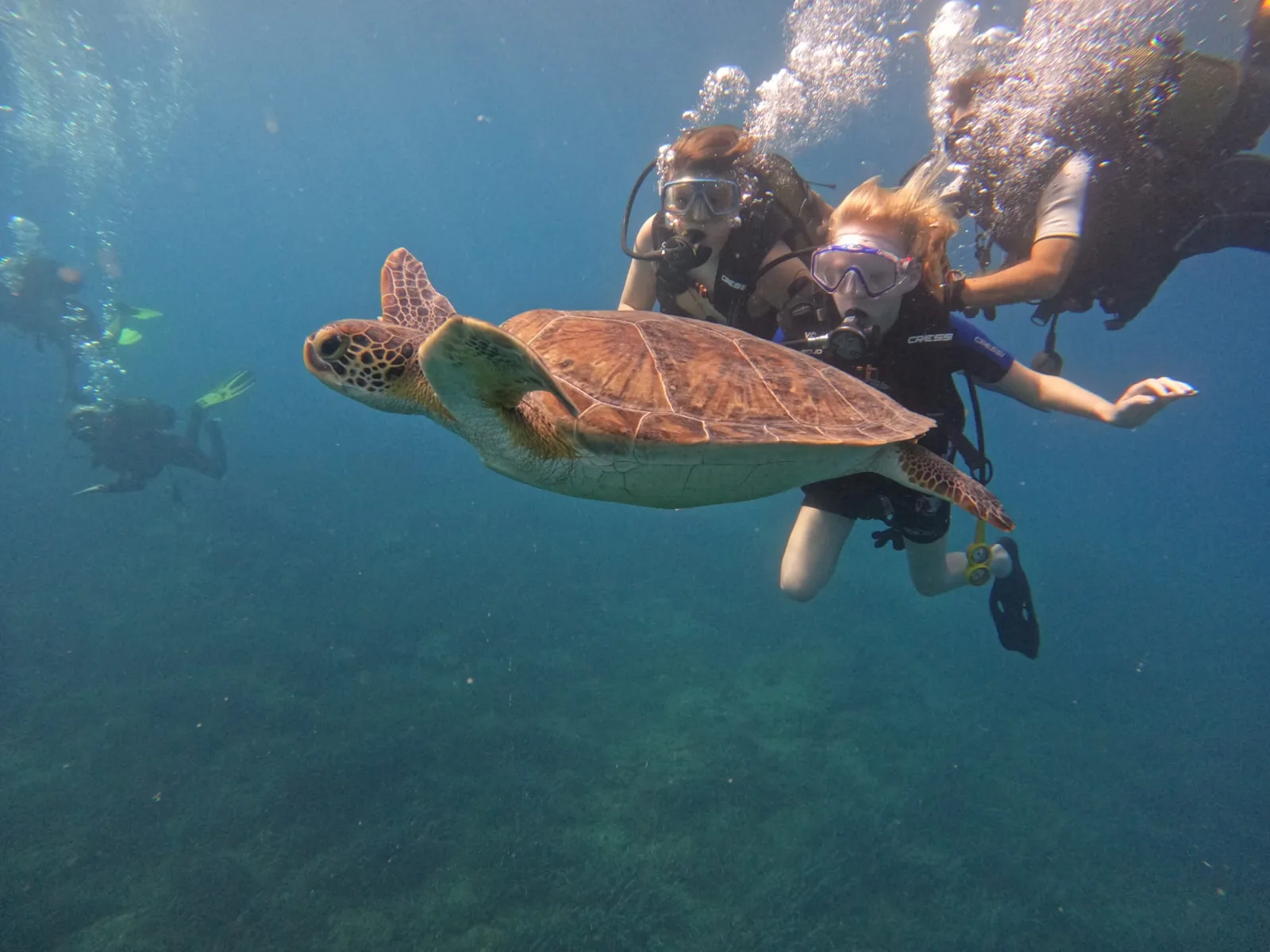
The characters take more looking. Moray eels sit in holes with their mouths working — that open-jaw look is breathing, not aggression. Octopus are the prize, and you find them by spotting the neat pile of empty shells outside a crevice, then realising the rock beside it has an eye. Grouper hold station near ledges and move off unhurriedly. Add starfish, sea urchins in the shallows and the occasional ray on the sand.
Nothing is guaranteed. Sightings vary with conditions, with the site and with luck, and any operator who promises you an animal is promising something the sea has not agreed to. We also do not bait anything here. If you want to read up before you travel, our page on marine life on this coast goes through the species properly.
Honest expectations, and the history on the seabed
If your reference point is the Red Sea or the Maldives, be clear with yourself before you book: there are no coral gardens and no reef sharks here. The Mediterranean is a cooler, older, more austere sea. The colour comes in flashes rather than covering everything, and the beauty is in the architecture of the rock and the quality of the blue light in it.
What Alanya has instead is history you can float over. The amphora site lies only minutes from the harbour: ancient clay shipping jars resting on the seabed exactly where the sea left them, not roped off behind museum glass. Diving above them is a strange, quiet feeling that no reef delivers.
Two honest alternatives. If visibility is what you care about most, Kemer has the clearest water on this coast for the same €43. And if you want a guaranteed spectacle rather than a natural one, the Side Underwater Museum at €45 puts around 110 sunken sculptures at about 12 metres with hand-feeding fish — the most photographed dive we run, and the one to choose if you want to be certain of the images you bring home.