Side Diving ° ATALAY HOBA · DIVE HOUSE

The Complete Guide

Scuba Diving in Side: The Ultimate Guide to Diving Turkey's Mediterranean Coast

If you type "scuba diving Side" into a search bar, you get a wall of fragments: a price here, a photo of a sunken statue there, a forum thread from years ago. This guide replaces all of that. It is the complete, honest picture of diving on this stretch of the Turkish Mediterranean — written by Side Diving, the local dive house of Atalay Hoba, and based only on what we actually run: five real full-day boat diving trips departing from Side, Kumköy, Kemer, Antalya and Alanya, every one of them open to complete beginners with no licence required.

You will find out why Side has quietly become one of the best places in Turkey to breathe underwater for the first time, what it actually feels like to descend onto the roughly 110 sculptures of the Side Underwater Museum, how a dive day runs from morning hotel pickup to the moment your instructor signs your logbook, who can dive and who should not, what every trip costs and includes, and how the coast changes as you move from the amphora fields of Alanya to the famously clear water of Kemer.

Use it as a map. Every section links deeper into the site — to the five bookable trips, to individual dive site guides, and to the full price overview — so that by the end you know exactly which day on the water is yours.

Why Side Is One of the Best Places in Turkey to Start Scuba Diving

Side sits in the middle of Turkey's Mediterranean riviera, an ancient Roman harbour town surrounded by some of the calmest, warmest and most forgiving sea conditions in the country. That combination matters more than most first-time divers realise. Learning to breathe underwater is ninety percent psychology: the calmer the water, the better the visibility, and the warmer the sea, the faster your brain stops treating the experience as a threat and starts treating it as a wonder. The Mediterranean off Side delivers all three, which is why dive boats have operated from this coast for decades and why we built our whole programme around it.

The second reason is geological. The Antalya coastline is not a monotonous sandy shelf. Within a two-hour radius of Side you have shallow protected bays perfect for a first breath at five metres, rocky reefs busy with Mediterranean fish life, sea caves, a nine-metre swim-through tunnel, two genuine wrecks — a WW1-era French freighter and a 1967 Dornier aircraft — and, uniquely, an entire sunken sculpture park. Very few places in Europe let a complete beginner and a certified wreck diver plan their ideal day from the same small harbour. Our dive sites by level page maps that whole spectrum.

The third reason is cultural: this is a working tourism coast with real infrastructure. Free hotel transfers are standard, boats are proper full-day vessels with kitchens on board rather than cramped speedboats, and the dive professionals here spend entire seasons introducing nervous first-timers to the water. At Side Diving we keep groups to three or four divers per instructor, which is the single biggest quality lever in try-diving — small groups mean your instructor is holding your hand, literally, for as long as you need it.

Finally, there is the honest economic argument. A full-day boat diving trip from Side costs between €43 and €50 — two guided dives, all equipment, lunch, insurance and transfers included. In most of Western Europe that budget barely covers a single pool session. Here it buys you a whole day at sea and your first two real dives in the Mediterranean. If you have ever been curious about what is under the surface, there are few cheaper or gentler places on the planet to find out. Start with the overview of all five diving trips, or read on for the detail.
The Side Underwater Museum: Diving Among 110 Sculptures

Every diving destination needs a signature dive, and Side's is genuinely unlike anything else on the Turkish coast: the Side Underwater Museum, a purpose-built sunken sculpture park resting at around 12 metres on a sandy seabed just off the Side peninsula. Roughly 110 sculptures were lowered to the bottom here — figures, forms and compositions arranged into avenues that you fly over and between like a visitor drifting through a silent gallery. Because the statues sit at the exact depth of a standard second try-dive, the museum is that rarest of things: a world-class dive that a complete beginner can actually do on day one.

What makes the museum special is what happens to the sculptures over time. The sea does not leave art alone. Year by year the figures grow their own second skin of algae and marine growth, and fish move in — the statues act as an artificial reef, concentrating life on what was once bare sand. On our museum trip you will usually spend part of the dive hand-feeding fish, which is the moment most first-timers stop thinking about their regulator entirely: it is hard to be nervous while a cloud of bream is eating from your palm in front of a sunken statue.

The Side Underwater Museum diving trip is our flagship: a seven-hour day departing from Side itself for €45, with the same beginner-friendly structure as all our trips — a gentle first dive at 5–8 metres to learn breathing and equalising, then the museum dive to around 12 metres in the afternoon, always with three to four divers per instructor. Non-diving partners can join the boat at a reduced rate and follow the day from the surface, so nobody has to sit in the hotel.

Is it worth choosing over a straightforward reef trip? If this is your only dive of the holiday, we honestly think yes — the museum gives your memory something no reef can: a scene. You will not remember every fish you saw, but you will remember hovering over a field of statues twelve metres under the Mediterranean for the rest of your life. For the full picture of the site, its layout and its photography potential, read the dedicated Underwater Museum site guide; for the exact cost breakdown, see the museum diving price page.

How a Dive Day Actually Works: From Pickup to Logbook

People imagine a first dive as a single dramatic moment. In reality it is a well-rehearsed, unhurried full day at sea, and knowing the rhythm in advance removes most of the nerves. Here is exactly how every one of our five trips runs, whether you board in Side, Kumköy, Kemer, Antalya or Alanya.

Morning: pickup and boarding. A free two-way transfer collects you from your hotel in the morning — the exact time is confirmed the evening before, because it depends on where along the coast you are staying. You are driven to the harbour, welcomed aboard a full-day dive boat, and the paperwork and health questions are handled while the boat heads out. Then comes the safety briefing: your instructor explains the equipment piece by piece, the three or four hand signals you need, how to equalise your ears, and the golden rule of never holding your breath. Nothing is assumed; the briefing is built for people who have never touched a regulator.

Dive one: the shallow introduction. Your first dive is deliberately modest — 5 to 8 metres for 15 to 25 minutes. The instructor controls your buoyancy and stays within arm's reach the entire time; with a maximum of three to four divers per instructor, you are never a face in a crowd. Most people describe the first three minutes as strange and everything after as addictive. You surface grinning, climb the ladder, and suddenly the afternoon dive cannot come fast enough.

Midday: lunch on board. A fresh lunch is cooked and served on the boat while you rest, warm up in the sun and let your body off-gas between dives. This surface interval is not dead time — it is a safety requirement and, on a Turkish gulet-style boat with the Taurus mountains on the horizon, one of the best parts of the day.

Dive two: the real dive. In the afternoon you go deeper — 12 to 13 metres — onto the day's main site: the sculpture park on the museum trip, reef and rock formations at Kemer, caves and shoals on the Antalya trip. You already know how to breathe and equalise, so this dive is where the actual sightseeing happens.

Afternoon: logbook and transfer home. Back at the harbour your instructor signs your logbook — your dives are real, recorded dives that count toward any future certification — and the transfer returns you to your hotel. Total duration is six to eight hours depending on the departure coast. Wondering what to pack? Swimwear, a towel, sunscreen and nothing else; our what-to-bring guide covers the details.

Who Can Dive? Beginners, Non-Swimmers, Kids and the Health Rules

The single most common question we get is some version of "can I actually do this?" — and the honest answer is that far more people can dive than think they can. Every trip on this site is a guided try-dive programme: no licence, no experience and no previous pool training are required. Your instructor manages your equipment and buoyancy; your only jobs are to breathe and look around. If you can walk down a ladder into the sea, you can do a try-dive. Our best trips for beginners page ranks the five departures from the gentlest up.

Non-swimmers can dive. This surprises almost everyone, but it is standard practice worldwide: a try-dive is conducted with an instructor physically holding or guiding you, in full buoyancy equipment, at depths where the surface is seconds away. Swimming ability is about moving on the surface; diving with an instructor is about breathing calmly while someone else handles the physics. Hundreds of our guests every season make their first dive without being able to swim a stroke. If you are in this group, say so when booking — we plan a little extra time in the shallow phase — and read diving for non-swimmers for a full explanation.

Children and families. Kids can join try-dives from around age 10 on our standard trips, with the same small-group instructor ratio and a shallower, shorter profile where sensible. For younger children from roughly age 8, pool-style "bubblemaker" introductions exist in the diving industry — ask us via the contact page and we will tell you honestly what is possible for your child's age rather than overselling. Non-diving family members join the boat as visitors at a reduced rate, so a dive day works as a family day: one parent dives in the morning, the other in the afternoon, and the kids get a boat trip with lunch either way. See the family diving guide for how other families structure it.

The health rules — the part we will not soften. Diving is safe for healthy people and genuinely dangerous for a small set of conditions. You should not dive if you are pregnant, have severe asthma, a serious heart condition or a significant respiratory illness. The health questionnaire on the boat is not bureaucracy — answer it truthfully. And one rule that catches holidaymakers out every year: do not fly within 24 hours after diving. Book your dive day at least a full day before your flight home, never on your last day. If you are unsure whether a condition affects you, ask us before booking; the answer costs nothing and might matter enormously.

Five Coasts, One Standard: Side, Kumköy, Kemer, Antalya and Alanya

Side Diving runs five full-day boat trips along more than 200 kilometres of coastline, and each departure has its own character. The format never changes — two guided dives, all equipment, free hotel transfer, fresh lunch on board, passenger and diving insurance, safety briefing — so your choice is really about geography, atmosphere and what you want to see. Here is the honest comparison.

Side – Underwater Museum (€45, ~7 hours). The flagship. Departs from Side itself, shortest transfers for anyone staying in the Side–Manavgat area, and the afternoon dive is the sculpture park. If you are staying locally and only diving once, this is the default answer. The diving from Side page covers everything about this home coast.

Kumköy (€43, ~6 hours). The compact option, departing from the beach-resort strip just west of Side. Slightly shorter day, the lowest price alongside Kemer and Alanya, and ideal for guests in Kumköy, Evrenseki or Çolaklı hotels who want minimal transfer time and maximum water time.

Kemer (€43, ~8 hours). The connoisseur's coast. Kemer is known for the clearest water on this entire shoreline, and the trip is led by PADI-certified instructors over reefs, rock formations and the territory of the local octopus population. The Kemer region also hosts the Three Islands reefs, the Lighthouse tunnel site and both wrecks — so if you fall in love with diving here, Kemer is where your certified future probably lives.

Antalya (€50, ~8 hours). The big-scenery day: reefs, sea caves and fish shoals along the cliffs of the gulf, departing from the city coast — the natural pick for guests staying in Lara, Kundu or Konyaaltı. Full details on the diving from Antalya page.

Alanya (€43, ~8 hours). The most atmospheric departure: caves and rocky reefs in the waters off Cleopatra Beach, beneath the castle rock, near the ancient amphora field by the harbour. For anyone staying from Okurcalar to Mahmutlar, Alanya is the local answer — and arguably the most photogenic coastline of the five.

The practical rule: pick the departure closest to your hotel unless a specific site — the museum, the clear water of Kemer, the caves of Alanya — pulls you elsewhere. The transfers are free either way, so the decision is about your day, not your wallet.

Dive Sites by Level: From First Bubbles to Wrecks and Caves

A coastline is only as good as its dive sites, and the Antalya coast has a genuinely deep bench. Below is the honest ladder, from sites a first-timer will actually visit to sites that require certification — because we would rather tell you clearly what needs a licence than let a wreck photo sell you a trip you cannot do yet. The full interactive version lives on our dive sites by level page.

Beginner sites — where your try-dive happens. The Side Underwater Museum (~110 sculptures at ~12 m) is the crown jewel: a sheltered, sandy-bottomed gallery at exactly try-dive depth. The Lighthouse at Kemer is a reef running from 3 to 18 metres with a nine-metre swim-through tunnel and busy cave-mouth life — its shallow upper section is superb for second dives in famously clear water. The Amphora site near Alanya harbour scatters ancient amphora jars across the bottom, with octopus, grouper and moray eels often seen among them — often, not guaranteed; the sea keeps its own schedule. And the Three Islands (Üç Adalar) off Kemer offer reefs and caves with, on lucky days, dolphins passing through the blue.

Certified-only sites — the reason to get a licence. The MS Paris II at Kemer is a WW1-era French freighter roughly 70 metres long, lying between 21 and 31 metres — one of the great wreck dives of the Turkish Mediterranean, and strictly for certified divers. The DO-28 aircraft wreck, a 1967 Dornier aeroplane at 19.5–23.3 metres, is its smaller, stranger sibling: an intact aircraft silhouette on the seabed. The Alanya underwater caves — entwined with the coast's Mediterranean monk-seal story — reward proper cave and cavern training.

Be clear about what your trip includes. Our five standard boat trips are try-dive format with a maximum depth of 12–13 metres. They do not, and cannot, include the Paris II, the DO-28 or cave penetration — those depths and environments legally and physically require certification. If you are already a certified diver, we arrange deeper and wreck days on request: tell us your certification level and wishes through our certified diver trips page or the contact form, and we will build the day around you with a personal quote. That is not a limitation of this coast — it is the roadmap it hands you: first dive at the museum this year, Paris II with a licence the next.

Prices and What's Included — No Hidden Extras

Diving has a reputation for nickel-and-diming: equipment rental here, marine-park fee there, lunch extra, transfer extra. We run the opposite model, and it is worth spelling out exactly what the number on the prices page buys, because when you compare offers along this coast the headline price is meaningless without the inclusion list.

The five trips: Side Underwater Museum €45 (7 hours) · Kumköy €43 (6 hours) · Kemer €43 (8 hours) · Antalya €50 (8 hours) · Alanya €43 (8 hours). Per-trip breakdowns live at Side, Kemer, Alanya and Antalya.

Every price includes, without exception: two guided dives (the 5–8 m introduction and the 12–13 m main dive), all diving equipment — wetsuit, mask, fins, regulator, BCD, tank and weights — the free two-way hotel transfer, a fresh lunch cooked on board, passenger and diving insurance, and the full safety briefing. There is no equipment surcharge, no "instructor fee", no fuel supplement. The complete anatomy of the number is on what's included in the diving price, and the traps to watch for elsewhere are catalogued in our hidden costs guide.

What legitimately costs extra: underwater photos or video if you want them, personal extras like café drinks at the harbour, and tips if you feel the crew earned them (never obligatory). Non-diving companions pay a reduced boat-visitor rate rather than the full diver price — ask when booking and we quote it straight.

Why is this so much cheaper than diving in Western Europe? Not because corners are cut, but because the economics are different: full boats all season, no heated pools to maintain, no drysuits, and a coast where the sea itself does the marketing. €43–€50 for a full-day, two-dive, all-inclusive boat trip is the honest local market level — anything dramatically cheaper is usually missing insurance, lunch or transfer from the list, and anything dramatically more expensive is usually the same day with hotel-lobby commission baked in. That last point matters: booking direct with the dive house rather than through a street agency is how you keep the price at the number printed here. More on that in the booking section below, and in where to book diving in Side.

From Try-Dive to Certified: Logbooks, CMAS Courses and What Comes Next

For most guests, a try-dive is a perfect self-contained holiday memory. But every season a predictable percentage of first-timers climb back on the boat with the same look on their face and the same question: how do I do this properly? Here is the honest map of what comes next — and what we can do for you here in Side.

Your try-dives already count. At the end of every trip your instructor signs your logbook. That is not a souvenir gesture: logged, instructor-verified dives are the currency of the diving world, and depending on the course structure your experience dives can feed into entry-level certification. If you think you might ever certify, keep that logbook.

CMAS courses with us, on request. Side Diving arranges CMAS certification courses — the classic European federation system — on request. We deliberately do not publish a course price or a fixed schedule, because a certification course is not an off-the-shelf product like a boat trip: the right course depends on your available days, your language, the season and how many students are training at once. Tell us your timeframe through the contact page or WhatsApp and you will get a personal plan with a clear price before you commit to anything. The full pathway — what the levels mean, how many days each takes, what a card lets you do worldwide — is explained on our diving courses page.

What a certification unlocks on this exact coast. This is the part that makes the question real rather than abstract. With an entry-level card, the Antalya coast opens its second tier: the 70-metre French freighter Paris II at 21–31 metres, the DO-28 aircraft wreck, deeper reef walls at the Three Islands, and — with further training — the Alanya cave systems. We arrange these certified-diver days individually on request rather than as scheduled products, which keeps groups small and standards high.

And the other directions. Not everyone wants a card. Some guests want the sea after dark — night diving is arranged on request for suitable candidates. Some travel companions want the underwater world without the tank — snorkelling seats on our boats cover that. The point of a real dive house rather than a ticket kiosk is exactly this flexibility: the five boat trips are the bookable core, and everything beyond them is a conversation. Start the conversation whenever you are ready.

Season, Sea Temperature and Visibility on the Turkish Mediterranean

"When is diving good in Side?" deserves a more honest answer than "always book now". Here is the general picture of how this sea behaves across the year — general, because the Mediterranean does not read calendars, and we would rather describe the pattern than promise you a specific week.

The headline: this is a long-season, warm-water coast. The eastern Mediterranean off Antalya is among the warmest seas in Europe. In high summer the surface is famously bath-like — warm enough that the short wetsuit you are given feels almost optional — and even in the shoulder months the water holds its heat far longer than the air does. The sea warms slowly through spring, peaks in late summer, and cools slowly through autumn, which means early autumn often combines summer-warm water with softer air temperatures and thinner crowds: many experienced divers quietly consider it the sweetest slice of the year.

Visibility. Mediterranean visibility on this coast is generally generous by any standard, and the Kemer stretch is known for the clearest water of all — one reason the Kemer trip and its reef sites punch above their weight for underwater photography. Visibility on any given day depends on wind, swell and plankton, none of which take reservations; what we can say truthfully is that genuinely poor visibility is the exception here, not the rule.

Marine life through the year. The cast of the Mediterranean — bream and damselfish over the reefs, octopus in the rocks, grouper and moray at sites like the Alanya amphora field — is resident year-round rather than migratory spectacle. What changes with the seasons is activity and density, not presence. We do not promise sightings of anything, ever; anyone who guarantees you an octopus is selling something other than diving.

What about winter and the edges of the season? Boats on this coast run when conditions and demand allow, and we deliberately do not publish an operating calendar — the honest answer changes with the weather and the year. If you are travelling outside the obvious summer window, simply ask us what is running when you are here via the contact page; it is a thirty-second question. For a deeper dive into how the year behaves underwater, our blog covers the best season for scuba diving in Antalya in detail.

The practical takeaway: if your holiday falls anywhere in the broad warm season, the sea will be ready for you. The variable worth planning around is not the month — it is leaving enough days before your flight home, because of the 24-hour no-fly rule after diving.

How to Book Smart: Direct, Pay on the Day, Free Cancellation

The last skill this guide can teach you is the simplest and saves the most money: how to actually book a dive trip on this coast without paying middleman tax or gambling your holiday cash on the weather. The Side booking landscape has three channels, and they are not equal.

Channel one: hotel lobby desks and street agencies. Convenient, and they sell exactly the same boats — with a commission layered on top. The person selling you the trip has usually never been underwater; the questions that actually matter for your safety and enjoyment (Can non-swimmers come? What about my asthma? Is my ten-year-old okay to dive?) get a shrug or, worse, a confident wrong answer.

Channel two: big international booking platforms. Fine products, but you typically pay online in advance, the platform's fee is inside the price, and the cancellation terms belong to the platform, not the boat.

Channel three: direct with the dive house. This is us, and the terms are deliberately the opposite of a gamble: you reserve online for free, you pay on the day of the trip, and you can cancel free of charge up to 24 hours before. No prepayment means no risk — if plans change, if a child gets sunburned, if you simply wake up and want a pool day instead, you cancel with a message and it costs nothing. It also means no currency-conversion fees and no chargeback anxiety; you hand over the money on the boat, on the day, having already seen what you are paying for. The reasoning behind this model is laid out on our no-prepayment page, and the wider comparison in where to book diving in Side.

The smart-booking checklist: First, choose your trip from the tours overview — nearest coast by default, or the Underwater Museum if you want the signature dive. Second, book at least two days before your departure flight, so the 24-hour no-fly rule never touches your plans. Third, mention everything relevant in the booking notes — non-swimmers, children's ages, health questions, a non-diving partner joining as a boat visitor — because every one of those has a good answer if we know in advance. Fourth, expect your pickup time the evening before: transfers are free and two-way, and the exact morning time depends on your hotel's position on the coast, so it is always confirmed the night before rather than guessed at booking. If you are a first-timer and want to walk onto the boat already knowing everything, our first-time diving guide is the final piece of homework.

That is the whole system: pick a coast, reserve for free, bring a towel. The Mediterranean handles the rest.

FAQ

Do I need a diving licence to join a trip in Side?+

No. All five of our boat trips are guided try-dive programmes designed for complete beginners: no licence, no experience and no pool training required. An instructor accompanies you throughout, with a maximum of three to four divers per instructor, and both dives stay within try-dive depths (5–8 m in the morning, 12–13 m in the afternoon). Certified divers who want deeper or wreck dives can arrange those separately on request.

Can non-swimmers really scuba dive?+

Yes. A try-dive is conducted with an instructor physically guiding you in full buoyancy equipment, so swimming ability is not required — breathing calmly is the only skill you need, and the briefing teaches you that. Tell us you are a non-swimmer when booking so the instructor plans extra time in the shallow phase. Many of our guests make their first dive without being able to swim.

From what age can children dive?+

Children can join try-dives on our standard boat trips from around age 10, with the same small-group supervision and a gentler profile. For younger children from roughly age 8, pool-style bubblemaker-type introductions exist in the industry — contact us with your child's age and we will tell you honestly what is possible. Non-diving kids and adults can always join the boat as visitors at a reduced rate.

What is included in the trip price?+

Everything essential: two guided dives, all diving equipment (wetsuit, mask, fins, regulator, BCD, tank, weights), free two-way hotel transfer, fresh lunch cooked on board, passenger and diving insurance, and the full safety briefing. The five trips cost €43–€50 for a six-to-eight-hour day. Only genuinely optional extras — like underwater photos — cost more.

Are there health restrictions I should know about?+

Yes, and they matter: do not dive if you are pregnant or have severe asthma, a serious heart condition or a significant respiratory illness. Answer the health questionnaire truthfully on the day. And never fly within 24 hours after diving — book your dive day at least a full day before your flight home. If you are unsure about a condition, ask us before booking.

How does booking and payment work?+

You reserve your place online for free, pay on the day of the trip, and can cancel free of charge up to 24 hours in advance — no prepayment, no risk. Your hotel pickup is included both ways; the exact morning pickup time is confirmed the evening before the trip, since it depends on where your hotel sits along the coast.

Book a Dive Trip

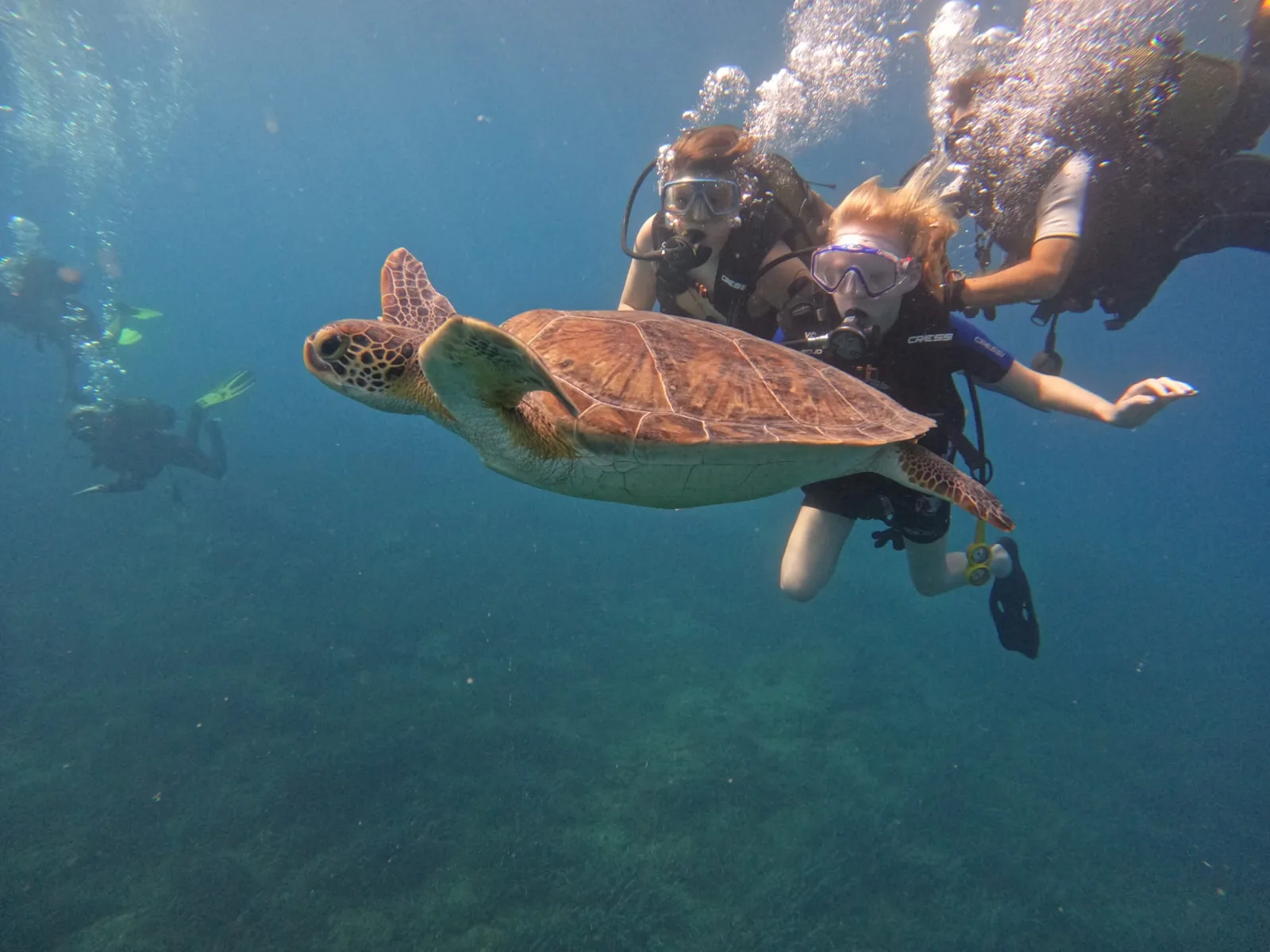
sea turtle with divers alanya
Reef & Cave −12 M
From €43
Alanya · 8H · 2 dives −12M

Thrilling Scuba Diving Adventure in Alanya

Your underwater day begins the moment a friendly local guide collects you from your Alanya hotel in a comfortable air-conditioned vehicle.

Book Now
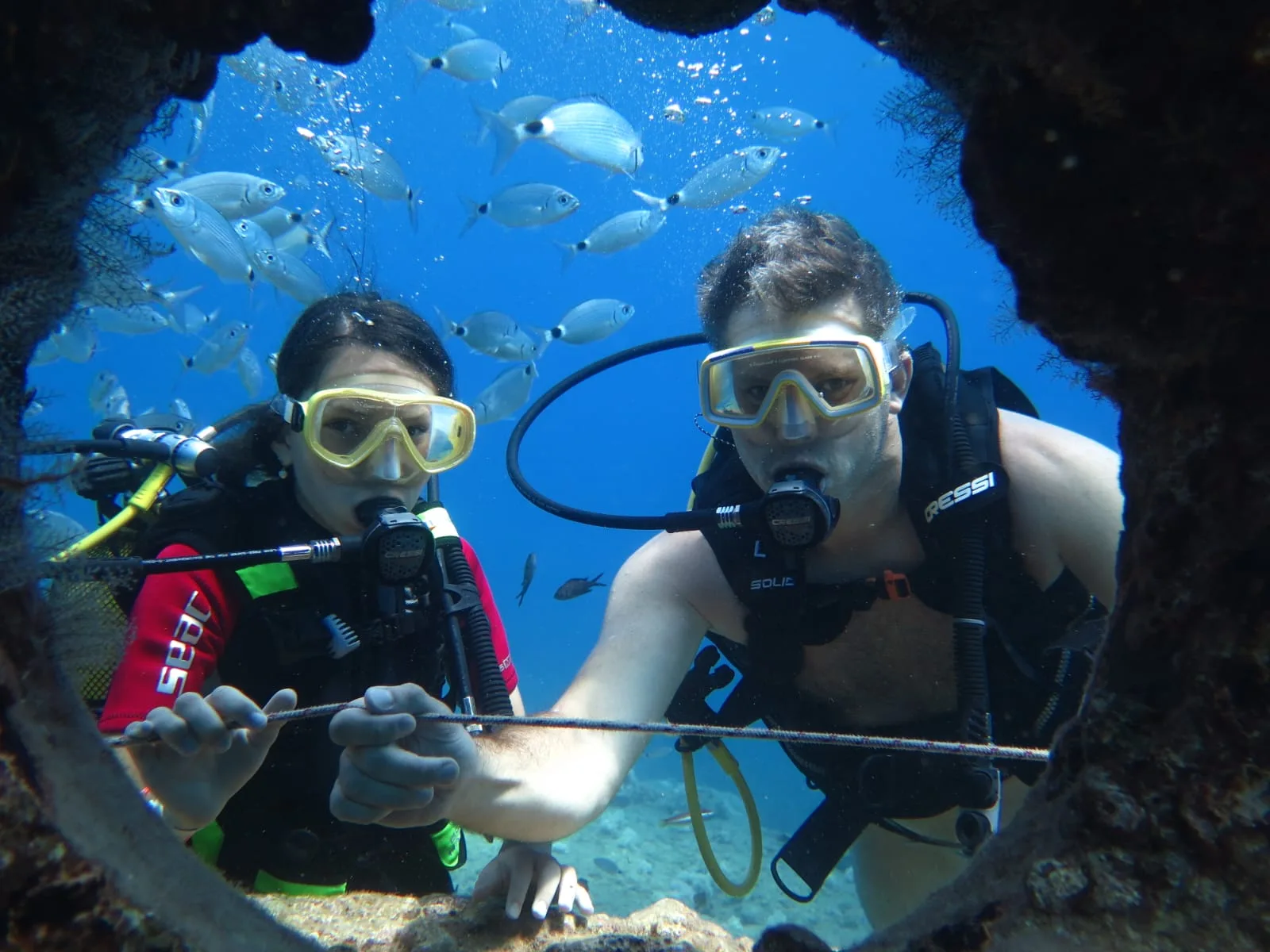
divers cave window museum side
Underwater Museum −13 M
From €45
Side · 7H · 2 dives −13M

Side Scuba Diving & Underwater Museum Tour: Dive into the Deep Blue

Embark on an extraordinary journey into the crystal-clear depths of the Mediterranean with our premier Side Scuba Diving Tour.

Book Now
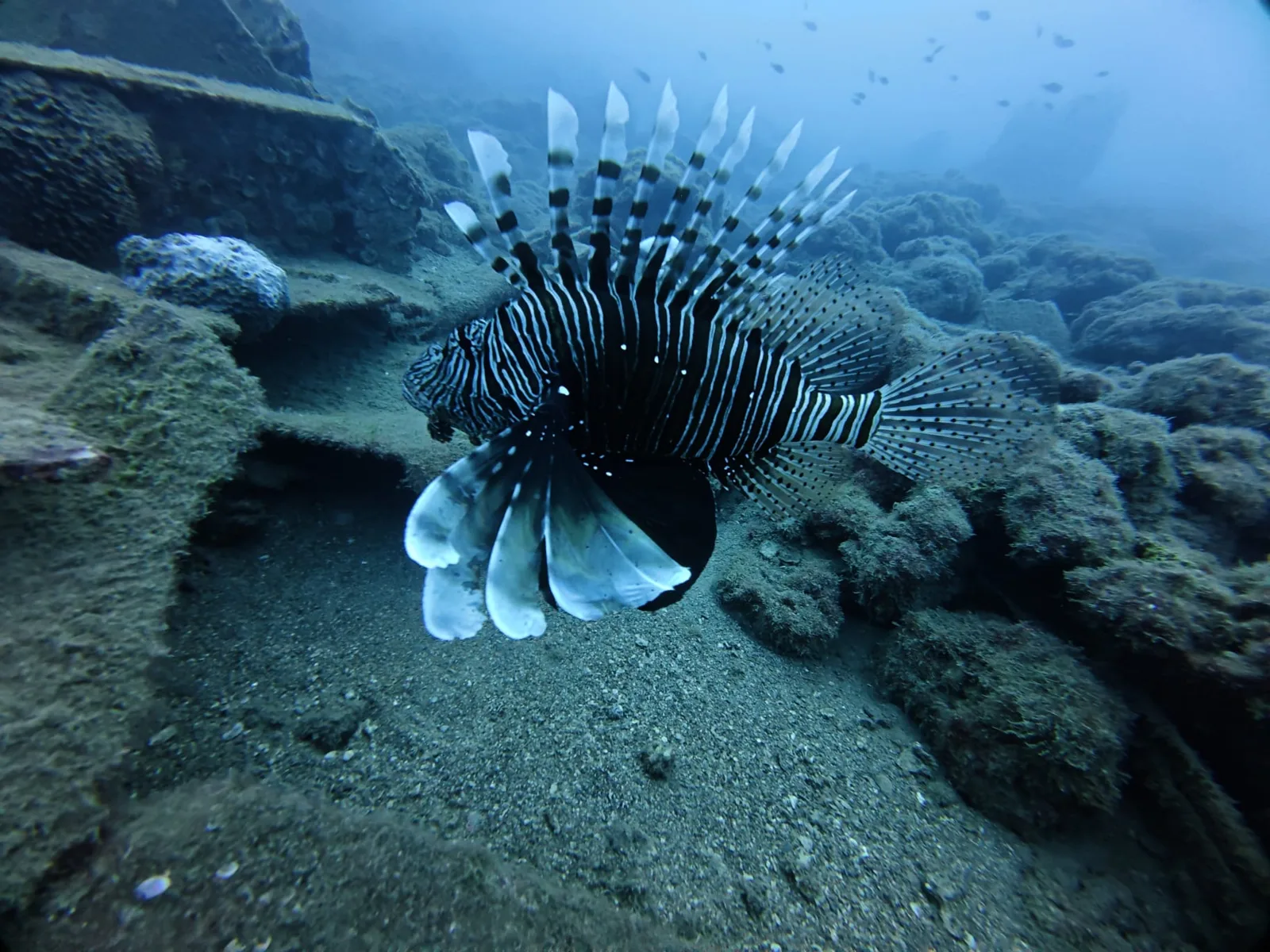
lionfish closeup antalya reef
Reef & Cave −12 M
From €50
Antalya · 8H · 2 dives −12M

Exciting Scuba Diving Tour from Antalya

Your day begins with a friendly pickup from your Antalya hotel, where our driver greets you and sets off along the sparkling coastline toward the harbour.

Book Now